Blog

The Sweaty-Hands Problem That Quietly Wrecks Your Low Serve

Early in a match, your low serve behaves. It skims the tape, drops, and gives the returner nothing. Two games later your palms are damp, and that same serve starts sitting up a fraction too high — enough for a quick opponent to step in and punish it. You didn’t change a thing about how
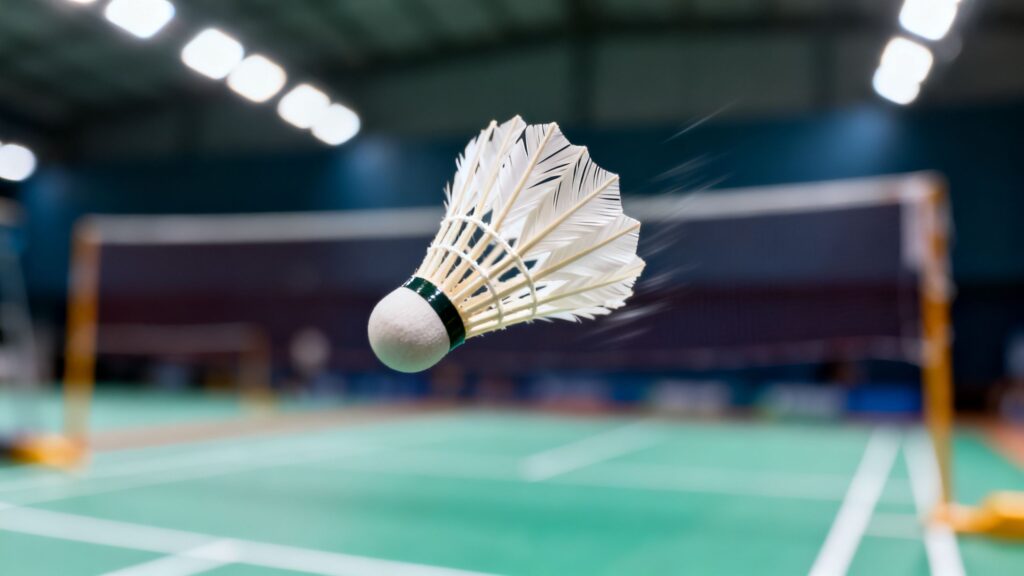
Feather badminton shuttlecock captured mid-flight on a court.
Blog

Slice Dip vs Topspin Dip: Two Ways to Make Your Low Serve Drop

A good low serve in doubles isn’t just low — it’s dying. You want the shuttle to skim the tape and then fall away steeply into the front of the service court, so your opponent has to reach up and lift it rather than step in and kill it. A flat serve that carries even

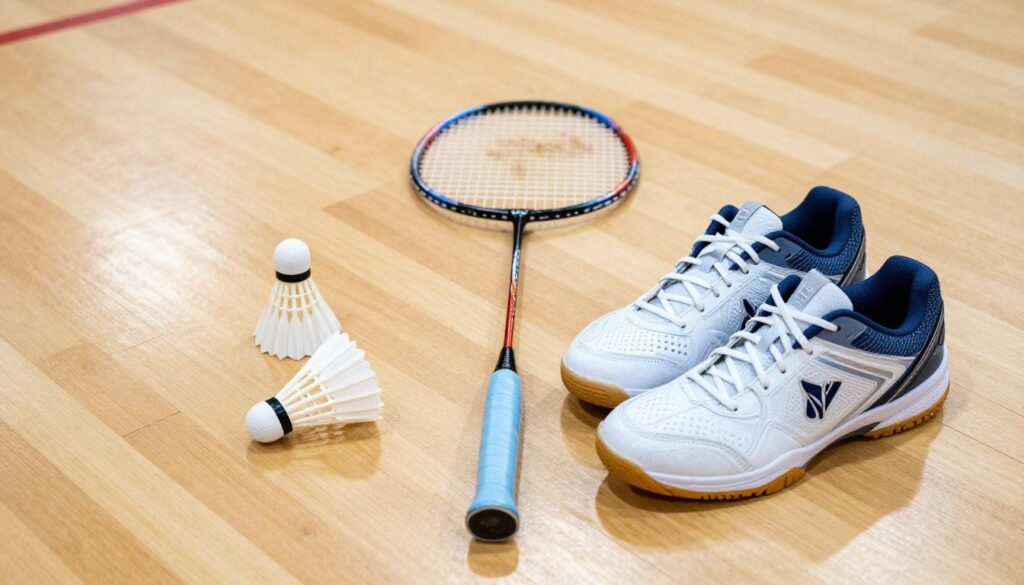
Clean badminton racket, shuttlecock, and shoes ready for play.
Blog

Complete Your Kit Selector Added to Badminton Worldwide

Most players pour all their attention into one thing: the racket. It’s the fun choice, the one with the marketing and the pro endorsements. But walk into any club and you’ll spot the players who’ve actually thought it through — their whole setup works together, and none of it is holding their game back. A

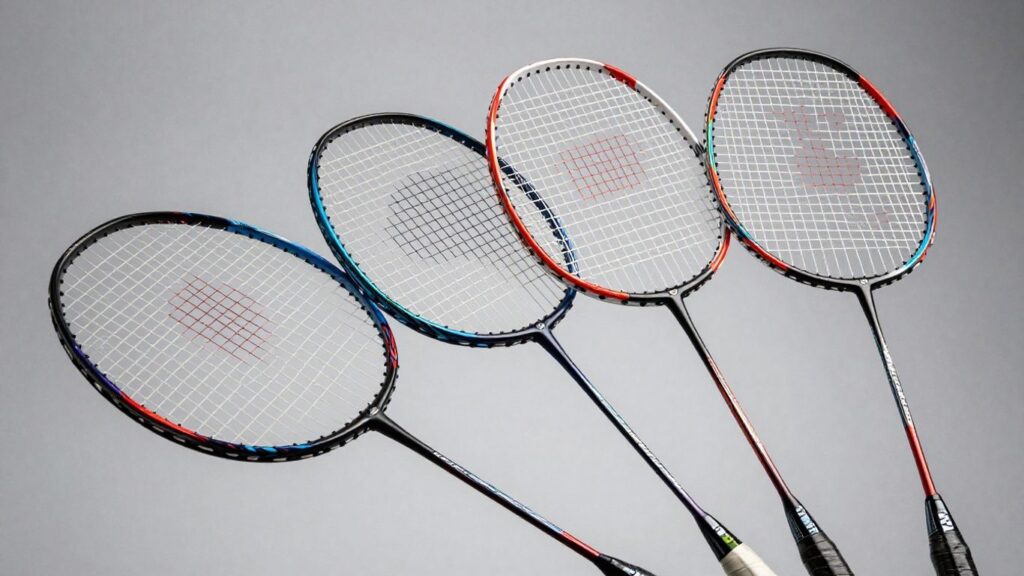
Yonex badminton racquets arranged artfully.
Blog

Find Your Perfect Badminton Racket in Minutes

# Find Your Perfect Badminton Racket in Minutes Choosing the right badminton racket can be confusing. With so many brands, weight classes, balance points, and shaft flex options available, it’s easy to spend hours researching without feeling confident in your decision. That’s why we created the **Find Your Racket** feature at Badminton Worldwide. Instead of

Blog

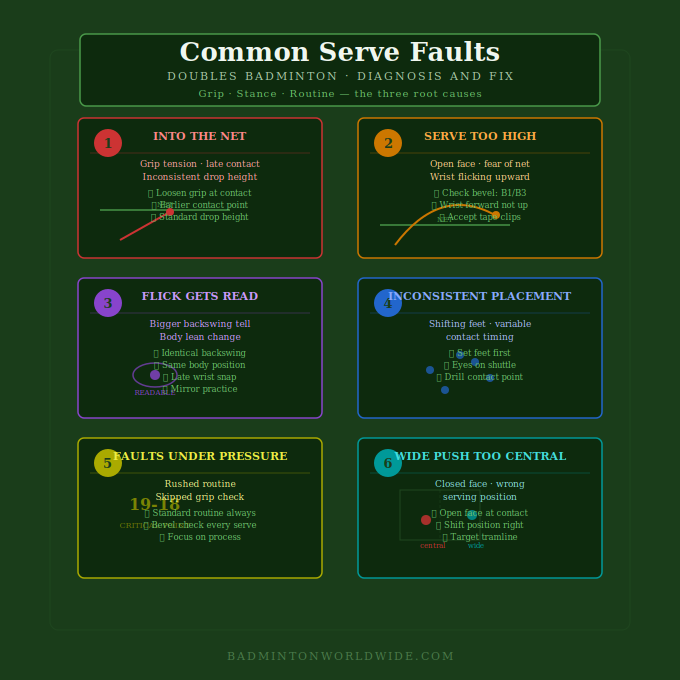
The Most Common Serve Faults in Doubles Badminton and How to Fix Them

Most serving problems in doubles are not what players think they are. A server who clips the tape assumes the problem is swing path. A server whose flick gets read every time assumes the problem is timing. A server who double-faults under pressure assumes the problem is nerves. In most cases, the root cause is

Blog

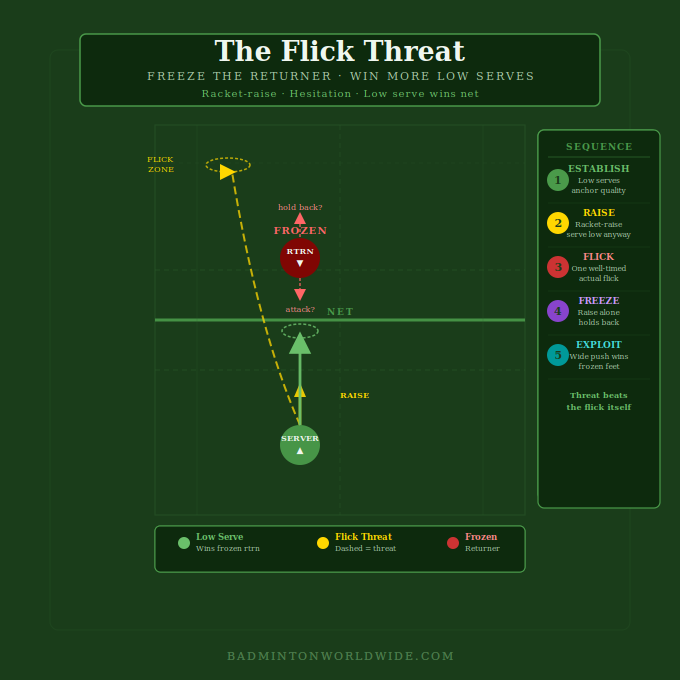
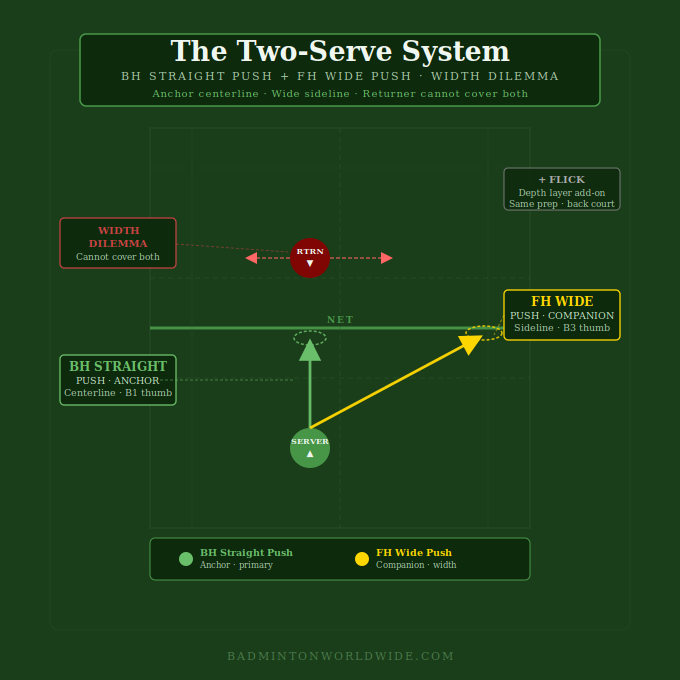
The Two-Serve System: Why One Serve Alone Loses Points in Doubles

A single serve, no matter how good, eventually stops winning points. This is one of the most consistent patterns in competitive doubles. A player develops a strong backhand straight push — low to the tape, centerline, difficult to attack. It works for a game, sometimes two. Then the returner adjusts. They move a half-step toward

Blog

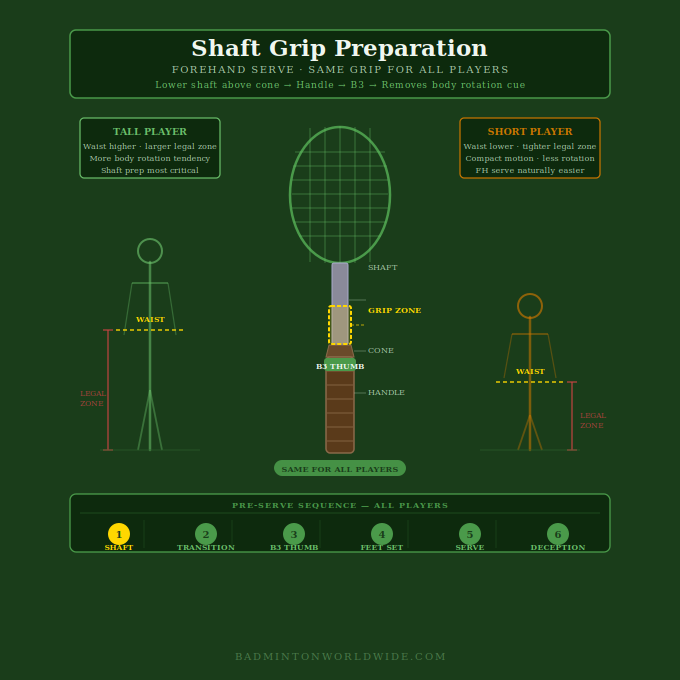
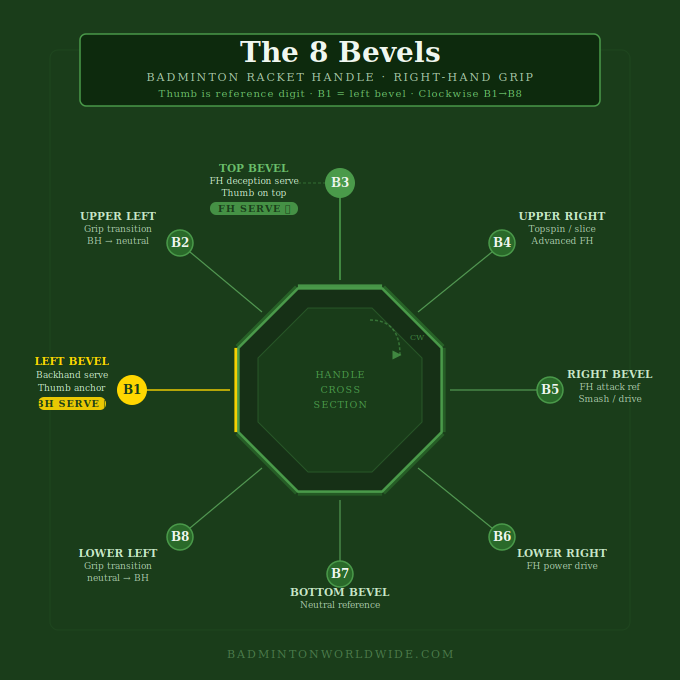
The 8 Bevels on a Badminton Racket Handle: What They Are and Why They Matter

Most badminton players have never thought about the eight bevels on their racket handle. They grip, they swing, they adjust by feel. And for casual play, that is fine. But at the competitive level — particularly in doubles, where the difference between a deceptive serve and a readable one can come down to millimeters of

Blog

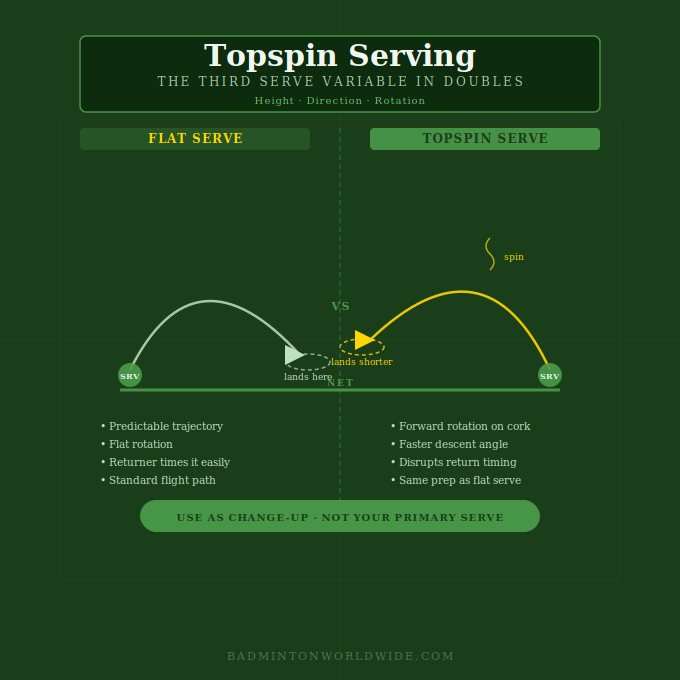
The Significance of Topspin in Badminton Serving

Topspin in badminton serving is one of the most underused weapons at the competitive level. Most players focus entirely on shuttle placement and serve height. Fewer think about rotation. Yet the players who have learned to apply topspin to their serve — even subtly — gain a measurable edge in how the shuttle behaves after

DOUBLES SERVE SYSTEM

Want to make your doubles serve genuinely dangerous?

The Doubles Serve Mastery eBook covers the complete Two-Serve System — grip mechanics, deception principles, serve variants, and the decision-making framework used in competitive club play. 20-page PDF, instant download.

Get the $27 eBook → See Coaching Options →
Scroll to Top