
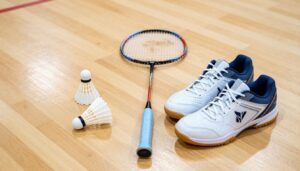
Most players pour all their attention into one thing: the racket. It’s the fun choice, the one with the marketing and the pro endorsements. But walk into any club and you’ll spot the players who’ve actually thought it through — their whole setup works together, and none of it is holding their game back. A badminton kit is a system, not a single purchase. Here’s how the pieces fit, and where your money actually matters.
Start with the racket — but match it to your game
The right frame depends on how you play, not on who’s on the poster. Attackers want a head-heavy racket that loads power into steep smashes. All-round players are best served by an even-balance frame that rewards control and touch on every shot. Speed players — fast hands, drives, quick defense — want a head-light, aerodynamic racket they can whip around at the net. Layer your level on top: flexible shafts are forgiving while you’re learning, stiffer flagship frames reward a developed swing. Get this match right and everything else falls into place around it.
String: the upgrade you feel the most
Ask experienced players what changed their game most cheaply and many will say the string, not the racket. A thin, high-repulsion string adds snap to your smash; a durable control string gives you dwell and feel. It’s also the part that wears out fastest — string loses tension over weeks and eventually snaps — so treat it as a running cost, not a one-time buy. A good rule of thumb: restring roughly as many times per year as you play per week.
Overgrip: cheap, ignored, and rebought constantly
An overgrip costs almost nothing and transforms how the racket feels in your hand. Once it goes slick or loses its tack — usually every few weeks of regular play — it’s time for a fresh wrap. Keep a multi-pack around and never play with a tired grip.
Shuttles: your biggest recurring cost
Nothing gets replaced more often than shuttles. Feather shuttles give the truest flight and the feel serious players want, but they wear out quickly. Nylon shuttles last far longer and are ideal for club nights and practice. Most players end up keeping both on hand — feather for match play, nylon for everything else.
Shoes: the one part you shouldn’t skip
Badminton is relentless side-to-side movement, and running shoes simply aren’t built for it. Proper court shoes have non-marking gum soles for grip and real cushioning to protect your knees and ankles. This isn’t the place to save money — it’s the part of your kit that protects you.
Bag: quiet protection for everything else
A thermal racket bag does more than carry your gear. The insulated lining shields your frames from heat and cold, which helps your rackets hold their string tension between sessions. It’s the least glamorous item in the kit and one of the most useful.
The easy way to build yours
You don’t have to piece all this together by guesswork. Our free Complete Your Kit finder asks three quick questions — your game, your level, and your shuttle preference — then matches you to the right racket and the exact string, grip, shuttles, shoes and bag that go with it.
Build your kit in 30 seconds →
Quick questions
What’s the most important part of a badminton kit?
The racket sets your ceiling, but string and shoes have the biggest day-to-day impact — string on how the racket performs, shoes on your safety and movement.
How often will I be rebuying things?
String, grips and shuttles are consumables. Expect to replace grips every few weeks, shuttles constantly, and string every couple of months or whenever it breaks.
Can I start cheap and upgrade later?
Absolutely. Begin with an all-round racket, a durable string, decent court shoes and nylon shuttles, then upgrade individual pieces as your style sharpens.
Badminton Worldwide is reader-supported. As an Amazon Associate we earn from qualifying purchases made through links in our gear finder, at no extra cost to you.