
So, you want to hit that killer badminton smash? It’s not just about swinging hard, you know. There’s a whole lot that goes into making that shot a real winner. We’re talking about the right way to hold the racket, how to move your body, and when to actually let that smash fly. It’s a skill that can totally change a game, and luckily, it’s something you can learn and get better at with practice. Let’s break down how to make your badminton smash something to be feared on the court.
Key Takeaways
- A good badminton smash uses proper grip, body positioning, and a quick wrist snap for maximum impact.
- Varying your smashes with different angles, speeds, and types like the jump smash can keep opponents guessing.
- Power for your badminton smash comes from your legs and core, not just your arm, combined with fast racket head speed.
- Timing is everything; knowing when to use your badminton smash is as important as how you hit it.
- Consistent practice and drills are vital to developing a reliable and effective badminton smash.
Mastering The Badminton Smash Technique
The smash is arguably the most exciting and decisive shot in badminton. It’s the one that can end a rally with a bang, but getting it right takes more than just brute force. It’s a blend of technique, timing, and a bit of finesse. Let’s break down how to build a smash that your opponents will dread.
Grip Fundamentals For A Powerful Smash
The way you hold your racket is the first step to a killer smash. You want a grip that allows for maximum wrist action and racket head speed. For most smashes, a forehand grip is the way to go, but keep it relaxed. Seriously, don’t white-knuckle it. A tight grip kills the fluidity needed for that whip-like snap at impact. Think of it like holding a wet bar of soap – firm enough not to drop, but loose enough to allow for movement. This relaxed approach is key to generating power from your whole body, not just your arm. A good grip allows for a smooth transfer of energy from your legs and core all the way to the shuttlecock.
Body Positioning And Preparation For The Smash
Getting your body in the right place before you swing is super important. You want to be behind the shuttlecock, ideally about half a meter. This allows you to transfer your bodyweight forward into the shot, which is where a lot of power comes from. As you prepare, turn your body sideways, almost like you’re about to throw something. Your non-racket arm should be up, helping with balance and pointing you towards the shuttle. Keep your elbow high and your racket pulled back, ready to launch. This setup is crucial for generating the necessary momentum and power. Proper preparation is a big part of developing a strong smash.
The Crucial Contact Point And Wrist Snap
This is where it all comes together. You need to hit the shuttlecock at the highest point possible in front of your body. This high contact point allows for a steeper, more downward trajectory, making it harder for your opponent to return. As you make contact, your wrist should snap forward with force. This wrist snap is what adds that extra burst of speed and accuracy to your smash. It’s not just about swinging hard; it’s about a coordinated effort involving your legs, hips, torso, and that final, sharp flick of the wrist. The combination of a high contact point and a powerful wrist snap is what separates a decent smash from a truly devastating one.
Mastering these technical elements—grip, body positioning, and the precise moment of contact—lays the groundwork for a powerful and effective badminton smash. Without a solid foundation here, even the most athletic player will struggle to consistently produce a winning smash.
Variations And Deception In The Badminton Smash
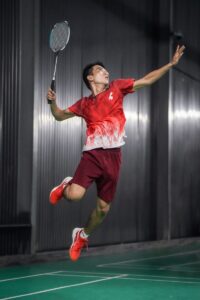
The real magic behind a winning badminton smash isn’t just power—it’s about being unpredictable. Top players use several smashing techniques that keep their opponents on edge, often forcing awkward or desperate returns. Mastering a variety of smash styles opens up new ways to score points and break through even the tightest defenses.
Executing The Jump Smash
Jump smashes add an extra level of force and angle compared to the standard ground smash. This move is flashy but practical—a good jump at the right moment lets you send the shuttle down hard at steeper angles, making it much harder to return.
- Time your jump so you hit the shuttle at the highest point
- Use your non-racket arm for balance in the air
- Land softly on both feet, ready for the next shot
Don’t overuse the jump smash; save it for the right opportunity—sometimes the threat alone is enough to earn points.
The Strategic Crosscourt Smash
A crosscourt smash can catch your opponent off guard, especially if they’ve gotten used to you smashing straight. Switching up the angles adds a layer of deception to your attack.
- Aim your smash diagonally across the court
- Watch the opponent’s positioning before picking your target
- Mix up your placement: deep corners, between shoulders, or just inside the sidelines
| Placement Zone | Impact on Opponent |
|---|---|
| Deep Corner | Forces wide footwork |
| Midcourt Gap | Exploits hesitation |
| Body | Limits swing, creates errors |
Employing The Reverse Slice Smash
The reverse slice smash is one of badminton’s trickiest moves. By using a slicing wrist action, you can make the shuttle spin and veer off unexpectedly after crossing the net. This makes it tough for your opponent to predict or counter.
- Hold a loose grip to maximize racket flexibility
- Slice the shuttle by brushing across it, not just hitting through
- Practice control over speed—accuracy is more important here
When executed right, a reverse slice smash can really throw off your opponent’s timing and footwork, even when it isn’t the most powerful shot on the court.
Mixing these smash variations into your game plan not only keeps things interesting but also makes you unpredictable—a key ingredient for winning more rallies.
Developing A Lethal Badminton Smash
Building a truly dangerous smash in badminton takes more than just a strong arm. It all comes down to the way you use your entire body, how you control the racket, and the ability to stay relaxed even during high-speed rallies. Let’s break down the parts needed to turn your smash into a real game-changer.
Generating Power From Your Legs And Core
Most people think smashing hard is all about arm strength. But real power actually starts in your legs and core. By using the big muscles in your lower body, you can launch yourself into the shot, giving you a strong base for everything else. Here’s what you should focus on:
- Bend your knees slightly before jumping or lunging into the shot.
- Rotate your hips and torso just before you hit. Imagine it like winding up a spring.
- Transfer your bodyweight forward as you strike, making sure your momentum goes toward the shuttle.
If you feel your balance shift forward smoothly during the smash, you’re probably using your entire body the right way—and that’s when you’ll notice serious gains in both speed and accuracy.
Achieving Fast Racket Head Speed
One of the biggest things separating advanced smashers from everyone else is their ability to create a whip-like snap in the racket. This speed mostly comes from a relaxed arm and good timing, not just muscle. Consider these points:
- Loosen your grip just before contact, allowing your hand and wrist to move freely.
- Snap your wrist and fingers right as you strike—this whiplash effect launches the shuttle at high speeds.
- Keep your follow-through smooth and forward, not sideways or down, sending more power into the shot.
The table below summarizes common problems and quick fixes:
| Problem | Quick Fix |
|---|---|
| Slow racket speed | Relax grip, use wrist snap |
| Weak contact | Hit shuttle in front of your body |
| Wild direction | Focus on steady follow-through |
The Importance Of A Relaxed Grip
A tight grip is basically the enemy of a powerful smash. The best players know how to hold their racket lightly until the very last moment. Why? Because a relaxed grip helps you swing faster, lets your wrist move naturally, and boosts consistency. Here’s how you can train this habit:
- Hold the racket with just enough pressure to keep it steady (you should be able to wiggle your fingers a bit).
- As you get ready to smash, keep your fingers spread just a touch rather than clamped on the handle.
- Increase your grip pressure only as your racket approaches the shuttle, then loosen up immediately after contact.
For more on how grip and body movement work together to up your smash game, check out these key techniques for a better smash. It’s surprising how much a simple adjustment can improve your shot with just a little practice.
Strategic Application Of The Badminton Smash
Applying the smash in badminton demands more than just a strong arm and quick wrist. Good decision-making makes your smash far more effective and keeps your opponent on their heels. Sometimes, knowing when not to smash is just as important as actually hitting the shot.
When To Unleash Your Smash
Choosing the right moment for a smash can change the rhythm of the rally. Here are a few times when your attack pays off:
- When your opponent lifts the shuttle short or mid-court.
- If you’ve pushed your opponent out of position with a deep clear or fast drive.
- When you have recovered balance and are behind the shuttlecock.
But avoid smashing if you’re out of position or off-balance—doing so can land you in trouble, leaving your court wide open.
The best smashes usually happen when you’re calm and patient, waiting for your opponent to make a weak shot, then going all-in with your attack.
Varying Smash Angles And Speeds
Relying on a single smash can get predictable, especially against skilled opposition. Mixing up your approach keeps your rival guessing.
- Switch between straight and cross-court smashes.
- Change up power: go for 80% on some shots to control placement, then unleash maximum force when you see a real opening.
- Mix in steeper drops after a few flat smashes to break your opponent’s pattern.
Common Smash Angles Used (Table)
| Smash Type | Situation |
|---|---|
| Straight Smash | Opponent out of central base |
| Crosscourt Smash | Opponent favoring forehand/backhand zone |
| Body Smash | Surprise, target opponent’s torso |
Targeting Zones For Maximum Impact
Where you place your smash is often more important than how hard you hit it. Targeting weaker zones boosts your chances of forcing a weak return.
- Aim for the corners when your opponent is slow to recover.
- Hit at your opponent’s racket shoulder or hip—these are awkward spots.
- In doubles, smash down the middle to create confusion between partners.
Sometimes the smartest move is to aim for open spaces, not just pound the shuttle down as hard as possible.
If you focus on these tactics, your smash becomes more than just a show of strength—it turns into a winning strategy on the court.
Record-Breaking Badminton Smashes
When we talk about the badminton smash, it’s not just about hitting the shuttlecock hard; it’s about precision, timing, and sometimes, sheer brute force that leaves opponents stunned. The sport has seen some incredible displays of power, with certain players etching their names in history for their devastating smashes.
The Fastest Badminton Smash On Record
The quest for the fastest smash has pushed the boundaries of human capability and racket technology. While speeds can vary based on conditions and measurement methods, one name consistently comes up when discussing raw smash velocity. Satwiksairaj Rankireddy of India currently holds the Guinness World Record for the fastest badminton smash, clocking an astonishing 565 kilometers per hour (351.07 miles per hour). This incredible feat showcases the explosive power that can be generated through perfect technique and physical conditioning.
Notable Players Known For Their Smash
Beyond the record books, many players have built legendary careers on the back of their formidable smashes. These athletes didn’t just hit hard; they used their smashes strategically, making them a constant threat on the court.
- Fu Haifeng (China): A former world champion and Olympic gold medalist, Fu Haifeng was renowned for his powerful and accurate smashes, often used to close out rallies with decisive force.
- Taufik Hidayat (Indonesia): Known for his fluid style and incredible court coverage, Hidayat possessed a deceptive and powerful smash that could catch opponents off guard, even when he seemed out of position.
- Lee Chong Wei (Malaysia): While celebrated for his all-around game and incredible defense, Lee Chong Wei also had a potent smash that he could deploy effectively, especially when given an attacking opportunity.
- Peter Gade (Denmark): A consistent top player for years, Gade’s smash was a key weapon in his arsenal, characterized by its speed and placement, often targeting the lines or the opponent’s body.
The effectiveness of a smash isn’t solely measured by its speed. A well-placed smash, even if not at maximum velocity, can be far more damaging than a wild, hard hit that goes out of bounds. Strategic placement and deception play equally important roles in making a smash a true match-winner.
Training Drills For An Improved Badminton Smash
Basic Smash Practice With A Partner
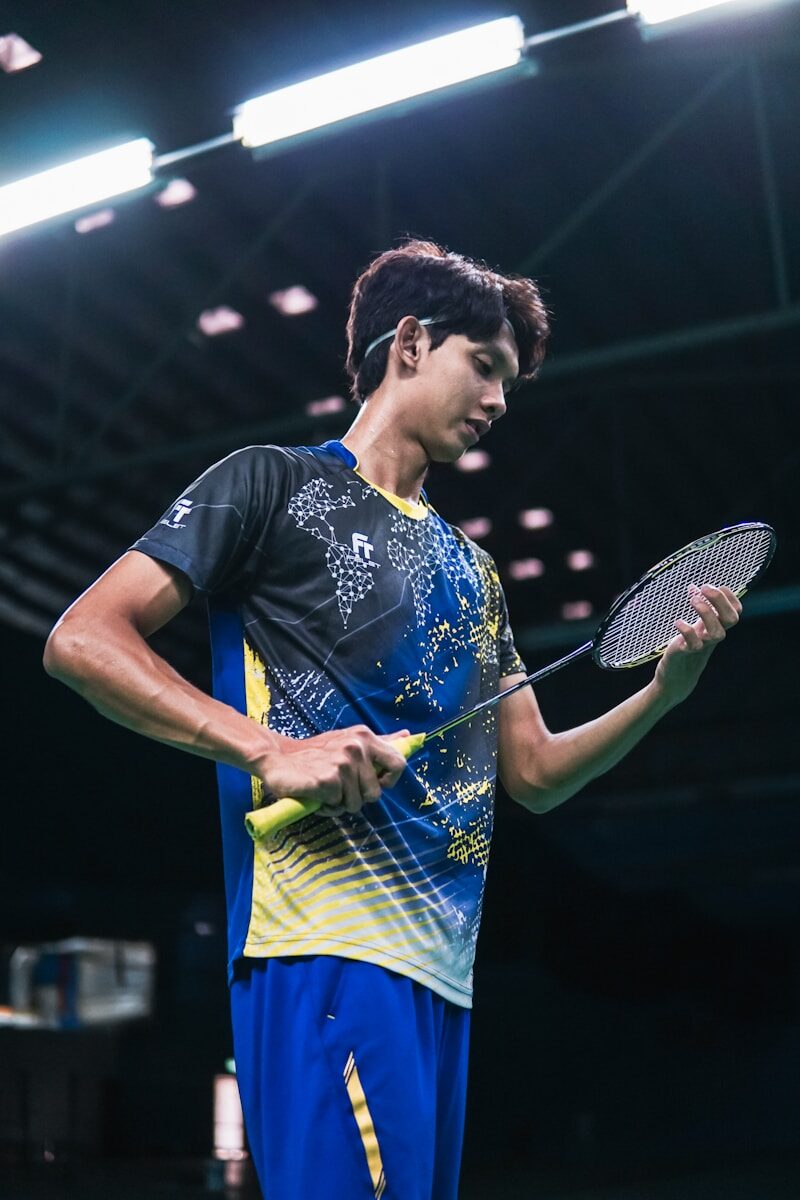
This is where you build the foundation. Grab a partner and have them feed you high clears, one after another. Your job? To smash each one. Don’t rush. Take your time between shots to really think about what you just did. Did you hit it well? Was your body in the right spot? This kind of self-check is super important when you’re starting out. It’s all about getting the feel for the correct swing and body movement without the pressure of a fast rally.
Two-Shot Combinations For Smash Practice
Once you’re comfortable with just smashing, it’s time to add a little more game-like movement. Here are a couple of ways to do this:
- Smash and Recover: Your partner lifts the shuttle to you, you smash it. Then, they hit it back to the mid-court, and you practice either a drive or a push to finish the point. This drill helps you work on getting back into position after you smash.
- Move to Smash: You hit a shot, maybe a drop shot to one side. Your partner then lifts the shuttle to the other side of the court, and you have to move quickly to get into position for the smash. This focuses on the footwork and agility needed to get ready for your attack.
Integrating The Smash Into Game Scenarios
This is where things get real. You’re not just practicing isolated shots anymore. Think about drills that mimic actual game play. For example, a “rear-mid” drill where you’re playing from the back of the court and moving to the middle, incorporating a smash when the opportunity arises. The goal here is to make the smash a natural part of your attacking strategy, not just a standalone shot. You want to be able to spot the right moment to smash and execute it without thinking too much.
Building a better smash isn’t just about hitting harder. It’s about smart practice, good technique, and knowing when to use it. Recording yourself can be a big help, letting you see what you’re doing right and what needs work. Keep at it, and that smash will become a real weapon in your game.
Wrapping Up Your Smash Game
So, we’ve talked a lot about the smash – how to hit it hard, where to aim, and even some of the crazy fast speeds it can reach. It’s not just about swinging wildly, though. Getting that smash right takes practice, paying attention to how you stand, how you swing, and when you actually hit the shuttle. Watching the pros helps, sure, but the real magic happens on the court, trying it out yourself. Keep at it, and you’ll definitely see your smash get better. It’s a game-changer when you nail it at the right moment.
Frequently Asked Questions
What’s the most important part of hitting a really good smash?
To hit a powerful smash, you need to use your whole body, not just your arm! Think about using your legs, hips, and chest to create a fast swing. Also, hitting the shuttle at the highest point you can in front of you makes a big difference.
How can I make my smash faster?
Getting a fast racket head speed is key to a fast smash. This comes from a good, full body swing, especially the rotation of your hips and torso, and a quick snap of your wrist right when you hit the shuttle. Keeping your grip a little loose until the last second helps too.
When is the best time to use a smash?
A smash is a great attacking shot, but it’s not always the best choice. It’s best used when your opponent hits the shuttle high and short, giving you a clear chance to hit down. If you’re off-balance or the shuttle is too low, a smash might not be the smartest move.
Are there different kinds of smashes?
Yes, there are! You can do a regular smash, a jump smash where you leap into the shot for more power, a crosscourt smash that goes diagonally, or even a reverse slice smash that can be tricky for your opponent. Mixing these up keeps them guessing.
How can I practice my smash if I don’t have someone to hit with?
You can still practice! Try hitting against a wall, focusing on your technique and timing. You can also practice the movements and swings without hitting a shuttle. Watching videos of pros and trying to copy their form is also helpful.
What’s the fastest smash ever recorded?
The fastest badminton smash ever recorded was incredibly fast, reaching about 565 kilometers per hour! That’s over 350 miles per hour. It shows how much power can be packed into this shot.