
So, you want to get better at birdie badminton? It’s a fun game, right? You hit that shuttlecock back and forth, trying to get it where your opponent can’t reach it. But like anything, there’s more to it than just swinging a racket. We’re going to break down the basics, how to serve, how to score, and what not to do. Plus, we’ll touch on how playing by yourself is different from playing with a partner. Let’s get into it.
Key Takeaways
- Understand the main goal of birdie badminton: hit the shuttlecock so your opponent can’t return it legally.
- Know the court sizes for singles and doubles, and how the net divides the playing area.
- Serving in birdie badminton has specific rules, like hitting it underhand and diagonally into the opponent’s service box.
- Points are scored on every rally, and games go to 21, but you need to win by two points unless it’s 29-29.
- Avoid common faults like hitting the shuttlecock out, into the net, or touching the net with your body or racket.
Understanding The Birdie Badminton Basics
Alright, let’s get down to the nitty-gritty of badminton. Before you can start smashing birdies like a pro, you’ve gotta know what you’re doing on the court. It’s not just about hitting a shuttlecock really hard, you know?
The Objective Of The Game
At its heart, badminton is pretty straightforward. You and your opponent (or opponents, if it’s doubles) are on opposite sides of a net. The main goal is to hit that little feathered thing, the shuttlecock, over the net so it lands in their court. If they can’t hit it back legally before it bounces, you score a point. The game is all about outsmarting and outmaneuvering your opponent to win rallies. It sounds simple, but trust me, there’s a lot of strategy involved.
Court Dimensions And Layout
Knowing the court is super important. It’s a rectangle, and the size changes a bit depending on whether you’re playing singles or doubles. For singles, it’s 13.4 meters long and 5.18 meters wide. Doubles matches use a wider court, measuring 13.4 meters long and 6.1 meters wide. The net sits right in the middle, standing 1.55 meters high at the posts and dipping slightly to 1.524 meters in the center. You’ve also got specific service boxes marked out – where you have to serve into. Getting a feel for these boundaries will help you understand serving and where to hit your shots. You can check out the official court dimensions for all the exact measurements.
Here’s a quick rundown:
- Length: 13.4 meters (44 feet)
- Width (Singles): 5.18 meters (17 feet)
- Width (Doubles): 6.1 meters (20 feet)
- Net Height (Posts): 1.55 meters (5 feet 1 inch)
- Net Height (Center): 1.524 meters (5 feet)
Essential Equipment For Play
So, what do you actually need to play? It’s not much, honestly. You’ll need a badminton racket – they’re usually lightweight and made of materials like graphite or aluminum. Then there’s the shuttlecock, often called a birdie. These can be made of plastic or feathers, with feather ones being the standard for serious play because they fly differently. You’ll also want some comfy athletic clothes that let you move freely, and importantly, non-marking court shoes. These give you good grip and won’t scuff up the gym floor. It’s pretty basic stuff, really, but having the right gear makes a big difference. A well-placed drop shot can be a game-changer, and the right shoes help you get there.
Mastering The Birdie Badminton Serve
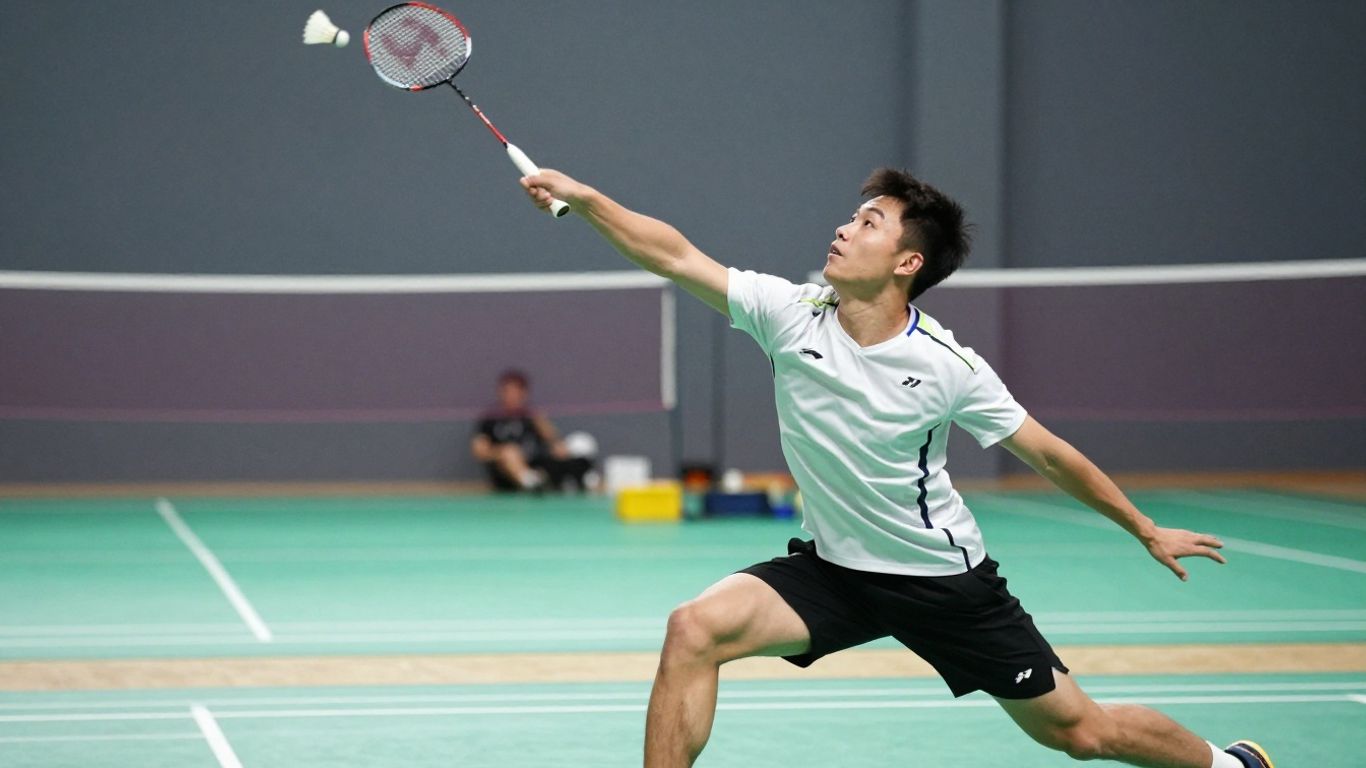
The serve in badminton is your first chance to put the shuttlecock into play, and getting it right can set the tone for the entire rally. It’s not just about getting the birdie over the net; it’s about doing it legally and strategically. A good serve can put your opponent on the defensive right from the start, while a weak or faulty one gives them an easy advantage.
Proper Serving Stance And Grip
Before you even think about hitting the shuttlecock, your stance and grip are super important. You want to be balanced and ready to move. For a standard underhand serve, hold the racket with a relaxed grip, often a forehand grip is best. Your non-racket foot should be slightly forward, pointing towards the service court you’re aiming for. Keep your weight balanced, ready to shift it forward as you swing. The key is to be stable but not stiff.
Executing The Underhand Serve
This is the only legal serve in badminton. You have to hit the shuttlecock below your waist. Think of it as a gentle push or a controlled swing rather than a powerful hit. The racket head should be below your hand when you make contact with the birdie. Aim to hit the shuttlecock with the base of the racket strings for better control. The trajectory should be a gentle arc, landing in the diagonally opposite service court.
Here’s a quick breakdown:
- Grip: Relaxed forehand grip.
- Stance: Non-racket foot forward, balanced weight.
- Contact: Racket head below hand, hit below waist.
- Swing: Smooth, controlled motion, not a full swing.
- Aim: Diagonal service court.
Key Serving Rules And Faults
There are a few rules that can trip you up if you’re not careful. Knowing these will save you points.
- Underhand: The serve must be hit below the server’s waist. The entire shuttlecock must be below 1.15 meters (3 feet 9 inches) at the moment of impact.
- Diagonal: The serve must travel diagonally into the opponent’s service court.
- Feet: Both of your feet must remain on the ground until you hit the shuttlecock.
- Racket Head: The racket head must be below your hand at the point of contact.
- No Feinting: You can’t fake a serve and then do something else.
If you mess up any of these, it’s a fault, and your opponent gets the point. Common faults include hitting the shuttlecock above your waist, serving straight instead of diagonally, or lifting your back foot before hitting the shuttlecock. It’s also a fault if the shuttlecock lands outside the correct service court or hits the net and doesn’t go over into the correct court. Getting the serve right is a big part of winning a game.
Birdie Badminton Scoring And Game Structure
Alright, let’s talk about how you actually win at badminton. It’s not just about whacking the birdie around; there’s a system to it, and knowing it makes the game way more interesting.
The Rally Point System Explained
Forget the old ways where only the server could score. Badminton now uses what’s called a rally point system. This means every single rally, no matter who served it, results in a point for someone. You win a rally, you get a point. Simple as that. This keeps the game moving and means you’re always in with a chance to score, even if you just lost the last point. It’s pretty neat, actually. You can find a simplified explanation of these rules here.
Winning A Game And Match
So, how many points do you need? A standard game is played up to 21 points. But here’s the catch: you have to win by at least two points. So, if the score is 20-20, you can’t just win 21-20. You need to get to 22-20, or 23-21, and so on. It can get pretty intense when scores get close! If things get really tight and you reach 29-29, the next point wins it – so 30-29 is the final score. A whole match is usually the best of three games. So, if you win two games, you win the match. Easy peasy, right? Well, usually. You can read more about how a match is decided here.
Understanding Score Ties And Leads
When the score hits 20-20, things get a bit wild. This is where that two-point lead rule really kicks in. You’ve got to keep playing until one side is ahead by two. This can lead to some nail-biting finishes. Imagine being up 20-18 and then losing four straight points to go down 20-22. Ouch. It’s all part of the fun, though. Keeping your cool when the score is tied is a big part of the game.
Staying focused when the score is close is key. Don’t let a few missed shots get you down. Just focus on the next point and play your best. Sometimes, just taking a deep breath before the next serve can make all the difference.
Navigating Birdie Badminton Faults And Lets
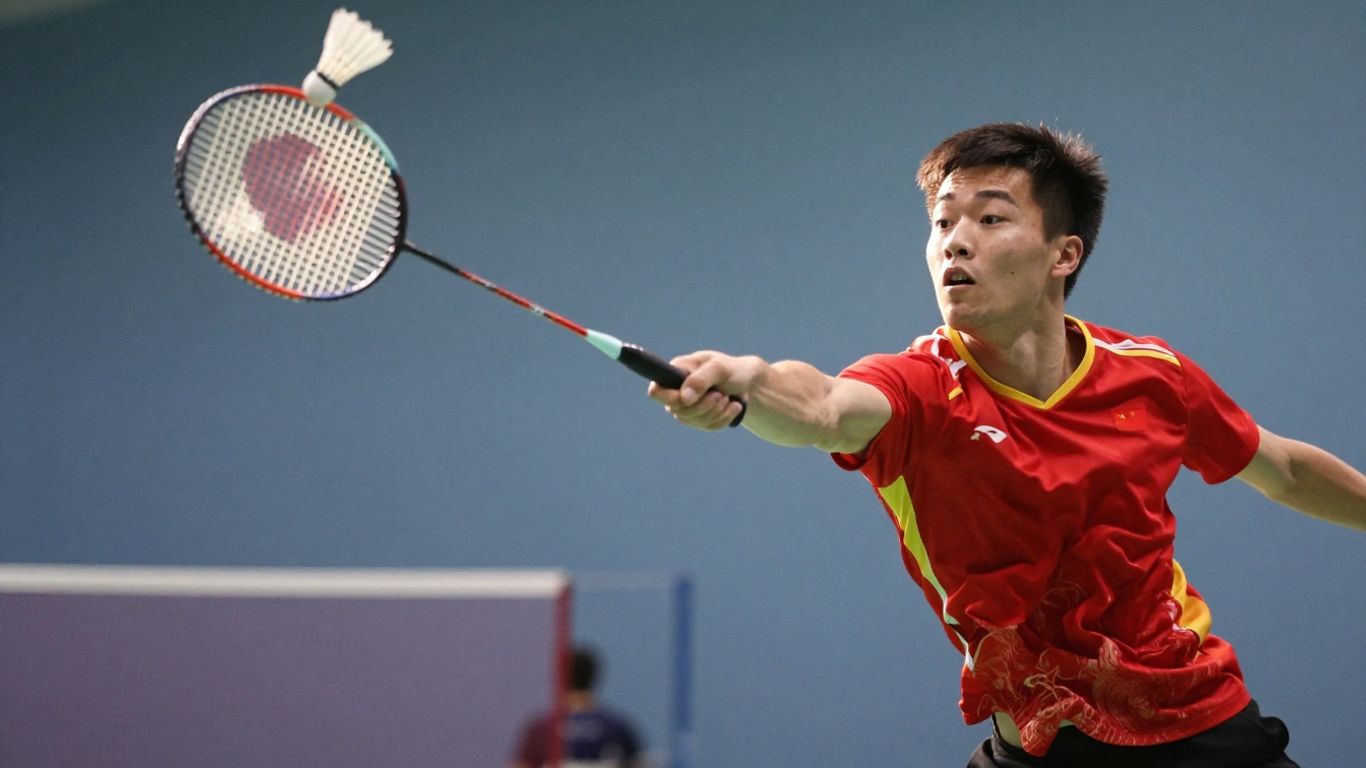
Okay, so you’re playing badminton, and suddenly the umpire calls "fault!" or "let!". It can be a bit confusing, especially when you’re just trying to get a good rally going. Let’s break down what these calls actually mean so you can avoid them and understand when they happen.
Common Faults To Avoid
A fault is basically when you break a rule, and that automatically gives a point to the other side. It’s pretty straightforward, but there are a bunch of ways it can happen. The most common faults usually involve the serve or hitting the shuttlecock incorrectly.
Here are some of the usual suspects:
- Hitting the shuttlecock out of bounds: If your shot lands outside the court lines, it’s a fault.
- Hitting the shuttlecock into the net: If the birdie doesn’t make it over the net, that’s a fault.
- The shuttlecock touching your body or clothes: You can only hit it with your racket.
- Hitting the shuttlecock twice: A player can’t hit the birdie twice in a row during a single shot.
- Touching the net with your racket or body while the shuttlecock is in play: You have to keep your distance from the net.
- Serving incorrectly: This is a big one. If the serve isn’t hit below the waist, or if the racket head isn’t below your hand when you strike it, it’s a fault. Also, serving out of the correct service box or not hitting it diagonally are common mistakes. You can find more details on incorrect serves.
When A Let Is Called
A ‘let’ is different from a fault. Instead of giving a point away, a let means the rally is stopped, and you just replay that point. It’s usually called when something unexpected happens that isn’t anyone’s fault.
Some situations where a let might be called:
- The shuttlecock gets stuck on the net: If the birdie lands on top of the net and just stays there, or gets caught in the net during play.
- An external disturbance: Like if something falls onto the court, or a spectator distracts a player at a critical moment.
- A serve hitting the net and landing in the correct service court: This is a specific type of let that only applies to the serve. The rally continues if the shuttlecock hits the net during a rally, but for a serve, it’s a let. You can read more about fouls and faults to get a better grasp.
Consequences Of A Fault
When a fault is called, the rally ends immediately. The player or team that committed the fault loses the rally, and their opponent scores a point. If you’re serving when you commit a fault, you lose the serve. If you’re receiving when the server commits a fault, you win the point and get to serve next. It’s pretty simple: fault equals point for the other side. So, paying attention to the rules and keeping your shots in play is key to winning.
Understanding these rules isn’t just about avoiding penalties; it’s about respecting the game and your opponent. Playing fair makes the game more enjoyable for everyone involved.
Advanced Birdie Badminton Techniques
Alright, so you’ve got the basics down, you can serve without faulting, and you know how to keep score. That’s awesome! But if you’re looking to really step up your game and start outsmarting your opponents, it’s time to talk about some more advanced stuff. This isn’t just about hitting the birdie hard; it’s about hitting it smart.
Strategic Shot Placement
This is where the real fun begins. Instead of just blasting the shuttlecock back, think about where you’re sending it. The goal is to put your opponent in a tough spot, making it hard for them to return effectively. This means aiming for the corners, the back of the court, or even just dropping it short right over the net.
Here are a few ideas:
- Cross-court shots: These travel diagonally and can pull your opponent off the court, opening up space for your next shot.
- Down-the-line shots: Hitting straight along the sideline can catch an opponent who’s expecting a cross-court return by surprise.
- Net drops: A delicate shot that lands just over the net forces your opponent to move forward, often resulting in a weaker return.
- Clears to the back: Sending the shuttlecock high and deep to the back corners can give you time to recover your position and reset.
The key is to vary your shots and keep your opponent guessing. Don’t be predictable!
Developing Court Awareness
Knowing where you are on the court and where your opponent is is super important. It helps you decide where to hit the birdie and how to move to get to the next shot. Think of it like a chess game, but way faster.
- Anticipate your opponent’s next move: Based on their position and how they hit the last shot, try to guess where they’ll send the birdie next.
- Know your own position: After you hit a shot, quickly get back to a good central spot on the court. This is often called the "base position" and helps you cover more ground.
- Watch for openings: If your opponent is out of position, look for the open space to hit your shot.
Good court awareness means you’re not just reacting to the birdie; you’re thinking ahead about the entire rally. It’s about controlling the space and dictating the play.
Improving Agility and Speed
Let’s be real, badminton is a workout. To play these advanced shots and maintain court awareness, you need to be quick on your feet. This isn’t just about running fast in a straight line; it’s about quick changes in direction and explosive movements.
Drills that focus on footwork are your best friend here. Things like:
- Shuttle runs: Sprinting to different points on the court and back.
- Side shuffles: Moving laterally across the court.
- Agility ladder drills: These help improve foot speed and coordination.
Practicing these regularly will make a huge difference in your ability to reach difficult shots and recover quickly. You can find some great drills to help with badminton footwork.
Remember, mastering these techniques takes time and practice. Don’t get discouraged if it doesn’t click right away. Keep at it, focus on one thing at a time, and you’ll see your game improve. And hey, if you’re still working on the basics, making sure you have a solid defensive stance is always a good starting point.
Singles Versus Doubles Birdie Badminton
Playing badminton can feel pretty different depending on whether you’re going head-to-head with one opponent or teaming up with a partner. It’s not just about having more people on the court; the whole game shifts.
Differences In Court Usage
When you play singles, it’s just you against them. The court feels a lot bigger because you’re responsible for covering every inch of your side. You’ve got to be quick on your feet and really think about where to place the shuttlecock to make your opponent run. The court dimensions for singles are narrower than for doubles, making those long, sweeping shots a bit trickier to pull off effectively. It’s all about individual stamina and strategy.
For doubles, the court opens up width-wise. Now, you and your partner have to split the responsibilities. This means you don’t have to cover as much ground individually, but you also need to coordinate with your teammate. The key is communication and understanding who’s covering which area. It’s a constant dance of positioning and anticipating where the shuttle will go, with less ground to cover but more people to coordinate.
Serving And Receiving Variations
Serving in singles is pretty straightforward: you serve from the right side when your score is even and the left when it’s odd, aiming for the diagonal service box. The receiver just needs to be ready for that one shot.
Doubles, though, adds a layer of complexity. The service court is wider, and while the serve still goes diagonally, the strategy changes. After the serve, players on the receiving team usually alternate who takes the shot. The serving team also has specific rules about who serves after a rally is won or lost. It’s a bit more involved than just hitting it over the net. You can find more details on serving rules to get a clearer picture.
Teamwork In Doubles Play
This is where doubles really shines, or sometimes, falls apart. You can’t just play your own game; you have to work with your partner. This means:
- Talking it out: Constantly communicate with your partner about who’s taking the shot, where you’re aiming, and what the opponent is doing.
- Covering for each other: If your partner is out of position, you need to be ready to cover their side. It’s a shared responsibility.
- Strategic positioning: Deciding whether to play side-by-side or front-and-back can make a huge difference in how effectively you cover the court and attack.
In doubles, the synergy between partners is what separates good teams from great ones. It’s not just about individual skill; it’s about how well two players can function as a single unit, anticipating each other’s moves and covering the court efficiently. A well-coordinated doubles pair can often overcome a team with stronger individual players.
Singles is a test of your personal prowess, while doubles is a test of your ability to collaborate and strategize with another player. Both offer a fantastic way to enjoy the sport, just in different ways. If you’re looking to improve your individual game, focusing on singles play might be your best bet.
Wrapping It Up
So, there you have it. We’ve gone over how to get that birdie flying just right, from the serve to smashing it over the net. It might seem like a lot at first, all those rules and techniques, but honestly, the best way to get good is just to play. Don’t worry too much about being perfect right away. Just get out there, hit the shuttlecock, and have some fun. You’ll start to feel the rhythm of the game, and before you know it, your shots will get sharper and your footwork will feel more natural. Keep practicing, maybe play with friends who know a bit more, and you’ll definitely see improvement. Badminton’s a great game, and mastering that birdie is a big part of the enjoyment.
Frequently Asked Questions
What is the main goal in badminton?
The main goal in badminton is to hit the shuttlecock, or birdie, over the net and into your opponent’s court so they can’t hit it back before it touches the ground. You score a point each time you do this successfully.
How are points scored in badminton?
Badminton uses a rally scoring system. This means a point is scored after every rally, no matter who served. The first player or team to reach 21 points wins the game, but you must win by at least two points. If the score gets to 20-20, play continues until one side has a two-point lead, or until one side reaches 30 points.
What are the basic rules for serving?
When serving, you must hit the birdie underhand, with the racket head below your hand and the birdie below your waist. You also have to serve diagonally into the opponent’s service box. If your score is even, you serve from the right side; if it’s odd, you serve from the left.
What counts as a fault in badminton?
A fault happens when you break a rule. Some common faults include hitting the birdie into the net, hitting it out of bounds, touching the net with your racket or body while the birdie is in play, or not hitting the birdie back before it hits the floor on your side.
What is a ‘let’ in badminton?
A ‘let’ means the rally is stopped and replayed without any points being awarded. This usually happens if the birdie gets stuck on the net during play, or if something outside of the players’ control interrupts the rally, like a disturbance on the court.
How is playing singles different from doubles?
In singles, you play on a narrower court and are responsible for covering the entire court yourself. In doubles, the court is wider, and you play with a partner. Serving and court coverage strategies change significantly in doubles, and teamwork is essential.