
Picking a badminton birdie seems easy until you’re standing in the sports aisle, staring at a bunch of tubes with different labels and prices. Trust me, I’ve been there, and it’s surprisingly confusing. Feather or nylon? Fast or slow? Which brand? It’s not just about grabbing the first one you see. The right birdie can actually make your games a lot more fun (and a little less frustrating). Whether you play every weekend or just mess around with friends, knowing what makes each type different can help you get the most out of your time on the court.
Key Takeaways
- Feather birdies are great for control and are usually used by advanced players, but they don’t last as long as nylon ones.
- Nylon (synthetic) birdies are tougher and more consistent, making them a solid choice for beginners or casual games.
- The speed of a badminton birdie changes how it flies—higher numbers mean faster birdies, and things like temperature and humidity can affect this too.
- Big brands like Yonex, Victor, and RSL have reliable options for both feather and synthetic birdies, but it’s okay to try less-known brands if you’re just starting out.
- Taking care of your birdies—like storing them right and checking for damage—will help them last longer and keep your games smooth.
Understanding Badminton Birdie Types
Alright, let’s talk about the heart of the game – the birdie, or shuttlecock as it’s officially known. Picking the right one can seriously change how you play, whether you’re just starting out or you’ve been hitting shuttles for years. There are two main kinds you’ll run into: the classic feather ones and the more modern synthetic or nylon versions. They look similar from a distance, but trust me, they feel and fly pretty differently.
The Difference Between Feather and Nylon Birdies
So, what’s the big deal? It really comes down to what they’re made of and how that affects their flight and how long they last. Feather birdies are the traditional choice, made from real feathers, usually from ducks or geese. They’re what the pros use because they have a really specific kind of flight – they slow down nicely and drop quite sharply. This gives players a lot of control for delicate shots. Nylon birdies, on the other hand, are built for toughness. They’re made from plastic or nylon and are designed to handle a lot more abuse. They tend to fly a bit faster and straighter, and they don’t break nearly as easily.
Key Characteristics of Feather Birdies
Feather birdies are all about that natural flight. They’re made with about 16 feathers attached to a cork base. This setup gives them a unique aerodynamic quality. They decelerate quickly after being hit, which is great for control and allows for those tricky net shots and spins. Because they’re made from natural materials, they’re also a bit more sensitive. Humidity can affect how they fly, and they can get damaged pretty easily if you’re not careful. You won’t see beginners using these much because they can be tough on them, leading to broken feathers and a ruined birdie.
Exploring the Benefits of Nylon Birdies
Nylon birdies are the workhorses of the shuttlecock world. Their main advantage is durability. You can hit them hard, practice drills over and over, and they’ll keep going. They’re also less affected by weather conditions like humidity, so they tend to fly more consistently, especially outdoors or in less-than-ideal indoor environments. While they might not offer the same level of finesse as feather birdies, they are fantastic for practice, casual play, and for players who are still developing their technique and might accidentally smash their birdies more often. They’re also generally more budget-friendly, which is a nice bonus.
Choosing between feather and nylon often comes down to your skill level and what you want from your game. For serious competition and precise play, feather is usually the way to go. For everyday practice, learning the ropes, or just having fun without worrying about breaking things, nylon is a solid bet.
Choosing the Right Feather Badminton Birdie
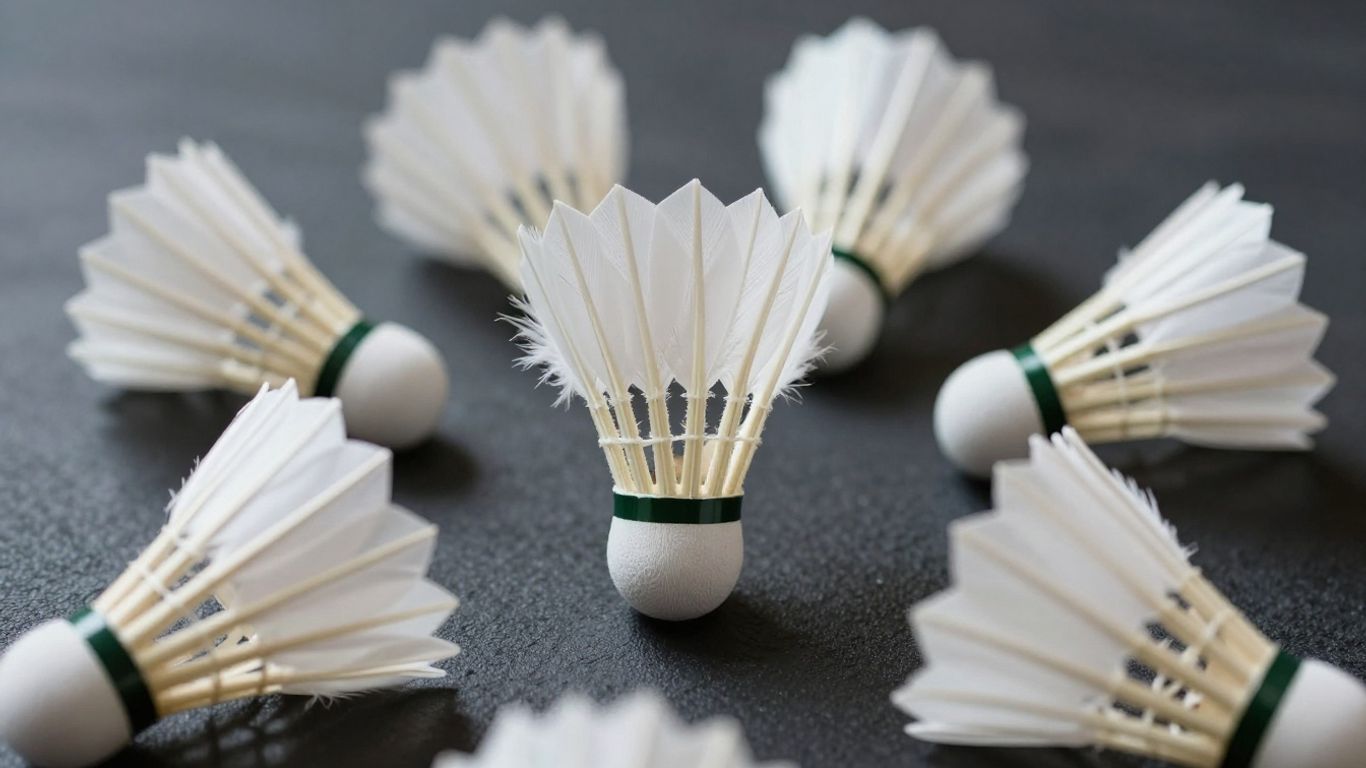
So, you’ve decided to go with feather birdies. Smart move, especially if you’re looking to really feel the game and get that authentic badminton experience. Feather birdies are what the pros use, and for good reason. They just feel different in the air, offering a flight that’s hard to replicate with anything synthetic.
Feather Types and Their Impact on Flight
Not all feathers are created equal, you know? The type of feather used makes a big difference in how the birdie flies. Most high-quality feather birdies use goose or duck feathers. Goose feathers are generally considered a bit more premium. They tend to be stiffer and more uniform, which can lead to a more consistent and predictable flight path. Duck feathers, on the other hand, can be a bit softer and might offer a slightly different feel, sometimes leading to a bit more wobble or a slower descent depending on the cut and how they’re arranged.
- Goose Feathers: Often preferred for their durability and consistent flight. They tend to be more resistant to bending and breaking.
- Duck Feathers: Can offer a slightly softer feel and might be more common in mid-range or practice birdies.
It’s not just the type of bird, but also how the feathers are prepared and attached. The way they’re cut and glued into the cork base really matters for aerodynamics. You’ll notice that the skirt of feathers is designed to create drag, which slows the birdie down and makes it drop more sharply. A well-made feather birdie will have a clean, stable flight, without too much flutter.
Identifying Premium Feather Birdies
How do you spot a really good feather birdie? It’s a bit of an art, but there are some clues. First off, look at the feathers themselves. Are they all pretty much the same size and shape? Do they look clean and well-attached to the cork base? You want to see a nice, even skirt. A premium birdie will have feathers that are uniformly spaced and free from nicks or tears.
Here are a few things to check:
- Feather Uniformity: Look for consistent size and shape across all 16 feathers.
- Feather Condition: Check for any signs of damage, bending, or fraying. They should look crisp.
- Base Attachment: Ensure the feathers are securely glued to the cork base, with no gaps.
- Brand Reputation: While not everything, established brands often have better quality control.
Sometimes, you can even feel the difference. A good birdie will feel balanced in your hand. When you hit it, it should have a satisfying ‘thwack’ sound and a clean trajectory. If it feels wobbly or makes a dull sound, it might not be top-tier.
Feather Birdie Durability and Care
Okay, let’s be real: feather birdies aren’t exactly built to last forever, especially compared to their synthetic cousins. They’re delicate. Hitting them hard, especially with mis-hits that catch the feathers, can cause them to bend, break, or even fall out. This is where proper care comes in. Keeping your feather birdies in good condition can significantly extend their lifespan and maintain their flight performance.
One of the biggest enemies of feather birdies is dryness. When the feathers dry out, they become brittle and are much more likely to snap. This is why storing them in a slightly humid environment is key. Many players keep their birdies in a sealed tube with a damp paper towel or a special humidifier pack. Just make sure it’s not too damp, or you’ll get mold!
Here’s a quick rundown on keeping them in shape:
- Storage is Key: Always store them in their original tube, upright. Avoid leaving them in hot cars or direct sunlight.
- Humidity Control: Use a humidifier pack or a slightly damp paper towel in the tube to prevent brittleness.
- Gentle Handling: Try to hit the birdie cleanly. Avoid smashing it into the net or ground if you can help it.
- Inspect Regularly: Before playing, give your birdies a quick look-over for any damage.
If you notice a feather is slightly bent, you might be able to gently bend it back. But if it’s broken or severely damaged, it’s probably time to retire that birdie. Using a damaged birdie can mess with your game and make it harder to practice accurately.
Selecting Synthetic Badminton Birdies
Alright, let’s talk about the synthetic badminton birdies, often called nylon birdies. These are the workhorses of the badminton world, especially if you’re just starting out or playing a lot of casual games. They’re built tough, which is a big plus.
Nylon Birdie Construction and Flight
So, how are these things actually made? Most synthetic birdies have a cork base, kind of like their feather cousins. But instead of feathers, they’ve got a plastic or nylon skirt. This skirt is designed to fly a bit like a feather one, but it’s a whole different ballgame in terms of feel and performance. The flight path can be a little more predictable, sometimes a bit faster off the racket, and they don’t slow down quite as much in the air. It’s not the same delicate float you get with a good feather birdie, but it gets the job done.
Durability and Consistency of Synthetic Birdies
This is where synthetic birdies really shine. They can take a beating. You can smack them around, hit them hard, and they’ll generally hold up way longer than a feather birdie. This means you’re not constantly replacing them, which saves money in the long run. Plus, they tend to be pretty consistent. You know what you’re going to get with each shot, which is great for practice. They aren’t as affected by things like humidity or temperature either, so they perform pretty much the same no matter the weather.
When to Opt for Synthetic Birdies
When should you grab a synthetic birdie instead of a feather one? Well, if you’re a beginner, these are usually the way to go. They’re more forgiving and won’t break the bank when you inevitably miss-hit a few. They’re also perfect for practice sessions where you’re hitting a ton of shuttles. If you play outdoors, where wind can be a factor and you need something a bit more robust, synthetic is often the better choice. And honestly, for casual games with friends, they’re just more practical. You don’t need to worry about them getting damaged as easily, and they’ll last you through many games.
Here’s a quick rundown:
- Beginner Play: Easier to control and more forgiving.
- Practice Sessions: They last longer, so you hit more for your money.
- Outdoor Games: Less affected by wind and more durable.
- Budget-Conscious Players: Cheaper in the long run due to durability.
While feather birdies offer that classic, precise flight preferred by pros, synthetic birdies provide a reliable and tough alternative that’s perfect for everyday play and learning the ropes. Don’t underestimate their value just because they aren’t made of feathers.
Decoding Badminton Birdie Speed
When you’re looking at shuttlecocks, you’ll notice numbers on the tube, usually between 74 and 79. This isn’t just some random code; it actually tells you about the shuttlecock’s speed. Understanding these speed ratings is key to picking the right birdie for your game and the conditions you’re playing in. It might seem a bit technical at first, but it makes a big difference in how the game feels and plays out.
Understanding Speed Ratings
So, what do those numbers actually mean? Generally, a higher number indicates a faster shuttlecock, while a lower number means it’s slower. This speed rating is determined by how the shuttlecock performs under specific conditions, usually related to temperature and altitude. For instance, a speed rating of 78 is often considered the standard and is popular worldwide. Slower speeds (like 74 or 75) are typically used in hotter climates or at higher altitudes where the air is thinner, causing the shuttle to naturally fly faster. Conversely, faster speeds (like 79) are better suited for colder environments or lower altitudes where the air is denser and slows the shuttle down.
Here’s a quick rundown of common speed ratings and their typical uses:
- 74-75: Slow Speed – Best for very hot weather and high altitudes.
- 76: Quite Slow Speed – Suitable for hot weather conditions.
- 77: Moderate Speed – Good for average temperatures at sea level.
- 78: Quite Fast – The most popular choice, good for cooler weather and sea-level play.
- 79: Fast Speed – Ideal for very cold conditions and below sea level.
How Speed Affects Gameplay
The speed of your shuttlecock directly impacts how the game flows. A slower shuttlecock won’t travel as far or as fast after a hit. This can be beneficial if you want more control over rallies or if you’re playing in a smaller indoor space. On the other hand, a faster shuttlecock will zip across the net with more force and cover more distance. This is great for aggressive players who like to hit hard and fast, or for outdoor play where wind can be a factor. Choosing the wrong speed can make the game feel sluggish or uncontrollably wild. For example, using a slow shuttle in a cold, indoor court might mean the shuttle drops too short, making it hard to return shots effectively. Conversely, a fast shuttle in a hot, open-air court could fly out of bounds too easily.
The trajectory and distance a shuttle travels are not just about the force of the hit; they are significantly influenced by the shuttlecock’s inherent speed rating and the environmental conditions. A shuttle’s flight path is a delicate balance between the initial impulse and the forces acting upon it as it moves through the air.
Factors Influencing Birdie Speed
While the speed rating on the tube is a good starting point, several real-world factors can alter how a shuttlecock actually flies. The most significant ones are temperature, air pressure, and altitude. Warmer air is less dense, making the shuttlecock fly faster. Colder air is denser, slowing the shuttle down. Lower altitudes generally have higher air pressure, which also slows the shuttle, while higher altitudes have lower pressure, allowing the shuttle to fly faster. Humidity can also play a small role. Because of these variables, a speed rating of 78 might feel different depending on whether you’re playing indoors in a climate-controlled gym or outdoors on a breezy day. It’s why experienced players often have a preferred speed for different playing environments. You can find a wide range of shuttlecocks designed for various conditions at badminton equipment suppliers.
Here are some general rules of thumb:
- High Temperature / High Altitude: Opt for a faster shuttlecock (higher number).
- Low Temperature / Low Altitude: Choose a slower shuttlecock (lower number).
- Windy Conditions: A slightly faster shuttlecock might be needed to counteract the wind’s effect.
Paying attention to these factors will help you select a shuttle that behaves predictably, making your game more enjoyable and consistent.
Brand Spotlights for Badminton Birdies
When you’re looking to buy shuttlecocks, you’ll notice a few big names pop up again and again. These brands have built their reputations over time, and for good reason. They generally offer a good mix of quality and consistency, whether you’re after those fancy feather ones or the more durable nylon types.
Exploring Top Feather Birdie Brands
For feather birdies, Yonex is a name you’ll see everywhere, and they’re pretty much the gold standard for many players. They use good goose feathers, and their different models are designed for specific speeds and conditions. You’ve got options like the Aeroclub ACB-TR, which is good for practice and tournaments, and the Aerosensa 2 AS2, known for its solid cork and quick recovery, making it great for powerful shots. Then there’s Babolat, which also puts out some high-quality feather shuttles, like their Speed 76, made with Taiwanese goose feathers. They aim for durability and a moderate speed. Adidas also has its Flieger FS5, using C goose feathers, which they say gives you better resistance and flight. These are generally for players who are getting more serious about their game and want that authentic feel.
Notable Synthetic and Hybrid Birdie Options
While feather birdies get a lot of attention, synthetic options are super important too, especially for casual play or when you just don’t want to worry about breaking a shuttle every few points. Brands like FZ Forza and Li-Ning often have good synthetic lines. These are usually made from nylon and have a rubber or cork base. They tend to be more forgiving on your wallet and last a lot longer. They might not have the exact same flight path as a feather birdie, but for practice or just hitting around, they’re perfectly fine. Some brands also play around with hybrid designs, trying to get some of the feel of feather with the durability of nylon. It’s worth checking out what they have, especially if you’re a beginner or play often without a coach.
Finding Value in Badminton Birdie Brands
It’s not always about the biggest name. Sometimes, you can find really good value from lesser-known brands. For instance, Golden Eagle is often mentioned as a more budget-friendly option for feather shuttlecocks. Buying in bulk from these brands can really save you money if you go through a lot of birdies. It’s a good idea to look at reviews and maybe even try out a few different brands if you can. What works for one person might not be the best for you, and sometimes a less expensive shuttle can perform surprisingly well. Nydhi.com is one place that often has good deals on various brands, including both feather and nylon options, sometimes with free shipping if you buy enough. It pays to shop around a bit to see who has what at a price you’re comfortable with.
Optimizing Your Badminton Birdie Experience
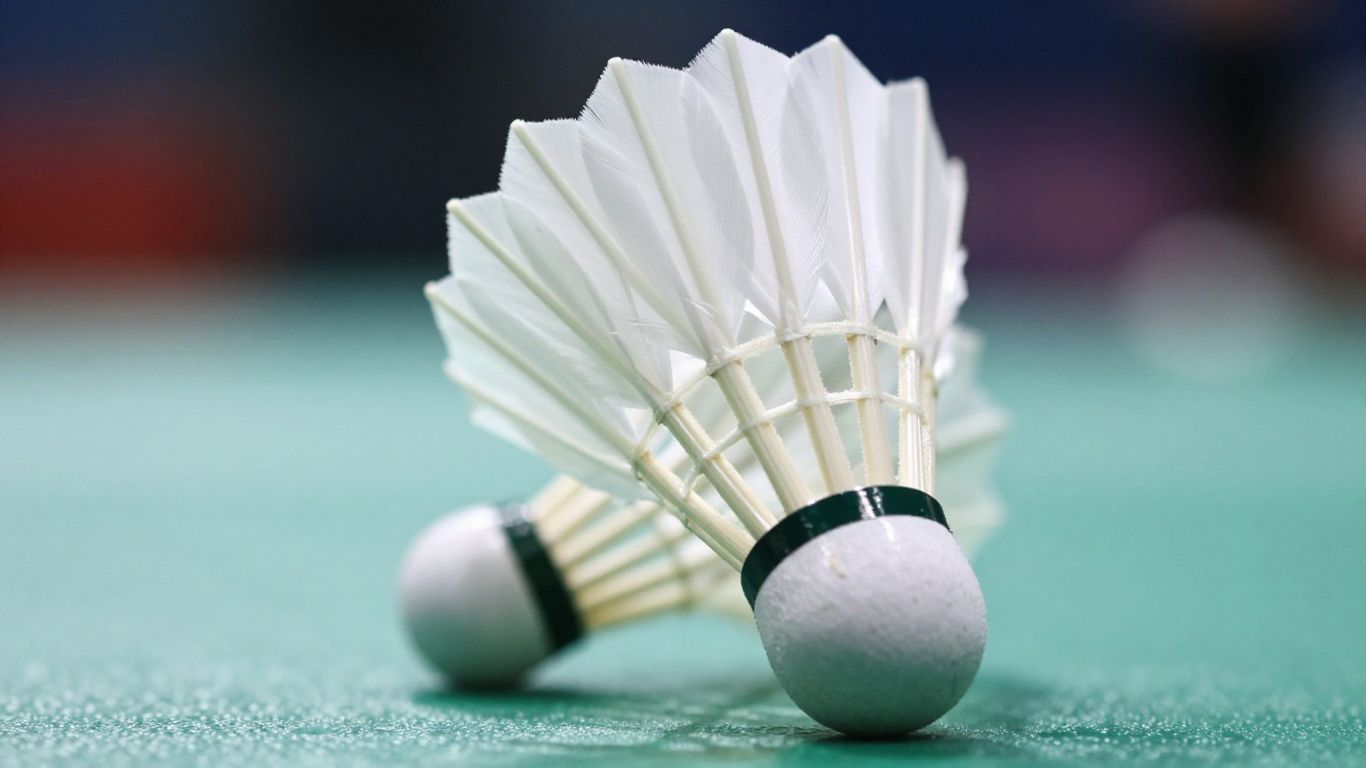
So, you’ve picked out the perfect birdie, whether it’s a fancy feather one or a tough synthetic. Now what? Keeping your birdie in good shape means it’ll play better and last longer. It’s not rocket science, but a little care goes a long way.
Proper Storage for Longevity
Think of your birdies like delicate flowers – they need the right environment. Keeping them in their original tube is the absolute best way to protect them. Don’t just toss them in your bag or a random drawer. The tube keeps the feathers (if you have feather ones) from getting bent out of shape and protects the cork base. If you’ve got a bunch of birdies, stacking the tubes is fine, but try not to put anything heavy on top. For feather birdies, a little bit of humidity is actually good; it keeps the feathers from getting brittle. So, storing them in a place that’s not bone dry, like a closet rather than a super-heated garage, is a smart move.
Maintenance Tips for Consistent Flight
Even with good storage, things can happen. If you notice your feather birdies are getting a bit dry and brittle, you can try a trick: place the tube in a slightly damp (not wet!) towel for a few hours. This can help rehydrate the feathers. For both feather and synthetic birdies, check the cork base. If it gets damaged, the flight will be all over the place. Sometimes, a little bit of tape can fix a minor chip, but usually, a damaged cork means it’s time for a new birdie.
When to Replace Your Badminton Birdie
Knowing when to say goodbye to a birdie is part of the game. It’s not just about saving money; it’s about playing your best. If a feather birdie starts losing feathers, or the feathers are noticeably bent or broken, its flight will be unpredictable. For synthetic birdies, look for cracks in the skirt or a damaged cork. A birdie that wobbles, flies erratically, or doesn’t travel the expected distance is past its prime. Don’t be afraid to retire a birdie that’s seen better days; a fresh one will make your game much more enjoyable.
Here’s a quick rundown of signs it’s time for a new birdie:
- Feather Birdies: Missing or badly bent feathers, damaged cork.
- Synthetic Birdies: Cracks in the plastic skirt, noticeable dents or damage to the cork.
- Both Types: Inconsistent flight path, reduced speed or distance, visible damage.
Playing with a worn-out birdie can actually hurt your game more than help. It’s hard to practice accurate shots when the equipment itself is unreliable. Think of it as trying to paint a masterpiece with a frayed brush – it’s just not going to turn out right.
Wrapping It Up
So, picking the right shuttlecock really does matter, whether you’re just starting out or you’ve been playing for ages. It’s not just about hitting the birdie back and forth; the type of shuttle you use can actually change how the game feels and how well you play. We’ve looked at the different kinds, like the fancy feather ones that pros love and the tougher nylon ones that can take a beating. Think about where you play, how good you are, and what you want to get out of your game. Getting the right shuttlecock means your practice will be better, and honestly, just more fun. So next time you’re grabbing a new pack of birdies, take a moment to think about what’s best for you. It might just make a bigger difference than you think.
Frequently Asked Questions
What is the main difference between feather and nylon badminton birdies?
Feather birdies are made from real feathers, usually goose or duck, and have a cork base. They fly smoothly and slow down quickly, which makes them great for skilled players who want more control. Nylon birdies are made from plastic and are stronger and last longer. They are better for beginners because they don’t break as easily.
How do I know if a feather birdie is high quality?
A good feather birdie uses straight, strong feathers that are all the same size. The best ones use goose feathers and have a solid cork base. If the feathers are bent, broken, or loose, the birdie won’t fly well. Always check for even feathers and a firm base before buying.
When should I use a nylon badminton birdie instead of a feather one?
You should use a nylon birdie if you are just starting to play, practicing, or playing outside. Nylon birdies last longer and don’t get damaged as quickly as feather ones. They are also less expensive and work well for casual games.
What does the speed rating on a badminton birdie mean?
The speed rating tells you how fast or slow a birdie will fly. Lower numbers (like 75) mean the birdie moves slower, while higher numbers (like 79) mean it moves faster. You should pick a speed based on the temperature, height above sea level, and how fast you want the game to be.
How can I make my badminton birdies last longer?
Keep your birdies in a cool, dry place and away from sunlight. Don’t leave them in your car or outside. For feather birdies, keeping them a little humid can help stop the feathers from getting brittle and breaking. Rotate your birdies during practice to make them wear out evenly.
How do I know when it’s time to replace my badminton birdie?
If your birdie doesn’t fly straight anymore, has broken or missing feathers, or the base is cracked, it’s time to get a new one. For nylon birdies, if the skirt is torn or the base is damaged, replace it for a better game.