
Getting the serve right in badminton is super important, whether you’re playing singles or doubles. It’s how every point starts, and messing it up can give your opponent an easy point. We’ll break down the basic badminton rules on serving so you can get it right every time. It’s not as complicated as it might seem at first glance, and once you get the hang of it, you’ll feel way more confident on the court.
Key Takeaways
- Always serve the shuttlecock below your waist. The lowest rib on your serving side is the general guide.
- Your feet need to stay still during the serve. Don’t lift or drag them until after you’ve hit the shuttle.
- In singles, you serve from the right side when your score is even and the left when it’s odd. In doubles, this rotation is a bit more complex.
- The shuttle must be hit diagonally across the net and land within the opponent’s service court.
- You only get one chance to make a legal serve. If you fault, your opponent gets the point and the serve.
Understanding Badminton Serving Basics

Alright, let’s get down to the nitty-gritty of serving in badminton. It might seem simple, but there are a few key things you need to nail down before you even think about hitting the shuttlecock. Getting these basics right is super important, not just for playing legally, but for actually getting your serve to work for you.
Player Positioning Based on Score
So, where do you stand when you serve? It actually depends on your score. If your score is an even number (0, 2, 4, etc.), you serve from the right side of the court. If your score is odd (1, 3, 5, etc.), you serve from the left side. This rule helps keep things fair and makes sure you’re not always serving from the same spot. It’s a simple system, but sticking to it is key.
Correct Foot Placement During Serve
When you’re serving, your feet are pretty important. Both of your feet need to stay still from the moment you start your serve until you actually hit the shuttlecock. You can’t lift them, drag them, or do any fancy footwork to try and get an advantage. Think of it like standing firm; you want a stable base. Also, make sure your feet don’t touch any of the boundary lines of the service court. It’s all about staying within the lines and keeping your feet planted.
Shuttlecock and Racket Positioning
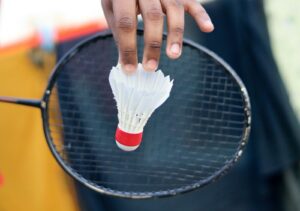
How you hold the shuttlecock and racket matters too. You should hold the shuttlecock at its base, in your open hand. Then, you’ll place it on your racket strings. Keep a gentle but firm grip on the shuttlecock with your bottom fingers and thumb until you’re ready to swing. Your racket head should be pointing downwards when you’re holding the shuttlecock, getting ready for that underhand swing. This setup helps you control the shuttle and aim it properly. It’s all about setting yourself up for a good, clean hit. Remember, the entire serve motion needs to be smooth and continuous; no pausing or hesitating allowed. This is a core rule for badminton doubles play.
The serve is the shot that starts every rally. Getting it wrong means giving your opponent a free point, so it’s worth spending time to get it right. A good serve can put your opponent on the back foot immediately.
Executing a Legal Badminton Serve
Pulling off a proper serve in badminton isn’t just about swinging the racket and hoping for the best. There’s a process to it, and if you skip any part, you could end up giving away points before the rally even starts. Let’s break down exactly what you need to do for a serve that’s not just effective—but legal each time.
Underhand Swing Technique
When you serve in badminton, your racket must swing underhand—not over your shoulder or from the side. This means the racket head stays below your grip hand at the moment of impact with the shuttlecock. The motion should feel smooth and natural, a bit like tossing a ball lightly to a friend.
- Hold the racket so your palm faces upward but keeps a relaxed grip.
- Bring your racket back gently and swing it forward in one fluent, underhand motion.
- Hit the shuttle below your waist—that’s roughly at the bottom of your ribcage.
It’s tempting for beginners to try a more dramatic swing, but sticking to underhand keeps your serve legal and helps with control.
Smooth and Continuous Motion
Serving in one uninterrupted motion is a rule that sometimes trips up new players. The serve has to be done with a steady movement from start to finish. No stops, delays, or wobbles once you’ve started the service action.
Here’s how you can practice this:
- Focus on a steady tempo—don’t let nerves make you rush or hesitate.
- Resist the urge to fake out your opponent by pausing mid-serve.
- Each serve should flow naturally from set-up to strike.
A fluid serve not only keeps you within the rules, but also sets you up for a stronger start to the rally. Consistency is your friend here.
Serving Diagonally Across the Net
Every legal serve in badminton must land in the correct diagonal service box on your opponent’s side. This rule exists to keep things fair and predictable. Here’s what you need to remember:
- Stand in your service box (right or left, depending on your score).
- Make sure you aim for your opponent’s corresponding service area, not directly in front of you.
- If you stand on the right, serve to your opponent’s left box—and vice versa.
| Server’s Court | Target Service Box |
|---|---|
| Right | Opponent’s Left |
| Left | Opponent’s Right |
Skipping these basics leads to a lot of easy faults. So, before you even think about spinning or slicing your serve, make sure you’ve got the direction down pat.
Getting the hang of the underhand technique, a smooth motion, and diagonal placement will get you serving like you belong on court—not just spectating from the sidelines.
Key Badminton Serving Faults
Alright, let’s talk about the stuff that can go wrong when you’re trying to get that serve in play. Nobody likes making faults, but knowing what they are is half the battle. It’s all about keeping the game fair and moving, and these rules help with that. Messing up a serve means your opponent gets a point, and nobody wants to hand those out for free.
Serving Above Waist Height
This is a big one. You absolutely have to hit the shuttlecock below your waist. Think of your lowest rib on the side you’re serving from – that’s roughly the line. It doesn’t matter if you’re tall or short; the rule is the same. This stops players from getting an unfair advantage by serving from way up high. It keeps things consistent and fair for everyone.
Foot Faults and Boundary Lines
When you serve, your feet have to stay put. Both of them need to be inside the service court, and they can’t move or lift off the ground until you’ve actually hit the shuttle. Also, make sure your feet aren’t touching any of the boundary lines of the service court. Stepping on a line or out of bounds is an automatic fault. It sounds simple, but in the heat of the moment, it’s easy to forget.
Shuttlecock Landing Outside Service Court
This is pretty straightforward. Your serve has to land in the correct service court. For singles, it’s the diagonal court opposite you. For doubles, it depends on the rotation. If it lands outside those lines, or if it hits the net and doesn’t go over into the correct court, it’s a fault. You’ve got to be accurate with where you’re aiming. A good serve clears the net and lands right where it should, making it tough for your opponent to return. If you’re struggling with accuracy, practicing your badminton serves regularly is key.
Making a fault on a serve means the rally ends immediately, and your opponent scores a point. It’s a quick way to lose momentum, so paying attention to these details is super important for winning games.
Service Rules for Singles Play
When you’re playing singles in badminton, the serving rules are pretty straightforward, but you’ve got to pay attention. It’s all about making sure you’re in the right spot and sending the shuttlecock to the right place. Mess this up, and you’re handing your opponent a point, which nobody wants.
Serving from the Correct Service Court
This is a big one. Where you stand to serve depends entirely on your score. If your score is even (0, 2, 4, etc.), you serve from the right service court. If your score is odd (1, 3, 5, etc.), you serve from the left service court. You always serve diagonally across the net to your opponent’s service court. Remember, the goal is to get the shuttlecock into the opponent’s service box, not out of bounds or into the net.
Scoring and Service Continuation
In singles, you serve until you or your opponent wins the rally. If you win the rally, you get a point, and you continue to serve, but you switch service courts based on your new score (even or odd). If you lose the rally, you don’t get a point, and the serve goes over to your opponent. They will then serve from whichever service court is correct for their score.
Single Serve Attempt Rule
Unlike some other sports, in badminton singles, you only get one shot at serving. There are no second chances. If you miss your serve – maybe it goes out, hits the net and doesn’t go over, or you commit a fault like serving too high – that’s it. The rally ends immediately, and your opponent gets the point and the serve. This rule really emphasizes the need for a consistent and accurate serve. You can’t afford to be sloppy here.
Navigating Doubles Badminton Serving
Playing doubles in badminton brings a whole new layer of strategy, especially when it comes to serving. It’s not just about getting the shuttle over the net; it’s about coordinating with your partner and understanding specific rules that apply only to doubles. The key is communication and knowing your role.
Serving Rotation in Doubles
In doubles, the serving order is a bit more involved than in singles. When your side wins the serve back, the player who is currently in the right service court will serve. This means the server might change even if your side didn’t lose the serve previously. It’s all about who is in the right-hand box when you gain the serve.
Here’s a quick rundown:
- If your side wins the rally and gains the serve, the player in the right service court serves.
- If your side wins the rally and the previous server was in the left service court, they now serve from the right.
- If your side wins the rally and the previous server was in the right service court, they continue serving from the left.
This rotation ensures both players get a chance to serve from different positions.
Receiver’s Position in Doubles
In doubles, only the player directly opposite the server can receive the serve. This means the receiver must stand in the service court diagonally opposite the server. Your partner, the non-receiver, has no active role during the serve itself and can stand anywhere on their side of the court, though they usually position themselves to be ready for the next shot. This rule helps maintain fairness and prevents one side from having too much of an advantage [bd61].
Doubles Service Court Boundaries
The service courts in doubles are different from singles. They are shorter and wider. The shuttle must land within these specific boundaries to be a legal serve. If it lands outside the doubles service court, it’s a fault. Remember, the service court you aim for depends on whether you are serving from the right (even score) or left (odd score) side of the court.
The dimensions of the doubles service court are critical. Unlike singles, the sidelines are the inner ones, and the baseline is the same. Always aim for that specific diagonal box. Missing it means you lose the point.
Getting the serve right in doubles is a team effort. Practice with your partner, understand the rotation, and always be aware of where the shuttle needs to land. It’s a foundational skill that can set your team up for success.
Advanced Serving Considerations
Net Clearance for Effective Serves
Getting the shuttlecock over the net is the first hurdle, but how high should you aim? You want enough net clearance so your serve doesn’t hit the net and fall back into your own court, which is an automatic fault. But you also don’t want to serve it too high, giving your opponent an easy chance to smash it back down. A good serve floats just over the net, making it awkward for the receiver. Think of it as a delicate balance; too low and it’s a fault, too high and you’re setting up your opponent for an easy win. It’s all about finding that sweet spot that makes their return difficult.
Avoiding Service Faults
Faults can really kill your momentum. The most common ones we’ve touched on are serving above the waist, foot faults (lifting your feet or stepping over the line before you hit the shuttle), and landing the shuttle outside the correct service court. Another sneaky one is not hitting the shuttle in a continuous motion – you can’t pause or fake a serve. Remember, you only get one shot at a legal serve. If you mess up, the point goes to the other side. Practicing these basics until they’re second nature is key to playing a clean game. It’s not just about power; it’s about precision and following the rules to the letter.
Consequences of Consecutive Faults
Committing a single fault means you lose the rally and the serve goes to your opponent. But what happens if you keep making mistakes? If you rack up two service faults in a row, you don’t just lose the serve; you also give your opponent a point. This can quickly change the game’s momentum, especially in close matches. It really highlights why focusing on consistency and understanding the rules is so important. You don’t want to be giving away free points just because you’re not paying attention to the details. It’s a tough lesson, but a necessary one for any aspiring player looking to improve their badminton singles game.
Making consecutive faults can be demoralizing, but it’s also a great learning opportunity. Instead of getting frustrated, try to analyze what went wrong. Were you rushing? Was your stance off? Identifying the root cause will help you correct it and avoid repeating the same errors. Every fault is a chance to refine your technique and become a more disciplined player.
Serving Up Success: Your Badminton Journey Continues
So, we’ve gone over the ins and outs of serving in badminton, for both singles and doubles. It might seem like a lot at first, but honestly, it’s mostly about getting the hang of where to stand and how to hit the shuttlecock properly. Practicing these basics will really make a difference when you’re out on the court. Don’t worry if you mess up a few serves; everyone does when they’re learning. Just keep at it, and you’ll find your rhythm. Now you’ve got the knowledge, so go out there, play some games, and enjoy the sport!
Frequently Asked Questions
What’s the main idea behind badminton serving rules?
The main idea is to make sure the game starts fairly. These rules help everyone play by the same guidelines, so no one gets an unfair advantage. It’s all about starting each point with a clear and proper serve.
Where should I stand when I serve, and how do I know which side?
You serve from the right side of your court if your score is even (0, 2, 4, etc.). If your score is odd (1, 3, 5, etc.), you serve from the left side. You always serve diagonally to the opponent’s service court.
What’s the rule about hitting the shuttlecock when serving?
You have to hit the shuttlecock below your waist. Think of it as hitting it from your waist down. Also, your racket head should be pointing downwards when you make contact. It needs to be a smooth, continuous motion, without stopping or pausing.
Can I move my feet while serving?
Nope! Both of your feet need to stay still on the ground from the moment you start your serve until after you hit the shuttlecock. You can’t lift them or drag them. This keeps things steady and fair.
What happens if I mess up my serve?
In badminton, you only get one chance to serve. If you make a mistake, like hitting it out of bounds, hitting it into the net, or serving it too high, it’s called a fault. Your opponent then gets the serve and a point.
How does serving work differently in singles versus doubles?
In singles, you serve from the right side when your score is even and the left when it’s odd, and you keep serving as long as you win points. In doubles, the rules for who serves and when get a bit more complex, involving rotations with your partner based on who wins points.