
So, you want to get better at badminton? That’s cool. It’s a great sport, fast-paced and fun. But like anything, there are rules. Knowing these 5 rules of badminton can really change how you play, making it smoother and fairer for everyone. Let’s break down some of the basics so you can step onto the court feeling more confident.
Key Takeaways
- In rally point scoring, every rally counts for a point, no matter who served. The winner of the rally gets the point and serves next. Games go to 21 points, and you need to win by two, with a cap at 30.
- When you serve in singles, where you stand depends on your score. If it’s even, serve from the right. If it’s odd, serve from the left. Always serve diagonally into the opponent’s service box.
- For singles, the court lines are different than doubles. You use the inner side lines and the back boundary line. The outer side lines are only for doubles, so they’re out in singles.
- A legal serve needs to be hit below your waist (lowest rib) and the contact point shouldn’t be higher than 1.15 meters. Your racket should point down, and both your feet need to stay still in the service court. The receiver must be ready.
- Don’t touch the net with your racket or body while the shuttle is in play. If you do, it’s a fault. Also, you can’t hit the shuttle twice in a row or hit it before it crosses the net.
1. Rally Point Scoring
Alright, let’s talk about how you actually score points in badminton. It’s pretty straightforward once you get the hang of it, and honestly, it makes the game way more exciting.
In rally point scoring, every single rally played results in a point being awarded. Yep, you heard that right. It doesn’t matter who served; if you win the rally, you get a point. This is a big change from older systems where only the server could score. It means the game is always moving, and you’re always in with a chance to score, no matter what.
Here’s the breakdown:
- Win the rally, win a point. Simple as that.
- The winner of the rally also gets to serve next. This adds a nice little strategic layer to things.
- Games are played to 21 points. You need to reach 21 first.
- You must win by at least two points. So, if it’s 20-20, you can’t just win 21-20. You have to keep playing until someone is up by two, like 22-20 or 23-21.
- There’s a cap, though. If things get really tight and you reach 29-29, the very next point wins the game. So, 30-29 is the highest possible score.
This rally point system really keeps you on your toes. There’s no coasting, and every shot matters. It rewards consistent play and punishes mistakes more directly, making for faster, more dynamic matches.
To win the whole match, you typically need to win the best of three games. So, if you win the first two games, you’re done. It’s all about who can adapt and perform best over those crucial games.
2. Service Court Positioning
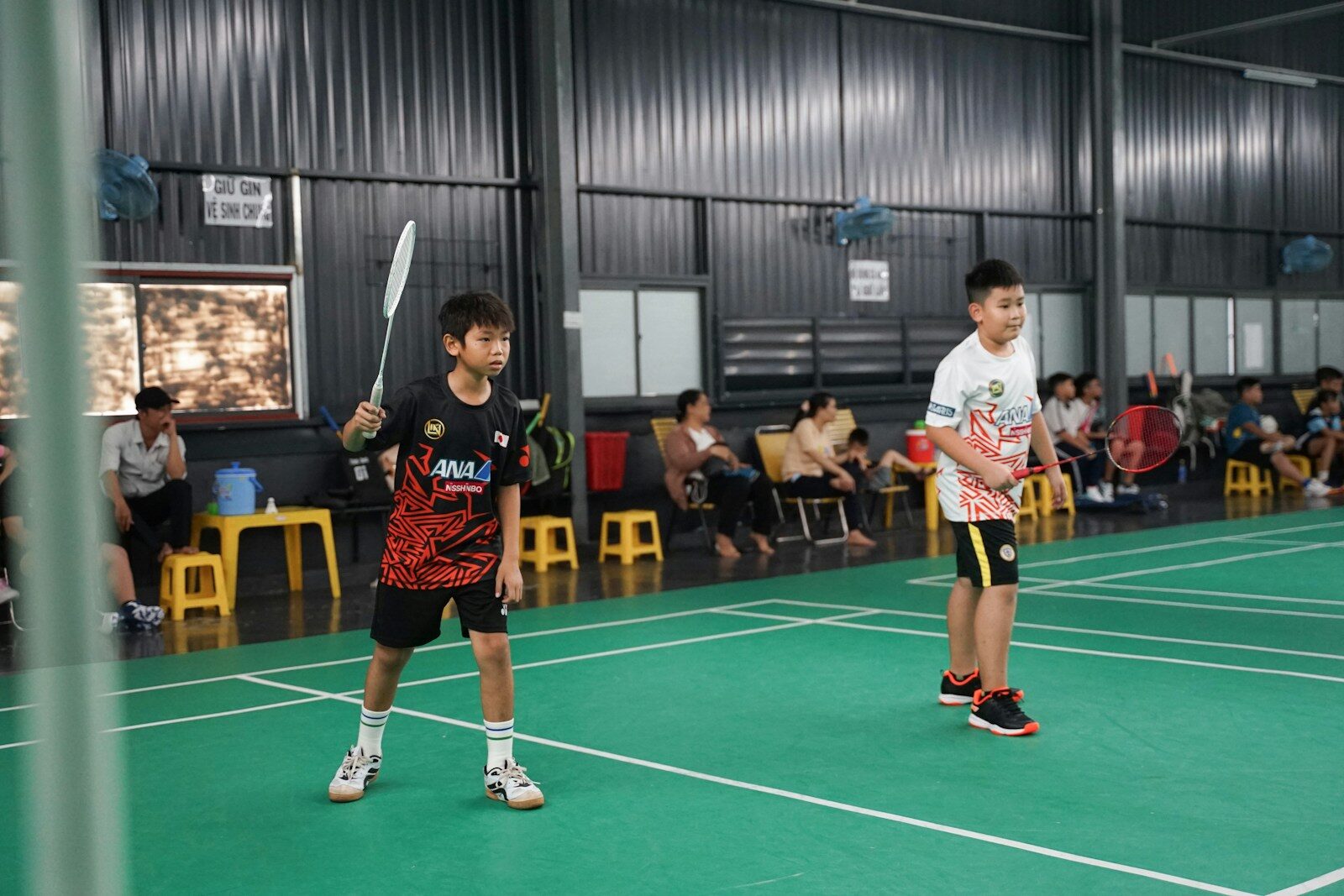
Alright, let’s talk about where you stand when you serve in singles. It’s not random, and it’s directly tied to your score. This is super important because serving from the wrong spot is an instant fault.
Here’s the breakdown:
- Even Score: If your score is even (like 0, 2, 4, 6, etc.), you serve from the right service court. Think of it as the ‘even’ side.
- Odd Score: If your score is odd (like 1, 3, 5, 7, etc.), you serve from the left service court. This is the ‘odd’ side.
Remember, no matter which side you’re serving from, the shuttle has to travel diagonally across the net and land in the opponent’s corresponding service court. So, if you’re serving from the right, it goes to their left service court, and vice versa. It sounds simple, but it’s easy to get mixed up when the game gets intense.
Getting your service court positioning right from the start sets the tone for the rally. It’s a basic rule, but messing it up means you’ve already lost the point before the shuttle is even properly in play. Pay attention to the score!
3. Court Boundaries
Knowing where the lines are is pretty important in badminton, otherwise, you’re just guessing! For singles play, the court is a bit narrower than in doubles. You’ve got the full length, which is 13.41 meters, but the width shrinks down to 5.18 meters. This means you really have to cover your ground.
Here’s the breakdown:
- Singles Court Width: 5.18 meters (the inner side lines are the ones that count).
- Singles Court Length: 13.41 meters (the back boundary line is always in play).
Basically, if the shuttle lands on any part of these lines, it’s considered in. If it lands outside of them, that’s a fault. It sounds simple, but in the heat of a fast rally, it’s easy to lose track. Keep an eye on those lines!
Remember, in singles, the outer side lines are only used for doubles. For your singles game, they’re out of bounds. Stick to the inner lines for width and the back line for length.
4. Legal Serve Requirements
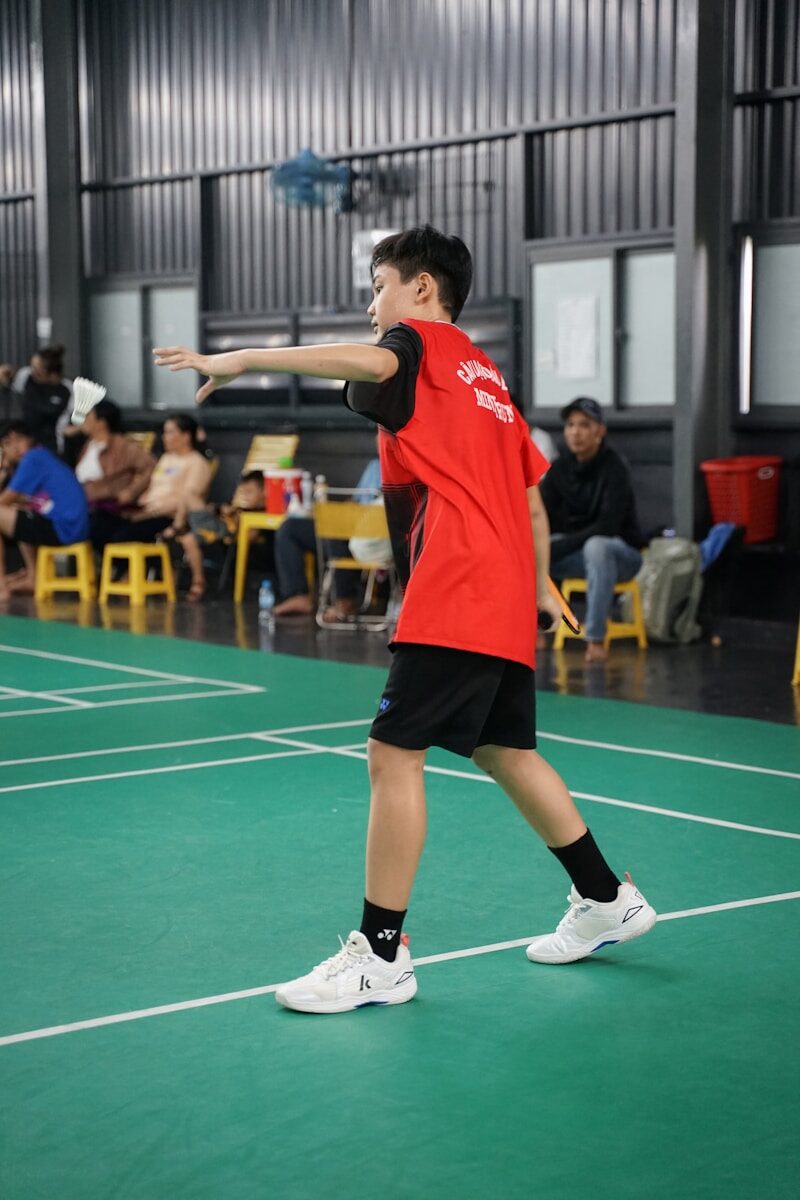
Alright, let’s talk about serving. This is where the game actually starts, and getting it right is super important. A bad serve can hand your opponent a free point before you’ve even broken a sweat. So, what makes a serve legal?
First off, you’ve got to hit the shuttle below your waist. They define your waist as the lowest part of your rib cage, so no high serves allowed. Also, the point where you hit the shuttle can’t be higher than 1.15 meters off the ground. Think of it as keeping the serve low and controlled.
Your racket needs to be pointing downwards when you make contact with the shuttle. This isn’t just for show; it helps keep the serve trajectory low. And here’s a big one: both your feet have to stay put and inside the service court the whole time you’re serving. No shuffling or stepping out!
Here’s a quick rundown of the key requirements:
- Contact Point: Below the waist (lowest rib) and no higher than 1.15 meters from the floor.
- Racket Position: Shaft must point downwards at the moment of impact.
- Footwork: Both feet must remain stationary and within the boundaries of the service court.
- Receiver Readiness: The opponent must be ready to receive the serve before you hit it.
Violating any of these rules means it’s a fault, and your opponent gets a point. It’s pretty straightforward, but easy to mess up if you’re not paying attention. Getting the serve right is a big part of controlling the game from the get-go, and it’s something you’ll want to practice a lot. Remember, a good serve can put your opponent on the defensive right away, setting you up for a winning rally. You can find more details on service rules if you want to dig deeper.
5. Net Touch Fault
Okay, so you’re in the middle of a heated rally, the shuttle’s flying, and you’re trying to make that winning shot. It’s easy to get a little too close to the net sometimes, right? But here’s the deal: you absolutely cannot touch the net while the shuttle is still in play. This applies to your racket, your body, or even your clothes. If any part of you or your equipment makes contact with the net or its posts while the shuttle is live, it’s a fault. That means the rally is over, and your opponent gets a point. It doesn’t matter if you touched it accidentally or if you were trying to reach for a shot. The rule is pretty straightforward to keep things fair and prevent players from interfering with the shuttle’s path.
Think of it this way:
- The net is like a wall that the shuttle has to go over, not through or into.
- Your racket and body need to stay on your side of the net until after you’ve hit the shuttle.
- Even if the shuttle is clearly going to land out, touching the net before it’s dead is still a fault.
It’s one of those rules that seems simple, but in the heat of the moment, it can definitely catch you out. Keep your distance and focus on making clean shots over the net, not into it!
Wrapping It Up
So there you have it – five key things to keep in mind when you’re out on the badminton court. It’s not just about hitting the shuttle back and forth, right? It’s about playing fair, respecting the other players, and just generally making the game more fun for everyone involved. Whether you’re just starting out or have been playing for a while, remembering these simple points can make a big difference. Keep practicing, keep playing with good spirit, and you’ll find yourself enjoying every game a whole lot more. Now go hit the court!
Frequently Asked Questions
Why is it so important to know the basic rules of badminton?
Knowing the rules helps make sure games are fair and fun for everyone. It stops confusion and arguments, and shows respect for your opponents and the game itself. Plus, it makes you a player others will want to play with!
What happens if the shuttlecock lands outside the court lines?
If the shuttle lands outside the lines, or if you hit it out, the rally ends. The other player gets a point. This is why knowing the court boundaries is super important!
Can I touch the net with my racket while the shuttle is in play?
Nope, you can’t touch the net with your racket or any part of your body while the shuttle is being played. Doing so is a fault, and the other player wins the point.
When do I serve from the right or left side of the court?
It depends on your score! If your score is an even number (like 0, 2, 4), you serve from the right side. If your score is odd (like 1, 3, 5), you serve from the left side. You always serve diagonally into the other side’s service box.
What are the requirements for a legal serve?
A legal serve needs to be hit below your waist, with the racket head pointing down. Both your feet must stay still in the service box, and you must hit the shuttle below 1.15 meters from the floor. The person receiving must be ready too!
What is rally point scoring?
Rally point scoring means every single rally results in a point, no matter who served. The player who wins the rally gets a point and gets to serve next. This makes games exciting and fast!