
Ever wondered about the exact real estate needed for a good game of badminton? It’s not just about hitting the shuttlecock back and forth; the size of the playing area actually matters a lot. Whether you’re playing singles or doubles, or just curious about the specs, knowing the dimensions of a badminton court is pretty important. Let’s break down the size of a badminton court, so you know exactly what you’re working with.
Key Takeaways
- A standard badminton court is 44 feet (13.4 meters) long.
- The width differs for singles and doubles: 17 feet (5.18 meters) for singles and 20 feet (6.1 meters) for doubles.
- The net height is consistently 5 feet (1.524 meters) at the center and 5 feet 1 inch (1.55 meters) at the sides.
- Service lines and boundary lines are specific to singles and doubles play, affecting the usable area.
- Understanding the size of a badminton court is vital for fair play, accurate construction, and strategic gameplay.
Understanding the Size of a Badminton Court
So, you want to know about badminton court sizes? It’s not just about hitting a shuttlecock back and forth; the space you’re playing on actually matters quite a bit. The dimensions of a badminton court are precisely defined to make sure every game is fair and exciting. It doesn’t matter if you’re a pro or just playing for fun in the park, these measurements are the standard. They affect how players move, the strategies they use, and even how accurate their shots need to be.
Official Court Dimensions for Badminton
When we talk about an official badminton court, we’re talking about a specific rectangle. It’s 44 feet long, which is about 13.4 meters. That length stays the same whether you’re playing singles or doubles. What changes is the width, and that’s a pretty big deal for how the game feels.
Key Measurements for Fair Play
To keep things fair, there are a few key lines and distances that are super important. You’ve got the sidelines, the baselines, and then the service lines. These lines create different zones on the court, and knowing where they are is vital for serving and playing rallies. It’s all about making sure neither player gets an unfair advantage.
Impact of Court Size on Gameplay
Think about it: a wider court for doubles means more ground to cover, more teamwork needed, and different defensive tactics. A narrower court for singles can lead to quicker rallies and requires players to be really sharp with their placement. The size really shapes the pace and style of the game you’ll experience.
The exact measurements aren’t just random numbers; they’ve been figured out over time to create the best possible playing experience. They balance the need for players to move with the challenge of hitting accurate shots.
Singles Versus Doubles Court Dimensions
So, you’re getting into badminton, and you’ve noticed the court seems to change a bit depending on whether you’re playing one-on-one or with a partner. That’s totally right! The main difference you’ll see is in the width of the playing area. It’s pretty neat how these small adjustments can really change the feel of the game.
Width Differences for Singles Play
When it’s just you against one other person, the court gets a little narrower. We’re talking about a width of 17 feet (5.18 meters) for singles matches. This smaller playing space means you’ve got to be quicker on your feet and more precise with your shots. There’s less room to cover, so every hit counts, and you’ll find yourself moving side-to-side a lot more. It really makes for some intense rallies!
Width Differences for Doubles Play
Now, when you bring in a teammate and play doubles, the court opens up a bit. The width expands to 20 feet (6.1 meters). This extra space is there to give both players on a side room to maneuver and work together. It changes the strategy quite a bit, as you’ll need to cover more ground and coordinate with your partner. Think of it as more teamwork and wider angles for shots.
Consistent Length for All Matches
Here’s a cool thing: no matter if you’re playing singles or doubles, the length of the badminton court stays exactly the same. It’s always 44 feet (13.4 meters) from baseline to baseline. This consistency means that while the width might change the dynamics of movement and strategy, the overall distance you need to cover from front to back remains constant. It’s a good balance that keeps the core challenge of the game intact.
| Match Type | Court Width (Feet) | Court Width (Meters) |
|---|---|---|
| Singles | 17 | 5.18 |
| Doubles | 20 | 6.1 |
The subtle shift in court width between singles and doubles isn’t just a random number. It’s a deliberate design choice that shapes how players move, strategize, and interact within the game. Understanding these differences is key to appreciating the nuances of each format.
Detailed Badminton Court Measurements
So, you want to know the nitty-gritty about how big a badminton court actually is? It’s not just a random rectangle; there are specific measurements that make all the difference for a fair game. Let’s break down the key dimensions you need to know.
Court Length in Feet and Meters
First off, the length. No matter if you’re playing singles or doubles, the court’s length stays the same. It’s a solid 44 feet (13.4 meters) from one baseline to the other. This consistent length means players have the same amount of space to cover front-to-back in any match.
Court Width in Feet and Meters
This is where things get interesting, as the width changes depending on whether it’s a singles or doubles match. For singles, the court is narrower, measuring 17 feet (5.18 meters) wide. This makes the game more about precise shots and covering ground quickly. When you switch to doubles, the court opens up to 20 feet (6.1 meters) wide. This extra space allows for more dynamic play and teamwork between partners. It’s pretty neat how a few feet can change the whole feel of the game.
Service Line Distances Explained
These lines are super important for serving, and they have their own specific measurements. The short service line is located 6 feet 6 inches (1.98 meters) from the net. This is the line you can’t cross when you serve in singles, and it’s a key boundary for doubles serves too. For doubles, there’s also a long service line that’s 2 feet 6 inches (0.76 meters) from the back boundary line. This line dictates where a doubles serve must land to be considered in bounds. Getting these lines right is key for a proper badminton court setup.
Understanding these specific measurements is what separates a casual backyard game from a properly regulated match. It’s all about creating a level playing field where skill, not just space, determines the winner.
Here’s a quick rundown of the main dimensions:
- Length: 44 feet (13.4 meters)
- Width (Singles): 17 feet (5.18 meters)
- Width (Doubles): 20 feet (6.1 meters)
- Short Service Line to Net: 6 feet 6 inches (1.98 meters)
- Long Service Line to Baseline (Doubles): 2 feet 6 inches (0.76 meters)
Beyond the Playing Area: Additional Court Specifications
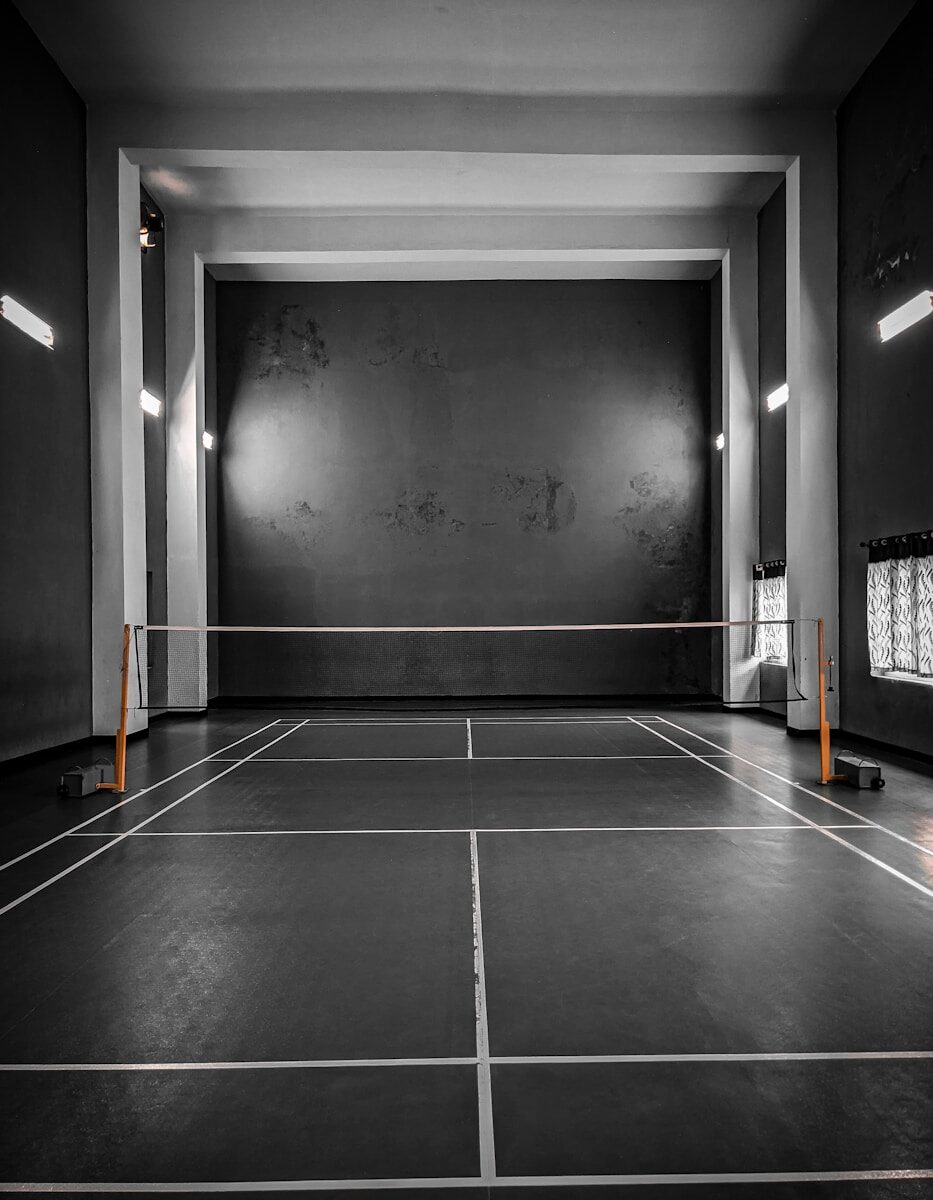
So, we’ve talked about the lines on the court, but what about everything else that makes a badminton court official? It’s not just about the playing space itself. There are a few other bits and pieces that are pretty important for making sure the game is played right and safely.
Net Height Standards
The net is obviously a big part of badminton, right? It’s what separates the two sides of the court. For official matches, the net has to be a specific height. It’s actually a little higher at the posts than it is in the middle.
- At the posts (the sides): 1.55 meters (about 5 feet 1 inch)
- At the center: 1.524 meters (about 5 feet)
This slight dip in the middle is intentional and part of the official rules. It makes those tricky shots over the net a bit more challenging and exciting.
Line Width and Visibility
Those lines we discussed earlier? They aren’t just drawn on randomly. They have a specific width to make sure they’re clearly seen by players and officials.
- Standard Line Width: All boundary lines, including the sidelines, baselines, and service lines, should be 40 millimeters (about 1.5 inches) wide.
- Color: Typically, these lines are a contrasting color to the court surface, often white or a bright color, to stand out.
Good visibility here is key. You don’t want players second-guessing if a shot was in or out because the lines are hard to see. It’s all about fair play.
Required Clearance Around the Court
Think about when a player really goes for a shot, maybe lunging or diving. They need a bit of space to do that without bumping into something. That’s where the clearance area comes in. It’s the space outside the actual court boundaries.
For official tournaments, there’s a recommended minimum space around the court. This usually means at least 1 meter (about 3 feet) on the sides and 1.5 meters (about 5 feet) behind the baseline. This extra room is super important for player safety and allows for those dynamic movements without worry.
This buffer zone is often overlooked, but it’s a big deal for preventing injuries and keeping the game flowing smoothly. It gives players the freedom to move without feeling boxed in.
Total Area and Its Significance
So, we’ve talked about the length and width, but what does that all add up to? Calculating the total area of a badminton court is pretty straightforward once you know the dimensions for singles and doubles. It’s not just about the lines on the floor; this total space has a real impact on how the game feels and plays out.
Calculating the Singles Court Area
For singles matches, the court is narrower, measuring 17 feet wide and 44 feet long. This gives us a total playing area of 748 square feet. It’s a more focused space, demanding quick footwork and precise shots.
Calculating the Doubles Court Area
When you switch to doubles, the court opens up to its full 20-foot width, while the length stays the same at 44 feet. This results in a larger total area of 880 square feet. That extra bit of width really changes things, requiring more movement and teamwork to cover the ground.
Why Total Area Matters for Play
Think about it: a bigger court means more ground to cover. In doubles, that extra space means players have to be more aware of their partner’s position and cover wider angles. It changes the pace and strategy quite a bit. The total area dictates the kind of rallies you’ll see and the physical demands on the players. A smaller singles court can lead to faster, more intense exchanges in a confined space, while the larger doubles area encourages more strategic positioning and wider shots. It’s all about how the dimensions influence the flow of the game.
The overall size of the court, whether for singles or doubles, is carefully set to balance the speed of the game with the players’ ability to react and strategize. It’s not just a random number; it’s designed to make badminton the exciting sport it is.
Here’s a quick look at the areas:
| Match Type | Length (ft) | Width (ft) | Total Area (sq ft) |
|---|---|---|---|
| Singles | 44 | 17 | 748 |
| Doubles | 44 | 20 | 880 |
Understanding these area differences helps appreciate why the rules and strategies vary between singles and doubles. It’s all part of the official court dimensions for badminton.
Factors Influencing Badminton Court Construction
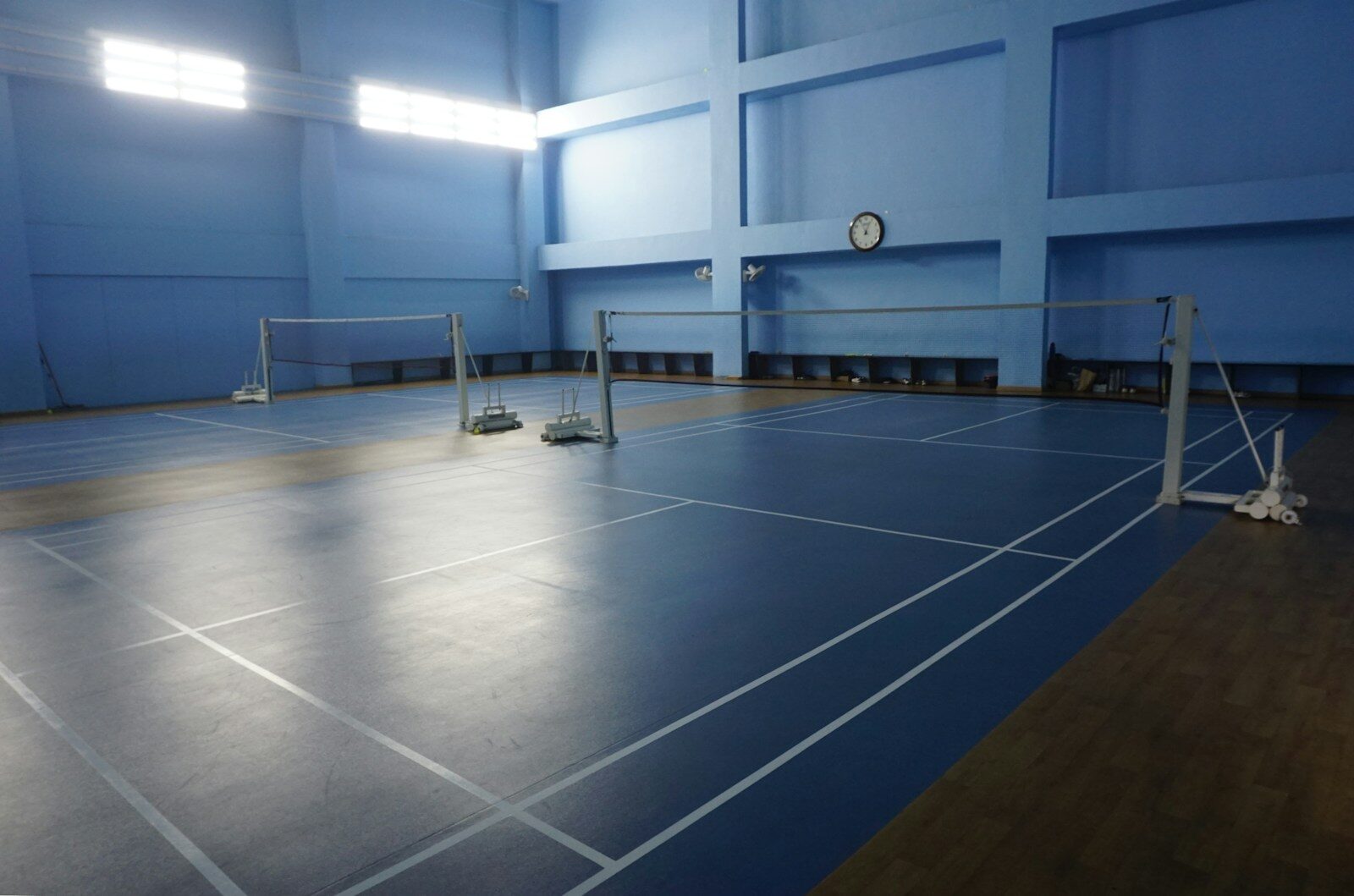
Building a badminton court isn’t just about marking lines on the ground. There are several things to think about to make sure it’s a proper playing space, whether it’s for a casual game in the backyard or a serious tournament.
Adhering to Regulation Standards
First off, you’ve got to follow the official rules. The International Badminton Federation (BWF) has specific measurements for everything – length, width, and even how high the net should be. Getting these right is super important if you want the game to be fair and consistent. It’s not just about the playing area itself, but also making sure there’s enough space around the court for players to move without bumping into things.
- Length: 13.4 meters (44 feet)
- Width (Doubles): 6.1 meters (20 feet)
- Width (Singles): 5.18 meters (17 feet)
- Net Height (Center): 1.524 meters (5 feet)
- Net Height (Posts): 1.55 meters (5 feet 1 inch)
Choosing Appropriate Court Surfaces
The ground you play on makes a big difference. You can’t just play on concrete, though some people do for fun. For actual games, you’ll want something that gives a bit and is easy on the knees. Common choices include:
- Wooden Flooring: Often used in professional indoor settings. It offers good grip and shock absorption.
- Synthetic/Plastic Flooring: Durable and easy to maintain, these are popular for both indoor and outdoor courts.
- Sports Carpeting: Provides a softer feel and good cushioning.
Each surface has its pros and cons regarding cost, maintenance, and how it feels to play on. The right surface can really affect player performance and prevent injuries.
Importance of Professional Design
If you’re building a serious court, especially indoors, thinking about the whole setup is key. This includes things like:
- Lighting: You need good, even lighting so players can see the shuttlecock clearly without glare.
- Ventilation: Especially for indoor courts, good airflow is important to keep the air fresh and players comfortable.
- Clearance: Making sure there’s enough empty space above and around the court is vital. This means no low ceilings or walls that could interfere with the game.
Building a badminton court involves more than just the playing lines. It requires careful consideration of the playing surface, lighting, ventilation, and surrounding space to create an environment that is both safe and conducive to competitive play. Professional design helps ensure all these elements work together effectively.
Getting these details right from the start means you’ll have a court that’s ready for action, no matter who’s playing.
Wrapping It Up
So, there you have it. We’ve gone over the exact measurements for a badminton court, whether you’re playing singles or doubles. It’s pretty straightforward, really – 44 feet long, and either 17 feet wide for singles or 20 feet for doubles. Knowing these numbers is key if you’re setting up a court, making sure the game is played right. It’s not super complicated, but getting it right makes all the difference for fair play. Now you know exactly what size space you need to get your game on.
Frequently Asked Questions
What are the main differences between a singles and doubles badminton court?
The main difference is the width. A doubles court is wider, measuring 20 feet (6.1 meters) across, to fit two players on each side. A singles court is narrower at 17 feet (5.18 meters) wide, making the game more intense for one player.
What is the total length of a badminton court for both singles and doubles?
The length of the court stays the same for both singles and doubles matches. It is always 44 feet (13.4 meters) long.
How high is the net in a badminton game?
The net is 5 feet (1.524 meters) high in the center and slightly higher at the posts, reaching 5 feet 1 inch (1.55 meters) at the sides.
Are the court dimensions different for junior players?
Yes, for junior players, the net can be lowered to 2.5 feet (30 inches), and the court length can be shortened to 34 feet. The width usually remains the same.
What is the recommended space around a badminton court?
It’s good to have at least 3 feet (1 meter) of clear space on the sides and about 5 feet (1.5 meters) behind the back boundary line. This helps players move safely and prevents them from hitting obstacles.
Why is it important to follow official badminton court dimensions?
Following the official sizes ensures that games are fair and consistent for all players, no matter where they play. It helps maintain the competitive spirit and the integrity of the sport.