
So, you’re looking to step up your badminton game, huh? A lot of folks focus on footwork or smashing power, but what about the way you hold the racket? It might seem small, but the grip you use for badminton can make a huge difference. It’s like trying to drive a car with the steering wheel on backwards – things just won’t work right. We’re going to break down the different ways to hold your racket and how picking the right grip for badminton can seriously change how you play.
Key Takeaways
-
Getting the right grip for badminton is super important for both hitting hard and keeping the shuttle where you want it. Using the wrong one can mess with your power and control, and even make you more likely to get hurt.
-
There are a few main ways to hold your racket: the basic forehand grip, the thumb grip for backhand power, and the bevel grip for smoother shots. Each one is good for different kinds of hits.
-
Your hand size and the racket handle size matter when picking a grip. Standard sizes are G3 (big), G4 (medium), and G5 (small). You need to find what feels right for your hand.
-
Don’t just stick to one grip. You need to be able to switch between them quickly during a game, depending on the shot you need to play. Practicing these changes is key.
-
Keeping your fingers loose on the handle helps a lot. It makes it easier to change grips on the fly and helps you use your fingers to add power when you hit the shuttle.
Understanding Badminton Grip Fundamentals
Alright, let’s talk about the handshake. No, not the awkward one you give at parties, but the one you give your badminton racket. It might sound simple, but how you hold that thing is a pretty big deal. Getting your grip right is the first step to playing better badminton. Seriously, it affects everything from how hard you can hit the shuttlecock to how accurately you can place it.
The Importance of the Correct Grip for Badminton
Think of your grip as the direct connection between you and the racket. If that connection is weak or wrong, your shots will suffer. A bad grip can mean less power, less control, and even a higher chance of hurting yourself. It’s like trying to drive a car with the steering wheel on backwards – you’re just not going to get where you want to go. You need to be able to switch grips quickly during a rally, and if you’re holding on too tight, that’s just not going to happen. It really matters for pretty much every shot you play.
Grip Size Considerations for Optimal Performance
So, grip size. It’s not just about what feels comfortable; it’s about what works best for your hand. Too big, and you’ll struggle to maneuver the racket and use your fingers for power. Too small, and you might feel like you’re going to lose it. Most rackets come in sizes like G3, G4, and G5, with G3 being the largest and G5 the smallest. You’ll want to match this to the size of your palm. It’s worth trying out different sizes to see what feels right for you, because it can make a real difference in how you play.
Here’s a quick look at common grip sizes:
-
G3: 95mm (Large)
-
G4: 89mm (Medium)
-
G5: 83mm (Small)
How Grip Affects Power and Control
Your grip directly influences how much power and control you have over your shots. A relaxed grip allows for more wrist action and forearm rotation, which are key for generating speed and power. If your fingers are too tight, you lose that flexibility. For instance, the thumb grip is great for adding power to overhead shots because it gives you more leverage. On the other hand, a grip that allows for quick adjustments, like the basic forehand grip, helps with accuracy and finesse, especially for shots like net plays or drives. Learning to switch between grips smoothly is what separates good players from great ones, allowing you to adapt to different badminton shots on the fly.
The way you hold the racket isn’t just a minor detail; it’s the foundation for everything you do on the court. If your grip isn’t right, even perfect technique elsewhere won’t save your shots. It’s that important.
Mastering these basics is the first step to improving your game. We’ll get into the specific grips next, but for now, just remember that your handshake with the racket is a big deal. It’s worth spending time to get it right, and maybe even checking out some badminton techniques to see how different grips are used.
Mastering Key Badminton Grips
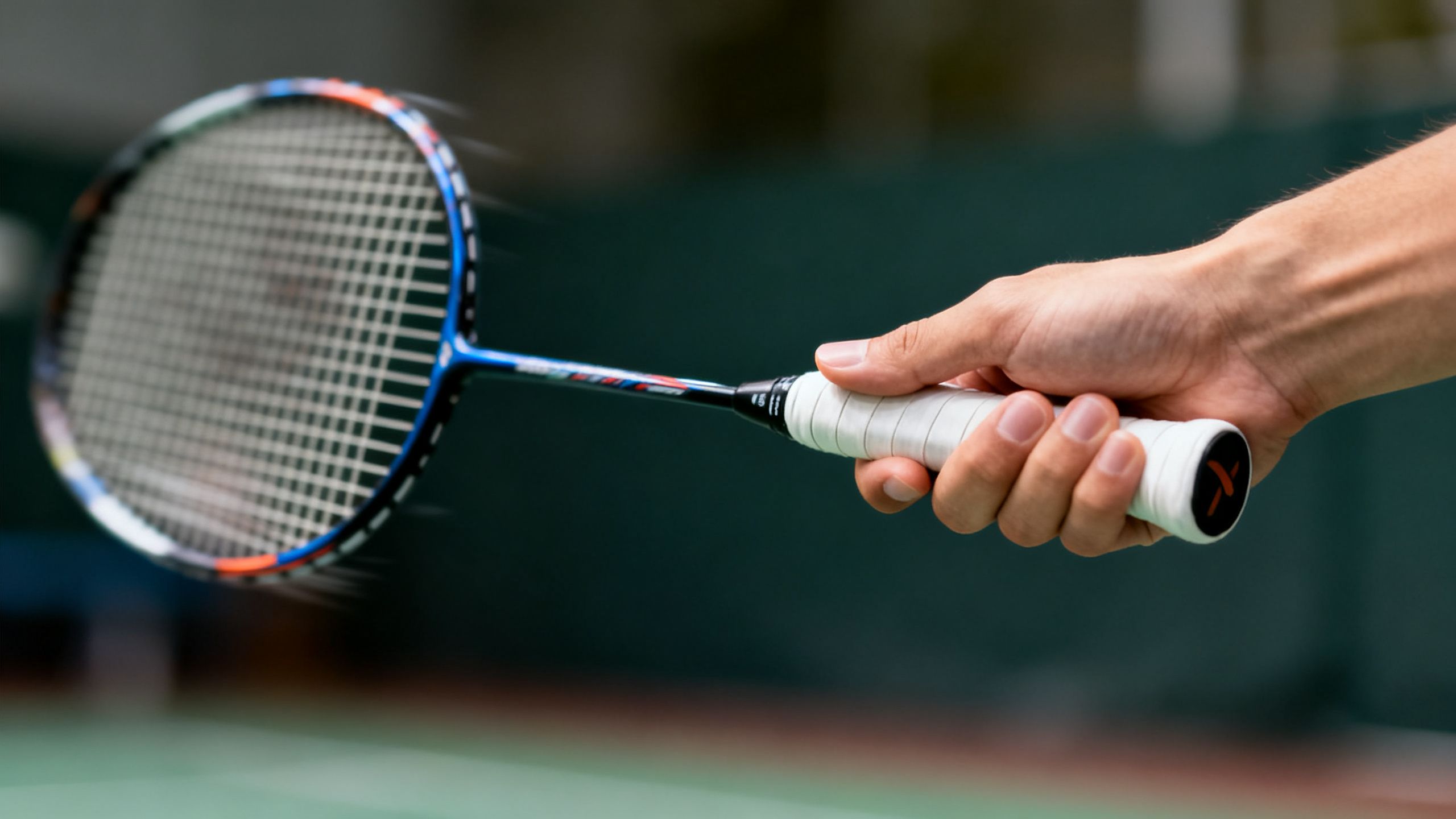
Getting a handle on the different ways to hold your racket is a big deal in badminton. It’s not just about swinging; it’s about how you connect with the shuttlecock. Different grips let you do different things, and knowing them can really change your game. Think of it like having a toolbox – you wouldn’t use a hammer for a screw, right? Same idea here. Let’s break down some of the main grips you’ll be using.
The Versatile Forehand Basic Grip
This is probably the grip you’ll use most often. It’s your go-to for a lot of shots, like clears, drives, and even some net shots. The easiest way to find it is to imagine you’re shaking someone’s hand. You want a relaxed hold, with a little ‘V’ shape between your thumb and index finger. Don’t grip too tight; a loose hold lets you change grips quickly and add finesse to your shots. It’s the foundation for many other grips, so getting this one right is super important.
The Powerful Thumb Grip for Backhand Shots
When you need to hit a backhand shot with some real oomph, the thumb grip is your friend. You’ll place your thumb on the wider part of the racket handle, with your fingers wrapped around the side. This position gives you a lot of power, especially for shots hit from the back of the court. It’s also a great grip to transition into from other grips when you’re about to strike the shuttle. It’s all about using your thumb to drive the shot.
The Strategic Bevel Grip for Smooth Play
The bevel grip is a bit more nuanced, and you’ll see it used a lot in backhand play, especially for softer shots or when you need fine control. It’s about positioning your hand so that the racket face is slightly angled. This allows for a smoother swing and better feel for the shuttle. Many players find this grip helps them execute tricky net shots or controlled backhand drives. It’s a grip that requires a bit of practice to get used to, but it pays off in precision.
Here’s a quick look at when you might use each:
-
Forehand Basic Grip: Clears, drives, lifts, and forehand net shots.
-
Thumb Grip: Powerful backhand shots, especially from the back court, and some defensive plays.
-
Bevel Grip: Controlled backhand shots, net play, and when you need delicate touch.
Mastering these grips isn’t just about knowing their names; it’s about feeling them in your hand and understanding how they translate to the court. Practice switching between them during rallies. It might feel awkward at first, but that adaptability is what separates good players from great ones. You’ll find that the right grip makes all the difference in shot accuracy.
Choosing the Right Grip for Your Game
Picking the right grip for your badminton racket isn’t just about comfort; it’s a big part of how well you play. Think of it like choosing the right shoes for running – the wrong ones can really slow you down or even cause problems. Your grip is your direct connection to the racket, and it dictates so much about your shots.
Matching Grip to Hand Size and Racket Handle
First off, let’s talk about size. Racket handles come in different sizes, usually labeled G3, G4, and G5. G3 is the biggest, and G5 is the smallest. The best way to figure out what works for you is to see how it feels in your palm. If the handle feels too big, you’ll have a harder time moving the racket around quickly and using your finger strength. Too small, and it might feel unstable. It’s not always the same across brands, so don’t be afraid to try a few out if you can. Getting this right means you can actually use the finger power you have.
Here’s a quick look at common handle sizes:
-
G3: Around 95mm (Large)
-
G4: Around 89mm (Medium)
-
G5: Around 83mm (Small)
Adapting Your Grip for Different Shot Types
This is where things get interesting. You can’t just use one grip for every shot. It’s like trying to hammer a nail with a screwdriver – it just doesn’t work well. You need to switch grips to get the most out of each shot.
-
Forehand Basic Grip: This is your go-to for most shots. Think of it like a handshake. It’s versatile and good for clears, drives, and net shots on your forehand side. It’s the foundation for many other grips.
-
Thumb Grip: When you need to hit hard, like for a smash or a powerful clear, this is your grip. You place your thumb on top of the handle for extra leverage. It’s great for power but not so much for delicate net play.
-
Backhand Grip: This is your standard grip for most backhand shots. You’ll often position your thumb on the wider part of the handle. It’s useful for backhand drives, lifts, and net shots, and even for defense in doubles.
-
Panhandle Grip: This one is for quick reactions, especially near the net. It gives you less power but allows for very fast movements and delicate touches. It’s a specialized grip for specific situations.
Switching between these grips smoothly during a rally is a skill that takes practice. Don’t get stuck using the same grip for everything. Being able to adapt means you can react better and hit more accurate shots.
When to Use the Panhandle Grip
The panhandle grip is a bit of a special case. You’ll see it used most often when players are trying to play very quick shots close to the net. Because it offers less power, it’s not your go-to for smashes or clears. Instead, it’s all about speed and finesse. Think of those lightning-fast pushes or deceptive drops right over the net. If you find yourself struggling with those quick, delicate net exchanges, practicing the panhandle grip might be the answer. It allows for rapid wrist action and precise control in tight spaces. You can learn more about different badminton grips and how they apply to various shots.
Remember, the goal is to find what feels right for your hand and your style of play. Don’t be afraid to experiment. What works for one player might not work for another. The right grip can make a big difference in your game, helping you feel more comfortable and play with more confidence. If you’re looking for a better feel and control, consider looking into tacky or absorbent grips to complement your chosen technique.
Optimizing Hand Positioning for Each Grip
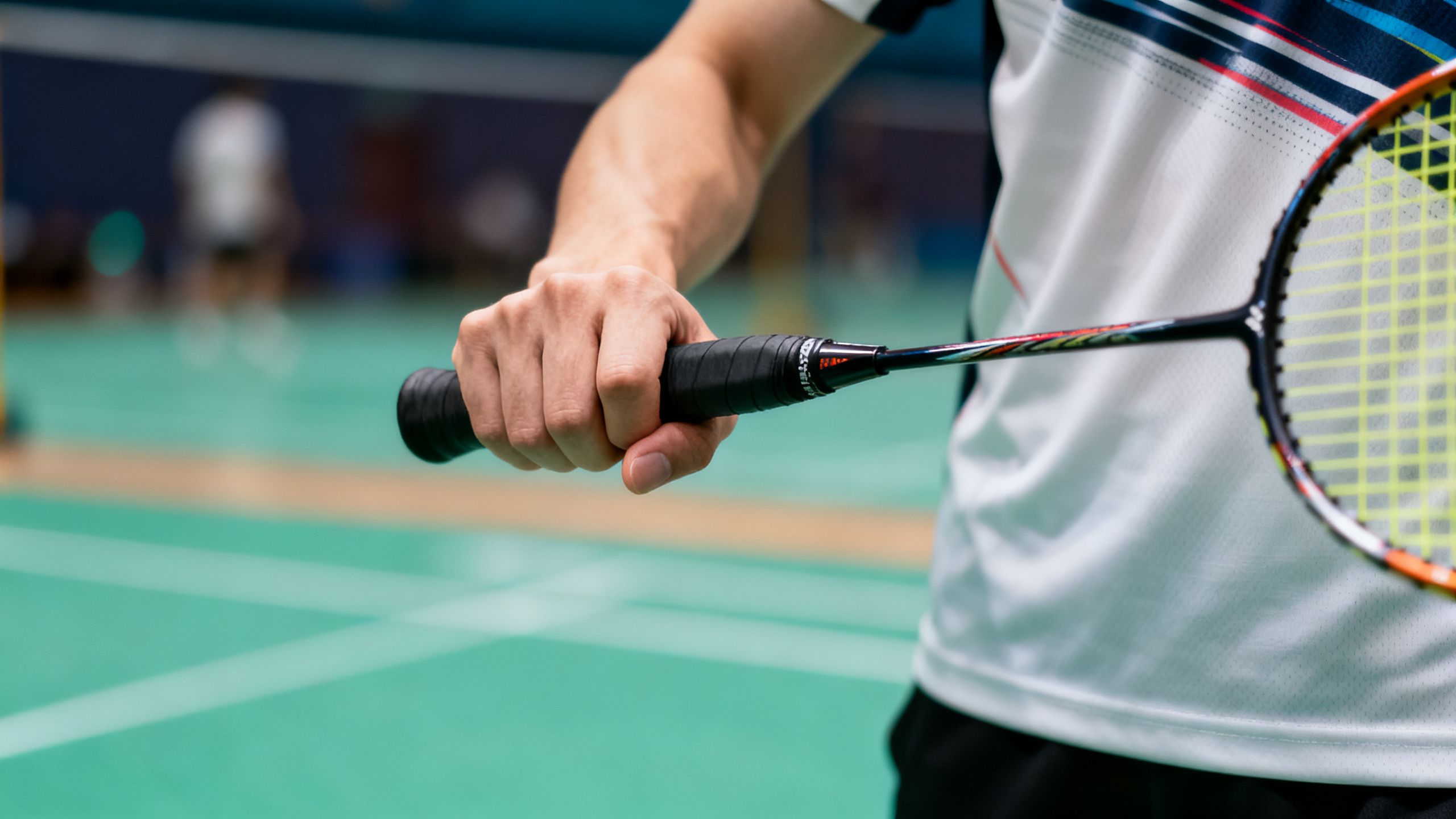
Getting your hand in the right spot on the racket handle is a big deal for hitting the shuttlecock well. It’s not just about holding on; it’s about how you position your fingers and thumb for each specific type of shot. Mess this up, and your shots might go wonky.
Forehand Grip Hand Placement
For the standard forehand, or “shake-hand” grip, think about how you’d greet someone. Your palm should be behind the handle, and your index finger’s first knuckle should line up with the edge of the racket frame. This gives you a good balance for most shots. Your thumb rests comfortably on the back of the handle, offering support. The other fingers wrap around naturally. It’s all about a relaxed but firm hold. This setup is great for general play and allows for a decent amount of power and control. You can learn more about different types of grips and how they affect your game.
Backhand Grip Hand Placement
When you switch to a backhand shot, your hand position needs to change. For the common backhand thumb grip, you’ll move your thumb to lie flat against the back edge of the handle. This gives you a stronger base and more power for those backhand strokes. Your index finger might move slightly to the side of the handle for added stability. It feels a bit different at first, but it’s key for hitting those backhand clears or smashes with authority. This grip is really important for backhand shots.
Thumb Grip Hand Placement
The thumb grip is where you really want to feel connected to the racket for power. For overhead shots like smashes, you’ll place your thumb flat on the back of the handle, almost like you’re pressing down on it. Your fingers then wrap around the front. This creates a strong lever. It’s not the grip you’d use for delicate net play, but for driving the shuttle, it’s fantastic. It allows for maximum force generation.
Proper hand positioning isn’t just about following a diagram; it’s about feeling the racket and understanding how that placement translates to the shot you want to make. Practice in front of a mirror can help you see if your hand is where it should be.
Here’s a quick look at how hand placement differs:
|
Grip Type |
Primary Hand Position |
|---|---|
|
Forehand Basic |
Index knuckle aligned with frame edge, thumb on back. |
|
Backhand Thumb |
Thumb flat on back edge, fingers wrap front. |
|
Panhandle |
Hand more horizontal, fingers spread on handle. |
Remember, the goal is to be able to switch between these grips quickly and smoothly during a rally. It takes practice, but getting your hand positioning right is a huge step towards better badminton.
Developing Superior Grip Control
Getting a good grip on your racket is more than just holding it; it’s about having command over every shot. Think of it like a musician holding their instrument – the way they hold it directly impacts the sound they produce. For badminton, the right grip means better accuracy, more power when you need it, and the ability to react quickly.
Tips for Improving Grip Control
So, how do you actually get better at this? It comes down to a few key things. First off, try to keep your grip relaxed. Seriously, a death grip on the racket will just make your arm tired and stiff, which is the opposite of what you want. You need to be able to move your wrist and fingers freely. It’s all about finding that sweet spot between a firm hold and being able to adjust on the fly.
-
Be aware of where your hand is on the handle. Are you too high? Too low? This placement matters a lot for different shots.
-
Practice switching grips. Don’t just stick to one. Drills that force you to change grips quickly will make you more adaptable on the court.
-
Visualize the perfect grip. Before you even step on the court, imagine yourself holding the racket just right for each type of shot. It sounds simple, but it helps.
Exercises to Build Grip Strength
Beyond just practicing on the court, you can do some simple things off-court to build up the muscles needed for a strong grip. This isn’t about becoming a bodybuilder; it’s about having the endurance and strength to control the racket through long rallies.
-
Squeeze a tennis ball or a grip strengthener. Do this for a few sets of reps. It really targets those forearm muscles.
-
Try wrist curls with light weights. This helps build forearm strength, which is key for racket control.
-
Do finger extensions with rubber bands. This works the muscles that open your hand, giving you more dexterity.
Even just a few minutes of these exercises a few times a week can make a difference. You’ll notice you can hold the racket more comfortably and make finer adjustments during play. A stronger grip means better shuttlecock control.
Avoiding Common Grip Mistakes
We all make mistakes, especially when we’re learning. But some grip errors are super common and can really hold you back. Being aware of them is the first step to fixing them.
Holding the racket too tightly is probably the biggest culprit. It leads to early fatigue and limits your ability to make quick, precise adjustments. Another common issue is using the same grip for every single shot. Your grip needs to change depending on whether you’re smashing, dropping, or defending. Sticking to one grip is like trying to paint a masterpiece with only one color – it just doesn’t work.
Remember, mastering your grip is an ongoing process. It takes practice, awareness, and a willingness to adjust. Don’t get discouraged if it doesn’t feel natural right away. Keep at it, and you’ll see your game improve. For more on grip basics, check out this guide to badminton grips.
Grip Selection for Serving and Specific Shots
When you’re out on the court, especially during a match, knowing which grip to use for different shots can really make a difference. It’s not just about hitting the shuttle; it’s about hitting it well. Let’s break down how your grip choice impacts your serve and other key shots.
The Backhand Grip for Serving
Serving is where you get to start the point, so you want to do it right. For a standard backhand serve, you’ll typically use a grip that’s similar to your basic forehand grip, but with a slight adjustment. The key is to keep it relaxed yet firm enough for control. You want to be able to generate enough power for the serve to go where you intend, whether it’s a short, low serve or a deeper one. Think about your thumb placement; it often rests slightly on the side of the handle for a backhand serve, giving you a bit more leverage. Practicing different types of serves with this grip will help you find that sweet spot between power and accuracy. Consistency in your serve is key to dominating the game.
Grip Choices for Net Shots and Smashes
Net shots and smashes are at opposite ends of the spectrum, and they often require different grips. For quick, delicate net shots, you might want to switch to something like the panhandle grip. This grip gives you a lot of wrist flexibility, which is great for those fine adjustments needed to keep the shuttle low and close to the net. On the flip side, when you’re looking to smash, you need power. The thumb grip is usually the go-to here. It allows you to really get behind the shuttle and drive it downwards with force. It’s all about adapting quickly.
Here’s a quick look at how grips can help:
-
Net Shots: Panhandle grip for finesse and quick wrist action.
-
Smashes: Thumb grip for maximum power and downward angle.
-
Clears: Basic grip often works well, offering a balance of control and reach.
Adapting Grips for Defensive Play
When you’re on the defensive, things can get hectic. You might be scrambling to get to the shuttle, and your grip needs to allow for quick reactions and adjustments. Often, you’ll find yourself reverting to a more neutral grip, like the basic forehand grip, because it’s versatile. However, depending on the specific defensive shot – maybe a defensive clear or a block at the net – you might need to make small tweaks. The goal is to maintain control and get the shuttle back into play safely, giving yourself a chance to recover your position. It’s about being ready for anything.
Being able to switch grips smoothly is a skill that takes practice. Don’t get discouraged if it feels awkward at first. Focus on making the transition feel natural, almost like an extension of your body’s movement. This adaptability is what separates good players from great ones.
Final Thoughts on Your Grip
So, we’ve gone over the different ways to hold your racket, from the basic handshake to the thumb grip and others. It might seem like a lot at first, but honestly, it’s all about finding what feels right in your hand for each shot. Don’t be afraid to try different things on the court. What works for one person might not work for you, and that’s totally okay. Keep practicing, pay attention to how your hand feels, and you’ll start to notice a real difference in your game. It’s not just about hitting the shuttle; it’s about controlling it, and your grip is the first step.
Frequently Asked Questions
Why is having the right grip so important in badminton?
Using the correct grip is super important because it helps you hit the shuttlecock with more power and control. If you use the wrong grip, you might not be able to hit the shuttle well, and it could even make you more likely to get hurt. It’s like using the right tool for a job – it makes everything easier and better!
What are the main types of grips used in badminton?
There are four main grips you’ll use in badminton: the forehand basic grip, the thumb grip (great for backhand shots), the bevel grip (good for smooth moves and backhands), and the panhandle grip (sometimes called the hammer grip, useful for quick shots).
How do I know what size grip I need for my racket?
Grip sizes are usually labeled G3, G4, or G5. G3 is the biggest handle, and G5 is the smallest. The best way to choose is to see what fits comfortably in your hand. A grip that’s too big or too small can make it harder to control the racket and hit your shots properly.
When should I use the basic forehand grip?
The basic forehand grip is like shaking hands with your racket. It’s the most common grip and is really good for all-around play. You’ll use it for most shots like clears, drops, drives, and even some net shots because it gives you a good mix of power and control.
How does grip affect my serve?
For serving, the backhand grip is often the best choice. It helps you have a relaxed but firm hold on the racket, which gives you flexibility and control. Sometimes, holding the racket a bit higher on the handle with this grip can give you more power and accuracy when you serve.
What’s the difference between the thumb grip and the panhandle grip?
The thumb grip is used when you want to hit hard overhead shots like smashes, because placing your thumb on the back of the handle gives you extra power. The panhandle grip is more for quick, fast shots near the net, where you hold the racket more sideways. It’s fast but doesn’t give as much power for big hits.