
Badminton has been part of the Olympic Games for a while now, and it’s seen some pretty amazing moments. We’ve watched athletes push their limits, break records, and become household names. From the early days of the sport in the Olympics to the incredible performances we see today, it’s a journey worth looking back at. This article dives into some of the most memorable events and looks ahead to who might be the next big stars in badminton in the Olympics.
Key Takeaways
- Badminton’s inclusion in the Olympics has greatly boosted its worldwide appeal and the number of people playing the sport.
- China, Indonesia, and Denmark have historically been powerhouses in Olympic badminton, with many memorable victories.
- Indian players like Saina Nehwal and PV Sindhu have made significant history, earning medals and inspiring a new generation.
- Olympic badminton has featured dramatic matches, unexpected wins, and intense rivalries that have captivated fans.
- The future of badminton in the Olympics looks bright, with emerging talents from various countries poised to make their mark.
Origins and Evolution of Badminton in the Olympics
How Badminton Became an Olympic Sport
Badminton didn’t have an easy or quick path to Olympic acceptance. The sport dates back to the 19th century in British-ruled India before making its way to England and gaining popularity in Europe and Asia. Yet, it took decades for badminton to break into the Olympic fold.
- Badminton was first showcased as a demonstration sport at the 1972 Munich Olympics.
- The International Badminton Federation, now known as the Badminton World Federation (BWF), played a critical role in advocating for the sport’s inclusion. The BWF, formed in 1934 with just nine nations, set the stage for organized global competition and Olympic aspirations (Badminton World Federation’s foundation).
- Finally, in 1992, badminton was officially included in the Barcelona Games. Singles and doubles events for both men and women debuted that year.
Changes in Tournament Structure and Rules
Since its Olympic debut, badminton’s format has constantly adapted to keep matches fair and exciting. Early on, the scoring system was different from what we see today. Back then, only the serving side could win points; that made for some drawn-out games.
| Edition | Notable Rule Change |
|---|---|
| 1992 Barcelona | Introduction of men’s/women’s singles & doubles |
| 1996 Atlanta | Mixed doubles added |
| 2006* | Rally point scoring system adopted |
Note: The rally scoring system (every rally scores a point) was introduced by the BWF globally post-2006, impacting Olympic matches in 2008 and onward.
Some key shifts include:
- Swapping to the rally point system, speeding up matches considerably.
- Mixed doubles coming in from 1996, which added strategic complexity.
- Adjustments in seeding and draws, to reduce match-fixing and ensure more even competition.
Impact on Global Popularity and Participation
Badminton’s Olympic recognition really changed its profile worldwide. After coming to the Olympics, badminton experienced a surge in both audience size and national investment. A few things that drove this shift:
- More countries—especially across Asia—started developing training academies and youth programs.
- Broad TV coverage introduced millions to the game’s speed and athleticism.
- The Olympic spotlight raised the expectations for national sporting excellence, with countries like Indonesia, China, and Denmark becoming household names in the sport.
Some fans still remember how unassuming badminton seemed before the Olympics, but now it carries the energy of any major world sport. Today, kids across continents know exactly what it means to win Olympic badminton gold, and the race to the top never felt more crowded.
Historic Victories That Defined Badminton in the Olympics
First Olympic Badminton Champions
Badminton made its debut at the 1992 Barcelona Olympics. That first medal round instantly set a new standard. Alan Budikusuma and Susi Susanti of Indonesia came out on top, winning men’s and women’s singles gold. These wins gave Indonesia enormous pride, but there was more to it: they triggered a chain reaction for badminton development not only in Indonesia, but across Asia. Denmark also took home a silver, hinting that Europe wouldn’t be left behind in this new Olympic sport.
| Year | Event | Men’s Singles Champion | Women’s Singles Champion | Country |
|---|---|---|---|---|
| 1992 | Barcelona Olympics | Alan Budikusuma | Susi Susanti | Indonesia |
| 1996 | Atlanta Olympics | Poul-Erik Høyer Larsen | Bang Soo-hyun | Denmark/South Korea |
Standing on the podium that first Olympic year, the winners weren’t just celebrating their victories—they were starting a movement that would make badminton one of the most watched racket sports in the Games.
Standout Performances from China, Indonesia, and Denmark
Since its debut, three countries have really made badminton their own at the Olympics:
- China has become a powerhouse, especially in doubles events, regularly sweeping medals and often reaching the finals in both men’s and women’s categories.
- Indonesia has consistently produced gold medalists, thanks to an endless stream of dynamic singles and doubles talent.
- Denmark brought European flair to the podium with legends like Poul-Erik Høyer Larsen, whose 1996 win in Atlanta remains a highlight.
There have been heartbreaks, dominant runs, and lots of new faces. Each of these nations keeps raising the bar.
Milestones in Women’s and Men’s Singles Events
Some moments in Olympic badminton just stick:
- In 2016, Chen Long of China clinched gold in men’s singles, ending Lee Chong Wei’s long chase for an Olympic title.
- Carolina Marín, the Spanish player, broke Asia’s monopoly in women’s singles by capturing gold at Rio 2016—showing that a player from Europe could win on the biggest stage.
- At London 2012, Saina Nehwal won bronze, making history as India’s first Olympic badminton medalist. Her achievement changed the game for Indian players.
These milestones are more than just wins—they’ve sparked dreams for new generations and changed the perception of badminton across continents.
Saina Nehwal and the Rise of Indian Badminton
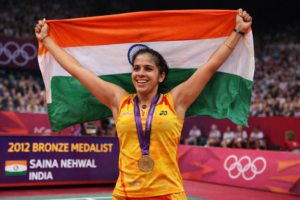
Indian badminton changed forever when Saina Nehwal stepped onto the Olympic podium. That moment started something much bigger than just a medal; it sparked hope for players and fans all across the country.
Making History with Olympic Bronze in 2012
In 2012, Saina made headlines by winning India’s first-ever Olympic medal in badminton: a hard-fought bronze at the London Games. Before that, Indian players didn’t expect to beat the world’s best. With her victory, everything seemed possible for the first time. The stands at Wembley Arena were packed with Indian supporters, and as the tricolor flag went up, there was a real sense that a new chapter was starting for Indian sport.
| Year | Olympic Medal | Event |
|---|---|---|
| 2012 | Bronze | Women’s Singles |
That Olympic bronze wasn’t just Saina’s win; it was a win for every aspiring badminton player in India who never saw someone like them standing on the world stage.
You can find more about her groundbreaking journey as a pioneering Indian badminton player.
Influence on the Next Generation of Indian Players
Saina’s success flipped the switch for a new generation of shuttlers in India. Suddenly, kids from places like Haryana or Hyderabad believed they could compete against the Chinese, Japanese, or Korean champions. Some big changes since her win:
- More parents started encouraging their children to play badminton seriously.
- The government and private sponsors increased their support for the sport.
- Several young players—including PV Sindhu, Kidambi Srikanth, and Lakshya Sen—rose through the ranks and became global threats.
Saina became the role model she never had, inspiring both boys and girls to chase Olympic dreams in a way that was pretty much unheard of before 2012.
Saina Nehwal’s Resilience and Comebacks
After London, life didn’t get any easier for Saina. She faced a career-threatening knee injury just before the Rio Olympics and multiple setbacks after that. But her drive never faded. She fought back with podium finishes at the World Championships, Commonwealth Games, and Asian Games. Her career was a series of ups and downs, yet she always bounced back. That perseverance helped make her an icon not just as a champion, but as a competitor who never gave up.
- 2017: Bronze at World Championships
- 2018: Gold at Commonwealth Games, Bronze at Asian Games
- Multiple BWF titles, even after injuries
The truth is, Saina’s journey wasn’t about just one medal. Her story pushed Indian badminton onto the world stage—and made every little kid with a racket hope for their own spot on the podium someday.
PV Sindhu: Breaking Through Barriers on the Olympic Stage
Silver at Rio and Bronze in Tokyo
PV Sindhu’s Olympic story is one of consistency and grit. At the 2016 Rio Olympics, she became the first Indian woman to win a silver medal in badminton—the only time an Indian shuttler had reached a final at the Games. She captured fans’ attention thanks to her relentless aggression on court and never-say-die attitude. Coming back at the Tokyo 2020 Olympics, Sindhu again made headlines as she battled through challenging matches to win the bronze medal, making her the only Indian woman with two Olympic badminton medals.
| Olympics | Medal | Category |
|---|---|---|
| Rio 2016 | Silver | Women’s Singles |
| Tokyo 2020 | Bronze | Women’s Singles |
Watching Sindhu stand on the podium not once, but twice, made millions of Indians truly believe that world titles were within reach.
Sindhu’s Rivalries and Global Influence
PV Sindhu’s journey has not just been about medals, but also high-profile rivalries that raised the level of competition. Over the years, she faced off with top players like Carolina Marin, Nozomi Okuhara, and Tai Tzu-ying, often resulting in edge-of-seat thrillers. These matchups:
- Drew huge global TV audiences
- Made badminton a regular topic in Indian households
- Helped bridge the gap between Asian and European playing styles
Sindhu’s presence on the world stage has made her one of the most recognizable faces in badminton. Her performances continue to inspire young players—not just in India but throughout the badminton circuit worldwide.
Inspiring a New Era of Indian Shuttlers
PV Sindhu’s Olympic success has truly changed the game for badminton in India. Here’s what followed her rise:
- More kids and parents are considering badminton as a serious career path.
- Sporting academies report higher enrollments, especially among girls.
- The Indian sports ecosystem has started investing more in training, diet, and travel for up-and-coming talent.
Aspiring shuttlers now see a path that leads from small-town courts to the Olympic podium, thanks to Sindhu’s legacy. Both on and off the court, she’s setting new standards for what’s possible for Indian athletes.
Game-Changing Moments in Olympic Badminton History
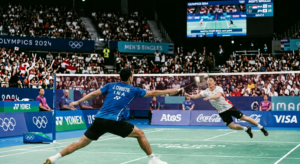
Olympic badminton has seen its fair share of nail-biting finishes and unexpected turns that have kept fans on the edge of their seats. These moments don’t just make for great drama; they often shift the perception of the sport and inspire future generations. It’s not always about the favorites winning; sometimes, it’s the underdog’s rise or a dramatic comeback that truly defines an event.
Surprising Upsets and Last-Second Victories
While the top seeds often make it to the finals, the Olympics have a knack for producing stunning upsets. Remember the 2012 London Games? A relatively unknown player from a nation not traditionally dominant in badminton managed to defeat a heavily favored opponent in the early rounds. This kind of result sends ripples through the tournament, opening up the draw and proving that on any given day, anything can happen. These unexpected wins often become legendary tales within the sport, highlighting the unpredictable nature of high-stakes competition. It’s these moments that make following the Olympics so exciting, as the established order can be completely upended. For instance, the recent European badminton championship saw France achieve a historic victory, a testament to how competitive the sport has become globally France achieved a historic victory in European badminton last weekend.
Dramatic Comebacks and Fierce Rivalries
Badminton matches are often decided by the slimmest of margins, and comebacks are a staple of Olympic drama. Imagine a player down by a significant margin in the deciding game, only to rally back with a series of incredible shots and unwavering focus. These comebacks are not just about physical skill; they showcase immense mental fortitude. The rivalries, too, add another layer of intensity. When two players or pairs have a history of close matches, their Olympic encounter becomes more than just a game; it’s a narrative unfolding on the court. The pressure cooker environment of the Olympics amplifies these rivalries, leading to matches that are talked about for years.
Rule Changes That Altered the Game
Sometimes, the game itself changes, and these shifts can have a profound impact on Olympic badminton. Over the years, various rule adjustments have been implemented to make the sport more spectator-friendly and to ensure fair play. For example, changes to the scoring system have led to faster-paced matches and more decisive endings. The introduction of the service court rule, for instance, aimed to reduce the advantage of powerful servers and encourage more dynamic rallies. These modifications, while sometimes controversial at first, ultimately contribute to the evolution of the sport on the Olympic stage.
Here’s a look at some key rule changes and their potential impact:
- Scoring System: The shift to a rally-point system (where a point is scored on every rally, regardless of who served) significantly sped up matches and increased the number of points played.
- Service Rules: Adjustments to how the shuttlecock must be struck during a serve have aimed to create more balanced rallies and prevent overly dominant serving strategies.
- Line Calls: The implementation of advanced technology for line calls has reduced disputes and ensured greater accuracy, leading to fairer outcomes.
The Olympics provide a unique platform where established stars face emerging talents, and the pressure can lead to both spectacular triumphs and unexpected stumbles. It’s this blend of predictability and surprise that keeps fans hooked, making every tournament a potential history-making event.
Promising Future Stars Ready to Shine at the Olympics
While we love looking back at the legends, the excitement of the Olympics is also about who’s next. Badminton is a sport that’s constantly evolving, and there are always new talents bubbling up, ready to make their mark on the biggest stage. It’s not just about the established powerhouses anymore; we’re seeing incredible skill emerge from all corners of the globe.
Up-and-Coming Indian Contenders
India has really found its stride in badminton over the last decade, thanks to pioneers like Saina Nehwal and PV Sindhu. Now, a new wave of players is ready to carry that momentum forward. Keep an eye on talents like Lakshya Sen, who has already shown he can compete with the best in men’s singles. His aggressive style and mental toughness are exactly what you need for Olympic success. In the women’s game, players like An Se-young from South Korea are also making serious waves, and it’ll be fascinating to see how Indian players stack up against them. The depth of talent means India is looking strong across multiple disciplines, not just singles.
Young Talents from Asia and Europe
Asia has always been a hotbed for badminton talent, and that’s not changing anytime soon. Countries like Japan, South Korea, and Malaysia are consistently producing young stars. For instance, Taguchi Maya, a young Japanese player, is already turning heads with her dynamic play and has the potential to be a major force. Europe, too, is stepping up its game. Players from Denmark, France, and even emerging nations are showing they have the skills and ambition to challenge the traditional Asian dominance. It’s this global spread of talent that makes the future of Olympic badminton so exciting.
Coaching Innovations and Youth Development
What’s really fueling this rise of new talent? A lot of it comes down to smarter training and better development programs. Coaches are using advanced analytics, sports science, and tailored training methods to get the most out of young players. There’s a big focus on building not just physical strength but also mental resilience, which is so important under the pressure of the Olympics. These programs are designed to identify potential early and nurture it, giving these young athletes the best possible shot at success. It’s a more scientific approach than we’ve seen in the past, and it’s definitely paying off.
The pathway from junior circuits to Olympic contention is becoming more defined. With better resources and a clearer vision for player development, we’re likely to see even more unexpected stars emerge in the coming years. The competition is getting fiercer, and that’s great for the sport.
The Impact of Badminton in the Olympics on Global Sports Culture
Growing Fanbases Worldwide
Badminton’s addition to the Olympics has pushed the sport onto bigger screens and into new living rooms year after year. Countries that weren’t known for badminton suddenly found themselves cheering for shuttlers at odd hours, glued to tense matches. Olympic exposure has made badminton much more accessible, turning it from a niche sport in a few Asian countries into a true global competition.
Here’s a quick table showing Olympic viewership numbers for badminton finals:
| Year | Estimated Global Viewers (Millions) |
|---|---|
| 1992 | 130 |
| 2008 | 220 |
| 2016 | 340 |
| 2024 | 410 |
This kind of growth in fans translates to more young people picking up rackets, and more nations fighting for a spot on the podium.
Promotion of Gender Equality in Sport
One not-so-subtle impact badminton has made at the Olympics is showing that men and women can achieve the same level of recognition on equal footing. Both men’s and women’s singles and doubles have drawn huge crowds, and mixed doubles is one event where teamwork across genders really shines.
- Both men and women represent their nations in singles, doubles, and mixed events.
- Female badminton players like PV Sindhu and Carolina Marín are as celebrated as their male counterparts.
- Young girls have new role models to look up to, and federations are starting to invest more equally in athlete development for all genders.
Badminton’s Olympic platform breaks down old stereotypes, simply by making women’s games just as important as the men’s.
Badminton’s Role in National Sporting Ambitions
Many countries use Olympic badminton results to mark their progress in international sport. For nations like India, Indonesia, and Denmark, a medal in badminton is right up there with historic moments in cricket or soccer.
Here’s what makes badminton so important on the national stage:
- Every medal boosts national pride, especially when it’s a breakthrough win.
- Success at the Olympics inspires government investment in sports facilities and youth programs.
- It creates heroes who motivate the next generation to dream bigger.
When you see a young athlete from your country take the Olympic podium in a sport like badminton, it doesn’t matter if you know the rules—it’s a shock of pride and possibility.
Badminton, through the Olympics, is now more than just a fast-paced game with a feathered shuttle. It’s a sport offering global dreams, equal opportunities, and new definitions of what a sporting nation can be.
Looking Ahead
So, we’ve seen some amazing badminton moments in the Olympics, from nail-biting rallies to athletes pushing their limits. It’s clear this sport has a special place in the Games. With talents like PV Sindhu and Lakshya Sen showing what they can do, and the dream of more gold medals for India getting closer, the future looks really bright. It’s exciting to think about who will be the next big stars and what incredible matches we’ll witness on the Olympic stage. One thing’s for sure, badminton is here to stay and will keep giving us unforgettable moments.
Frequently Asked Questions
When did badminton first become an Olympic sport?
Badminton made its debut as a full medal sport at the 1992 Barcelona Olympics. Before that, it was a demonstration sport in 1972 and 1988, meaning players competed, but their medals didn’t count towards the official medal tally.
Which countries have dominated Olympic badminton?
China has been the most successful nation in Olympic badminton, winning a large number of gold medals across various disciplines. Indonesia and Denmark have also historically been very strong contenders, with many Olympic champions and medalists.
Who was the first Indian to win an Olympic medal in badminton?
Saina Nehwal achieved this historic feat at the 2012 London Olympics, where she won a bronze medal. This was a major milestone for Indian badminton.
What medals has PV Sindhu won at the Olympics?
PV Sindhu has won two Olympic medals. She earned a silver medal at the 2016 Rio Olympics and followed it up with a bronze medal at the 2020 Tokyo Olympics (held in 2021).
Are there any exciting young badminton players to watch for the future?
Yes, there are always new talents emerging! Players like Lakshya Sen from India have shown great promise. Keep an eye on young athletes from countries like China, Japan, South Korea, and Denmark, as they often bring fresh energy and skill to the game.
What is the significance of Olympic badminton for a country like India?
Olympic success in badminton has a huge impact. It inspires millions of young people to take up the sport, boosts national pride, and can lead to more investment in training and facilities. It shows that Indian athletes can compete and win on the world’s biggest stage.