
Picking the right badminton kits can feel overwhelming, especially with all the choices out there. Whether you’re just starting out or you’ve been playing for a while, the gear you choose really shapes your experience on the court. This guide will walk you through everything you need to know, from understanding your playing style to picking the right racket, strings, shoes, and even those small accessories that make a difference. By the end, you’ll have a clear idea of what works for you and how to avoid some common mistakes people make when shopping for badminton kits.
Key Takeaways
- Figure out your playing style and skill level before buying any badminton kits.
- Pay attention to racket weight, balance, shaft flexibility, and grip size for comfort and performance.
- Choose strings and tension based on whether you want more power, control, or durability.
- Always test out rackets and make small adjustments to grip or strings before finalizing your kit.
- Don’t forget about shoes and accessories—good footwear is just as important as the racket.
Understanding Your Badminton Kits
So, you’re looking to get into badminton, or maybe you’re just tired of that old racket that feels like a noodle? It can be a bit much trying to figure out what you actually need. It’s not just about grabbing the first shiny thing you see, you know. Your badminton kit is really an extension of your own game, and picking the right stuff makes a huge difference.
Evaluate Your Playing Style and Goals
Think about how you like to play. Are you the type who likes to stand at the back and smash the shuttlecock as hard as possible? Or do you prefer to be up at the net, playing quick, tricky shots? Maybe you’re more of a steady player, focusing on keeping the shuttle in play and making your opponent move. Knowing this helps a lot. If you’re aiming to compete in tournaments, you’ll want something different than if you’re just playing for fun on a Saturday morning. What do you want to get out of the game?
Assess Your Skill Level: Beginner to Advanced
This is a big one. If you’re just starting out, you don’t need a super stiff, head-heavy racket that requires perfect technique. That’s just going to make things harder. Beginners usually do best with rackets that are a bit more forgiving, maybe medium flex and evenly balanced. These are easier to swing and help you get the shuttle over the net more consistently. As you get better, you can start looking at rackets that offer more power or control, but don’t rush it. Trying to run before you can walk, as they say.
Here’s a quick look at what might suit different levels:
- Beginner: Look for something lightweight, with a flexible or medium-flex shaft and an even balance. These are forgiving and easy to handle. You’ll want something that helps you get the shuttle over the net without too much effort.
- Intermediate: You might be ready for a slightly stiffer shaft and maybe a slightly head-heavy balance if you’re looking for more power. Control starts to become more important here too.
- Advanced: Stiffer shafts and more pronounced head-heavy or head-light balances become options, depending on whether you prioritize raw power or lightning-fast reactions.
Identify Your Preferred Playing Style
Are you a singles player who covers a lot of court and needs a racket that’s good for both defense and offense? Or are you a doubles player who thrives on quick exchanges at the net and needs something super fast to react with? Doubles players often prefer lighter rackets that are easier to maneuver for those rapid-fire shots. Singles players might lean towards rackets that offer a bit more power for clears and smashes from the back of the court. It really comes down to what feels right for you on the court.
Picking the right gear isn’t just about specs on paper; it’s about how it feels when you’re actually playing. A racket that’s technically ‘better’ but doesn’t suit your swing or your style will just get in the way. Think of it like choosing a good pair of badminton shoes – they need to fit your feet and your game.
Ultimately, understanding these basics will help you narrow down your choices and find a racket that feels like a natural part of your game, not something you have to fight against. It’s the first step to building a kit that truly works for you.
Key Racket Characteristics for Your Badminton Kits
Alright, let’s talk about the heart of your badminton kit: the racket. It’s not just a stick with strings; it’s an extension of your arm, and picking the right one makes a huge difference. You’ve got a few main things to think about here, and they all work together to affect how you play.
Racket Weight and Balance
Think about how heavy the racket feels in your hand and where that weight is concentrated. Lighter rackets, often around 4U (about 80-85 grams), are generally easier to swing quickly. This is great for fast rallies and players who rely on speed. If you’re just starting out, a lighter racket can be a good choice because it’s less tiring and easier to control. You can find some good beginner options that are around 3U (85-89g) as well, which offer a nice balance of maneuverability and stability.
Balance is another big one. Rackets can be head-heavy, even-balanced, or head-light.
- Head-heavy rackets put more weight at the top. These tend to give you more power for smashes, but they can feel slower to swing and might be tougher on your wrist if you’re not used to them.
- Even-balanced rackets distribute the weight equally. These are super versatile and a solid choice for most players, especially beginners, because they offer a good mix of power and control. They’re forgiving and help you develop your all-around game.
- Head-light rackets feel lighter at the head. They are the quickest to swing, making them ideal for defensive players or those who love fast-paced doubles. They help with quick reactions at the net.
Choosing the right weight and balance is like finding the right tool for the job. It shouldn’t feel like a struggle to swing, but it also needs to give you the performance you’re looking for. Don’t just grab the first one you see; hold it, feel it. Does it feel natural? Can you move it around easily?
Shaft Flexibility: Stiff vs. Flexible
The shaft is the long, thin part connecting the handle to the head. Its flexibility impacts how much power and control you get.
- Flexible shafts bend more when you hit the shuttle. This ‘whip’ action can help generate more power, especially for players with slower swing speeds or beginners who are still developing their technique. They’re more forgiving and can help you get more out of your clears.
- Stiff shafts bend less. These give you more direct control over the shuttle. If you have a fast swing speed and good technique, a stiff shaft will translate your power more efficiently and offer greater precision. They’re often preferred by advanced players who can really put a racket through its paces.
Grip Size and Handle Comfort
This might seem minor, but the grip size is surprisingly important for comfort and control. Most rackets come with a standard grip, but you can change it. The common grip sizes are G1 (largest) to G5 (smallest). A grip that’s too big can make it hard to do quick wrist actions, while one that’s too small might make you grip too tightly, leading to fatigue. Finding the right grip size helps prevent injuries and allows for better racket maneuverability. You can always add overgrips or use a base grip to adjust the size slightly. The material of the grip also matters – some are tackier than others, offering more security. It’s all about what feels comfortable and secure in your hand during those intense rallies.
Selecting Strings and Tension for Optimal Performance
Okay, so you’ve got your racket frame sorted, but what about the strings? This is where things can get a little tricky, but honestly, it’s super important. Think of the strings as the part of your racket that actually connects with the shuttlecock. They have a huge impact on how your shots feel and perform. It’s not just about hitting the shuttle; it’s about how you hit it.
Strings for Power and Repulsion
If you’re looking to add some serious ‘oomph’ to your smashes and clears, you’ll want to think about strings that offer good repulsion. This basically means how quickly the string bed springs back after hitting the shuttle. Thinner strings, generally around 0.61mm to 0.67mm, tend to give you that extra bit of speed. They’re like tiny trampolines, giving the shuttle a real kick. However, keep in mind that these thinner strings can also break more easily, especially if you’re prone to hitting the frame or the very edge of the strings.
Strings for Enhanced Control
On the flip side, if precision is your game, you’ll want strings that give you more control. This usually means a slightly thicker string, maybe in the 0.68mm to 0.75mm range. These strings offer a more solid feel on impact, allowing for more delicate net play and accurate placement. They don’t have quite the same ‘trampoline’ effect as the thinner ones, so you’ll need to generate more of your own power. But for players who like to dictate the pace and place shots exactly where they want them, these are the way to go. It’s all about that crisp feel when you make clean contact.
Durable String Options
Let’s be real, nobody likes breaking strings all the time, especially if you’re just starting out or playing casually. For durability, thicker strings are generally your best bet. They can take more of a beating from off-center hits and general wear and tear. Many beginner-friendly rackets come pre-strung with durable strings, and that’s perfectly fine to start with. If you’re playing with plastic shuttles, which are a bit heavier and tougher on strings than feather ones, durability becomes even more of a consideration. You might find yourself needing to restring less often with these tougher options.
Understanding String Tension
String tension is measured in pounds (lbs) and it’s a big deal. It’s how tightly the strings are pulled in the racket frame.
- Lower Tension (18-22 lbs): This gives you more power because the strings act like a bigger trampoline. It also creates a larger sweet spot, meaning off-center hits are more forgiving. Great for beginners and those who want easier power.
- Medium Tension (22-24 lbs): A good middle ground. You get a bit more control than with lower tension, but still a decent amount of power. This is a popular range for many club players.
- Higher Tension (24+ lbs): This results in a tighter string bed, offering more control and a sharper feel. You’ll need a strong swing to generate power, and the sweet spot is smaller. This is usually for more advanced players.
Always make sure to check the recommended tension range for your specific racket. Exceeding it can damage the frame. It’s usually printed on the racket shaft or in the specs. Don’t risk it, especially if your racket is still under warranty.
When you’re just starting, sticking with the factory strings or asking for a popular, durable string at a moderate tension (around 20 lbs) is a safe bet. As you play more and get a feel for what you like, you can start experimenting. Maybe you want a bit more power, or perhaps you’re finding you need more control for those tricky net shots. Talking to your local stringer or experienced players can give you some good pointers on what might work best for your playing style.
Testing and Finalizing Your Badminton Kits
So, you’ve done your homework, figured out what kind of player you are, and zeroed in on a few rackets that seem like a good fit. Awesome! But before you slap down your cash, there’s one more super important step: actually testing the gear. It sounds obvious, right? But you’d be surprised how many people skip this. Trying out a racket before you buy is non-negotiable if you want to avoid buyer’s remorse.
The Importance of Testing Before Purchase
Think of it like test-driving a car. You wouldn’t buy a car without taking it for a spin, would you? Same goes for your badminton racket. What feels good on paper might feel totally different when you’re actually swinging it. You need to feel how it moves through the air, how it handles your smashes, and how it feels on those delicate net shots. This hands-on experience is the only way to truly know if a racket is going to work with your game, not against it. It’s about finding that sweet spot where the equipment feels like an extension of your own arm.
Fine-Tuning with Grip and String Adjustments
Once you’ve got a racket in hand, pay attention to the details. How does the grip feel? Is it too thin, too thick, or just right? Sometimes, a simple overgrip can make a world of difference. Don’t forget about the strings, either. The factory stringing might not be what you need. If you’re after more power, you might want a slightly lower tension. For better control, a higher tension could be the way to go. These small tweaks can really personalize the racket to your preferences.
Here’s a quick rundown of what to look for:
- Weight Distribution: Does it feel balanced, head-heavy, or head-light? How does this affect your swing speed?
- Shaft Flexibility: Can you feel the whip when you swing? Does it feel too stiff or too whippy for your technique?
- Vibration: Does the racket feel comfortable on impact, or does it send jarring vibrations up your arm?
- Overall Feel: Does it just feel right? This is subjective, but often the most important factor.
Trying out a few different rackets, even if they’re just demo models, can save you a lot of hassle down the line. It’s better to spend a little extra time now than to regret a purchase later. Plus, many shops will let you try rackets out, especially if you’re a regular customer.
Considering Your Budget Wisely
Let’s be real, budget is always a factor. You don’t need to break the bank to get a decent racket, but you also don’t want to go so cheap that it hinders your progress. It’s about finding that sweet spot. Sometimes, a slightly more expensive racket that’s perfect for you is a better long-term investment than a cheaper one you’ll want to replace in six months. Think about the total cost of your kit, too. Don’t forget to factor in good badminton shoes, as they’re just as important for performance and injury prevention. A balanced approach to your spending across all your gear will serve you best.
Beyond the Racket: Essential Badminton Kit Components
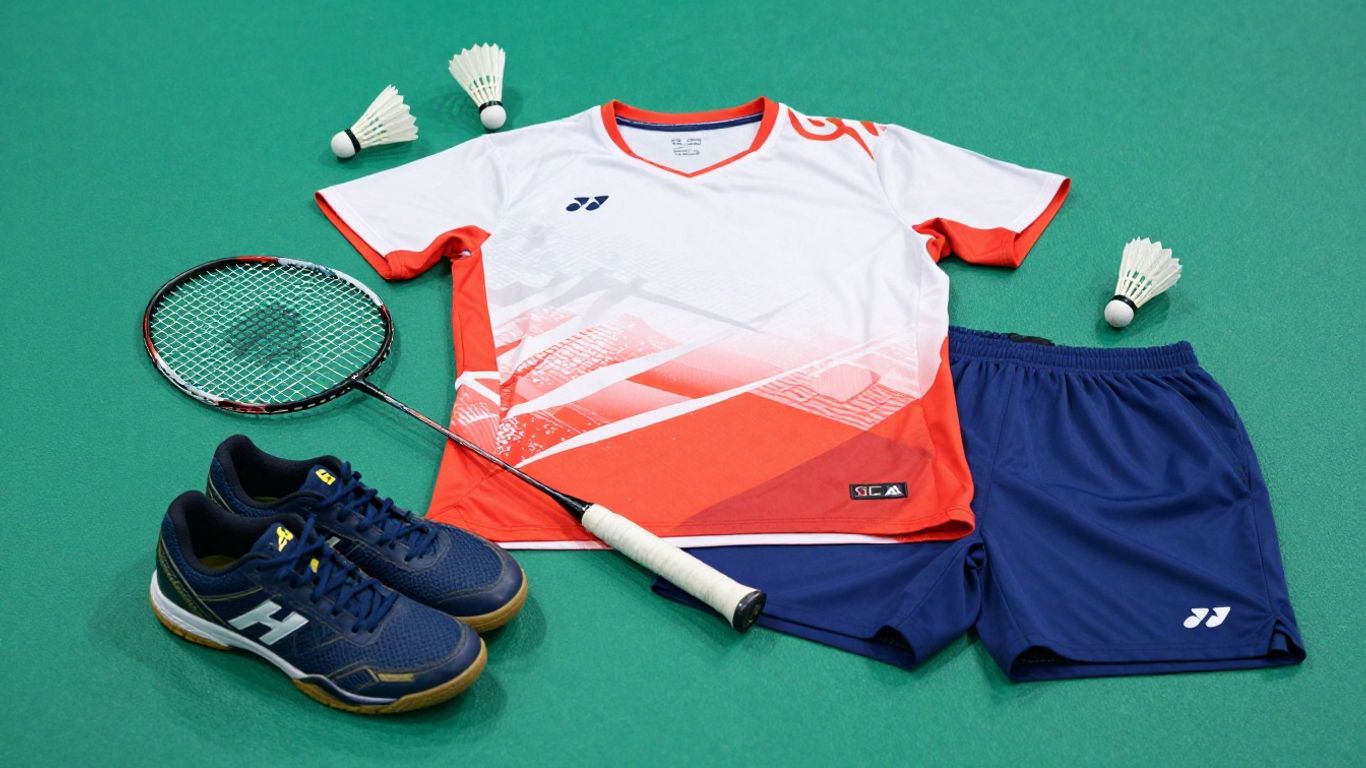
So, you’ve picked out the perfect racket – awesome! But hold on, your badminton kit isn’t complete without a few other bits and pieces. Think of these as the supporting cast that helps your star player, the racket, shine. Getting these right makes a big difference in how you play and how comfortable you are on the court.
Choosing the Right Badminton Shoes
This is a big one, seriously. You might be tempted to spend all your cash on a fancy racket, but showing up in your old running shoes or just any old trainers is a mistake. Badminton requires quick movements, stops, and starts, and you need shoes designed for that. Good badminton shoes give you the grip you need to move around the court without slipping, and they offer the cushioning to protect your feet and knees from all that impact. It’s often better to get a decent mid-range racket and a really good pair of court shoes than the most expensive racket with footwear that could lead to an injury. Look for shoes with non-marking soles and good ankle support.
| Feature | Importance |
|---|---|
| Grip | Prevents slips during quick movements |
| Cushioning | Absorbs shock, protects joints |
| Support | Stabilizes the ankle, reduces injury risk |
| Durability | Withstands the demands of court play |
| Breathability | Keeps feet cool and comfortable |
Essential Accessories for Your Kit
Beyond the shoes, there are a few other things that make playing much more enjoyable. First off, you’ll need shuttlecocks. If you’re just starting out, a few plastic shuttles are fine. As you get better, you might want to try feather shuttles for a more authentic feel, though they wear out faster. A good bag is also a must. It doesn’t have to be a fancy badminton set bag, but something that can hold your racket(s), shoes, a water bottle, and maybe a change of clothes will make getting to and from the court much easier. Don’t forget a towel, especially if you tend to sweat a lot. Some players also like to carry a spare grip or two, just in case the one on their racket gets worn out or slippery.
- Shuttlecocks (plastic or feather)
- A sturdy bag to carry your gear
- Water bottle
- Towel
- Spare grips
Don’t underestimate the impact of the smaller items. While the racket gets all the glory, the right shoes and a few simple accessories can genuinely improve your comfort, safety, and overall enjoyment of the game. Think of them as investments in your playing experience.
When you’re looking for rackets, remember that many manufacturers, like those found from trusted badminton racket manufacturers in China, also offer a range of accessories. It’s worth checking them out when you’re making your main purchase to see if you can get everything you need in one go.
Making an Informed Decision on Badminton Kits
So, you’ve spent time figuring out what kind of player you are and what racket specs might work best. That’s a huge step! But before you click ‘buy’ or head to the shop, let’s talk about how to really nail that final choice. It’s not just about picking the prettiest racket; it’s about finding a tool that actually helps your game.
Leveraging Community Advice and Resources
Don’t underestimate the power of talking to other players. Experienced folks at your local club or even online forums can offer insights you won’t find in a product description. They’ve been there, bought the gear, and probably made a few mistakes along the way. Ask them what they like, what they don’t, and why. Just remember, what works for them might not be perfect for you, so take advice with a grain of salt. It’s also smart to check out reviews from reputable badminton sites. They often break down racket performance in a way that’s easy to understand. You can find some great comparisons and user feedback that might point you in the right direction.
Avoiding Common Purchasing Mistakes
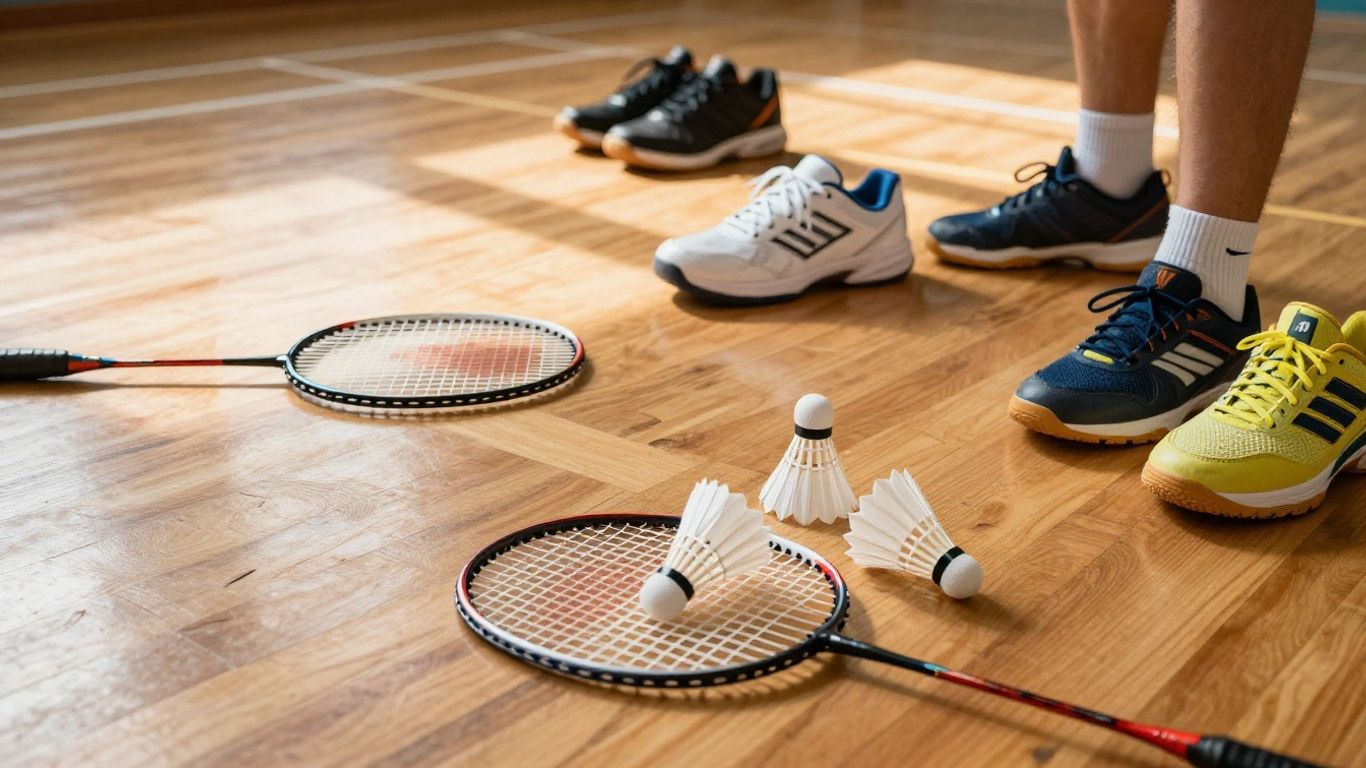
One big oopsie people make is spending their whole budget on a fancy racket and then showing up in old running shoes. Seriously, proper badminton shoes are non-negotiable. They give you the grip and support you need to move around the court safely and effectively. Skimping on shoes can lead to injuries, which means no playing at all. Another mistake is getting caught up in brand names. While big brands are popular for a reason, don’t dismiss lesser-known ones. Sometimes, you can get more bang for your buck with a different label. Focus on the racket’s feel and specs, not just the logo.
Matching Your Badminton Kits to Your Game
Ultimately, the best badminton kit is the one that feels right in your hand and suits how you play. If you’re an attacking player, you might lean towards a slightly head-heavy racket for more power. If control is your game, an even-balanced or head-light racket might be a better fit. Don’t be afraid to test rackets if possible. Many shops let you swing a few models. Pay attention to how the weight feels, how easy it is to swing, and if the grip is comfortable. It’s a personal thing, and what feels great to one person might feel off to another. Think of it like finding a comfortable pair of shoes – it just has to feel right for your feet, or in this case, your swing.
Making a smart choice now means fewer regrets later. It’s about finding equipment that supports your strengths and helps you enjoy the game more, rather than fighting against your gear.
Wrapping It Up
So, we’ve gone through a bunch of stuff about picking out a badminton racket. It might seem like a lot, but really, it boils down to a few key things: know how you play, what feels good in your hand, and don’t forget about other gear like shoes. The most expensive racket isn’t always the best one for you. Sometimes, a simpler, well-balanced racket is the way to go, especially when you’re starting out. Don’t be afraid to ask other players for advice or check out what the folks at your local club are using. And remember, the best racket in the world won’t replace practice. Get out there, play some games, and have fun with your new gear!
Frequently Asked Questions
What’s the most important thing to think about when picking a badminton racket?
The most important thing is to match the racket to how you like to play and your skill level. Are you an attacker who likes to smash hard, or do you prefer to control the game with tricky shots? Knowing this helps you choose a racket that feels good in your hand and helps your game, whether you’re just starting or have been playing for years.
Should I get a stiff or flexible racket?
If you’re new to badminton or don’t hit the shuttlecock super hard, a flexible racket is usually better. It’s easier to swing and gives you more power without needing perfect technique. More experienced players who can generate a lot of power might prefer a stiffer racket for more control.
Does racket weight really matter?
Yes, it does! Lighter rackets (often labeled with ‘U’ numbers like 4U or 5U) are quicker to swing and easier to use for quick volleys or defense. Heavier rackets give you more power for smashes but can feel slower. Most beginners do well with a medium-weight racket.
What about racket strings and how tight they are?
Strings affect how your racket plays. Thinner strings often give more power, while thicker ones tend to be more durable. The tightness, or tension, also matters. Higher tension gives you more control for precise shots, but lower tension can give you more power and a bigger ‘sweet spot’ where the racket feels best when you hit the shuttle.
Is it okay to buy a racket without trying it first?
It’s always best to try a racket before you buy it if you can. Different rackets feel different, and what works for one person might not work for you. If you can’t try it, read reviews and choose based on your playing style and skill level. Many stores let you test rackets, which is a great way to find the right fit.
Besides the racket, what else is important for my badminton kit?
Don’t forget good badminton shoes! They give you the grip and support you need on the court to move well and avoid injuries. Comfortable clothing that lets you move freely is also key. Some players also like specific grips for their racket handle or wristbands.