
Getting the serve right in badminton is pretty important, you know? It’s the only shot you really get to control before the rally starts. It’s not just about getting the shuttle over the net; it’s about setting up the point. We’ll go over the basic rules and some techniques to help you start your rallies off strong. Mastering these services in badminton can really change how you play.
Key Takeaways
- Make sure your feet stay still and inside the service box when you serve. Don’t lift your feet or step out of bounds.
- The shuttlecock must be hit below your waist, with the racket head below your hand, for a legal serve.
- Different serves, like the short backhand or the high forehand, have different goals. Choose wisely!
- Watch out for common faults like serving too high, missing the shuttle, or hitting the net.
- A good serve can win you points directly or put your opponent in a tough spot, making it easier for you to win the rally.
Understanding Badminton Service Rules
Getting the serve right in badminton is pretty important. It’s how every rally starts, and if you mess it up, you hand over a point to your opponent. So, knowing the rules is step one to playing well.
Serving from the Correct Court
This is all about where you stand and where the shuttle needs to go. When you serve, you have to stand in the service court that’s on the same side as your score. If your score is even (0, 2, 4, etc.), you serve from the right side. If your score is odd (1, 3, 5, etc.), you serve from the left side. The shuttlecock has to travel diagonally across the net and land in the opponent’s corresponding service court. It’s a simple diagonal path, but getting it wrong means a fault. For example, if you’re serving from the right court, the shuttle must land in the opponent’s left service court.
Foot Positioning During Service
When you’re serving, your feet have to stay put. Both feet need to be inside your service court and flat on the ground. You can’t lift your feet or drag them around before or during the serve. Once you hit the shuttle, then you can move, but not before. This rule is there to stop players from using fancy footwork to get an unfair advantage. It keeps things fair and focused on the actual hit. You also can’t step on or cross the boundary lines of the service court while you’re serving.
Shuttlecock and Racket Placement
There are a few rules about how you hold and hit the shuttle. The serve must be hit below your waist. The BWF defines this as being below the lowest rib on your serving side. Also, the racket head has to be below your hand when you make contact with the shuttle. This means all serves are underhand serves. You can only have one attempt to serve; there are no second chances if you miss. The shuttlecock should be held at its base, and you should hit it with a smooth, continuous motion. No pausing or hesitating mid-swing!
The serve is the only shot in badminton where you have complete control, without any pressure from your opponent. This makes understanding and executing it correctly even more vital for starting rallies positively.
Here’s a quick rundown of what’s legal:
- Serve must be hit below the waist.
- Racket head must be below the hand at contact.
- Both feet must remain stationary and within the service court.
- Shuttle must travel diagonally into the opponent’s service court.
- Only one serve attempt is allowed.
Understanding these basics is key to avoiding faults and starting your rallies on the right foot. For more details on the latest updates, you can check out the 2025 service rules.
Executing Effective Badminton Services
Alright, let’s talk about actually getting the shuttle over the net and into play. Serving isn’t just about starting the rally; it’s your first chance to put your opponent on the back foot. Getting this right can set the tone for the whole match.
The Backhand Short Serve Technique
This is probably the most common serve you’ll see, especially in singles. The goal here is to land the shuttle just over the net, making it tough for your opponent to attack. You want to hit it with an open racket face, almost like you’re gently pushing it. Keep your wrist loose and use a smooth, controlled motion. The key is deception; make it look like you might go for something else.
Here’s a quick breakdown:
- Grip: A relaxed forehand grip is usually best.
- Stance: Stand facing the side of the court, feet shoulder-width apart, with your non-racket foot slightly forward.
- Shuttle Position: Hold the shuttle around waist height, in front of your body.
- Swing: A short, controlled backswing followed by a gentle forward swing, hitting the shuttle at the lowest point possible while still being legal (below your waist).
- Follow-through: A short, controlled follow-through is important to keep the shuttle low and short.
A common mistake is to try and hit it too hard, which often sends it too long. Think ‘soft hands’ and precision over power for this serve.
Mastering the Forehand High Serve
This one is more about pushing your opponent back to the far end of the court. It’s a great way to gain time and reset the rally if you’re under pressure, or to catch them off guard if they’re standing too close to the net. You’ll want to hit the shuttle with a bit more force, aiming for a high trajectory that drops down near the back boundary line. This requires a bit more of a full swing, but remember to keep it controlled.
The Drive Serve for Surprise
Now, this is where you can really throw your opponent off. The drive serve is hit with a flat, fast trajectory, usually aimed at the opponent’s back boundary line. It’s meant to be a quick, aggressive serve that catches them off guard. You’ll use a more powerful, straight-arm swing, similar to a forehand clear but flatter and faster. It’s a bit riskier because if you miss-hit it, it can go out or be easily attacked, but when it lands, it’s very effective. This serve is particularly useful in doubles badminton serving strategies to catch the receiving pair off guard.
Remember, practicing these different serves is key. Try to vary them during a match to keep your opponent guessing. You can explore various badminton serves to get a better feel for the techniques involved.
Biomechanical Principles of Badminton Services
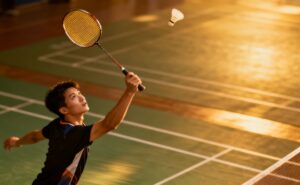
When you’re serving in badminton, it’s not just about getting the shuttle over the net. There’s some real science behind making it effective, and understanding these biomechanical principles can seriously up your game. It all boils down to how your body works together to generate speed and control.
Speed Summation in Stroke Production
Think of your serve like a whip. The final speed of the shuttlecock isn’t just from your arm swinging; it’s a chain reaction. The principle of speed summation means that the final velocity comes from adding up the speeds of each part of your body in sequence. It starts with your feet pushing off the ground, then your legs and torso rotate, your arm swings, and finally, your wrist and fingers give that last flick. Each step adds a bit more speed, building up to that final impact. It’s like a domino effect, but with momentum. If any part of the chain is weak or out of sync, you lose power.
The Role of Racket Head Speed
This is where the magic happens. The faster your racket head moves at the exact moment it hits the shuttle, the faster the shuttle will fly. Studies show elite players can get their racket head moving at speeds well over 70 meters per second during a smash, and while serves aren’t usually that fast, the principle is the same. This incredible speed is a direct result of that speed summation we just talked about. It’s not just about swinging hard; it’s about transferring all that body momentum efficiently through your arm and into the racket. Getting this right means the shuttle goes where you want it, with the pace you intend.
Integrating Footwork with Service Techniques
Your feet are your foundation. Without good footwork, even the best arm swing won’t do much. Proper footwork helps you get into the right position to hit the shuttle cleanly and with power. It involves a few key stages:
- Split Step: This is a small hop or adjustment you make just as your opponent is about to hit the shuttle. It gets you ready to move in any direction explosively.
- Approach: Moving towards the shuttle. The type of steps you take depends on where the shuttle is – maybe quick side steps or a longer stride.
- Strike: Getting into the optimal hitting position. This might involve a lunge, a small jump, or specific foot placements to allow for a full swing.
- Recovery: After hitting the shuttle, you need to quickly get back to a balanced, ready position, usually near the center of the court. This allows you to react to your opponent’s next shot.
Mastering the coordination between your footwork and your service motion is what separates a decent serve from a really effective one. It’s about being in the right place at the right time, with your body perfectly aligned to generate maximum force and accuracy. Without this connection, your serve will likely lack both power and precision, making it easier for your opponent to return.
Getting these biomechanical elements right can make a huge difference in your service game. It’s about making your body work as a cohesive unit to produce a fast, accurate, and controlled serve, setting you up for success right from the start of the rally. For more on how your body moves, understanding biomechanics in badminton can offer further insights.
Service Faults and Scoring
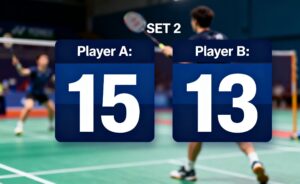
Common Service Faults to Avoid
Okay, so you’ve got the hang of serving, but what happens when things go wrong? Badminton has specific rules about what constitutes a fault during a serve, and knowing these is key to not handing your opponent free points. The most common mistakes usually involve where the shuttlecock lands or how it’s hit.
Here are some of the big ones to watch out for:
- Shuttlecock Landing: If your serve doesn’t make it over the net, or if it lands outside the boundaries of the correct service court (diagonally opposite your own), it’s a fault. This includes landing too short or too long.
- Height and Racket Position: The shuttlecock must be hit below your waist when you make contact. Your racket head also needs to be below your hand at the moment of impact. Serving too high is a common error.
- Foot Faults: While serving, both your feet must remain in contact with the ground and within the boundaries of your service court. You can’t lift or drag your feet before hitting the shuttle.
- Double Hit: You only get one go at serving. If you accidentally hit the shuttle twice with your racket during the serve, that’s a fault.
Understanding Fault Limits
So, what happens after a fault? In badminton, you generally get just one attempt to serve legally. If you commit a service fault, the rally ends immediately, and your opponent scores a point. They then get the serve. This is different from some other sports where you might get a second chance. It really emphasizes the need for accuracy and consistency right from the start of the rally. You can’t just blast it and hope for the best; precision is important.
The pressure of a single serve attempt means you need to be mentally prepared and technically sound. It’s not just about hitting the shuttle; it’s about hitting it correctly within the rules, every single time.
Rally Victory and Service Continuation
Now, let’s flip it around. What happens when you serve successfully and win the rally? This is where things get interesting. If your serve is legal and the rally continues, and you eventually win that rally, you score a point, and you get to keep serving. However, you must then switch service courts. If you were serving from the right side (because your score was even), you’ll now serve from the left side (for an odd score), and vice versa. This ensures that both players have a chance to serve from both sides of the court during the game. It’s a neat little system that keeps things fair and dynamic, making sure you’re always thinking about your position on the court.
Winning a rally after a successful serve means you’ve not only earned a point but also maintained the initiative to serve again, but from the other side. This is how you build momentum and keep the pressure on your opponent.
Strategic Considerations for Services in Badminton
Tactical Objectives of Different Serves
The serve in badminton isn’t just about starting the rally; it’s your first offensive or defensive move. Thinking strategically about your serve can give you a real edge right from the get-go. Different serves have different jobs. The backhand short serve, for instance, is a staple in doubles. Its main goal is to just clear the net with a flat trajectory, forcing your opponent to lift the shuttle. This limits their ability to attack early on. It’s all about controlling the pace and keeping them on the defensive.
Then you have the forehand high serve, which is more common in singles. This one sends the shuttle way back into your opponent’s court. The idea here is to push them back, making it harder for them to hit attacking shots. It opens up opportunities for you to control the rally. And don’t forget the drive serve, sometimes called the flick serve. This is a quick, flat serve aimed right at the opponent’s body or sides. It’s designed to surprise them and often results in a weaker return, giving you the advantage. Mastering these different serves means you have more tools to play with.
Adapting Services for Singles and Doubles
Serving in singles and doubles feels quite different, and you need to adjust your strategy accordingly. In singles, you’ve got more court to play with, and the high serve is often your best friend. Pushing your opponent deep into the back corners can really wear them down and create openings. You can also use the drive serve to catch them off guard if they’re standing too far back. The court is bigger, so you have more room to play with angles and depth.
Doubles is a whole different ballgame. Here, the short backhand serve is king. You want to keep the shuttle low and close to the net, making it tough for the front player to attack and forcing the back player to move forward. The goal is to prevent easy attacking shots and keep the rally going. Communication with your partner is key here, too. You need to coordinate who covers what and anticipate your partner’s serve. Understanding the nuances of doubles badminton rules can make a big difference in how you approach your serve.
Using Services to Limit Opponent Options
Ultimately, a good serve is about dictating play and limiting what your opponent can do. By choosing the right serve for the situation, you can steer the rally in your favor. If your opponent is strong at the net, a deep high serve might be the way to go. If they tend to stand too far back, a short serve could be effective.
The serve is the only shot in badminton where you have complete control before the rally begins. It’s your chance to set the tone and put your opponent under immediate pressure, or at least neutralize their attacking potential. Thinking about where your opponent is standing, their strengths, and weaknesses is vital.
Think about it: if you consistently serve to their weaker side or into their body, you’re forcing them into uncomfortable positions. This can lead to errors or weak returns that you can then capitalize on. It’s a subtle art, but mastering how to use your serve to control the game is a huge part of becoming a better player. It’s not just about hitting the shuttle; it’s about playing the player. For more on how to play strategically, you might want to look into tactical objectives of different serves.
Wrapping It Up
So, we’ve gone over the ins and outs of badminton serves, from the basic rules to a few different ways to get the shuttlecock flying. Remember, getting your serves right is a big part of the game, and it really helps build your confidence on the court. It’s not just about hitting the shuttle; it’s about starting the rally the way you want. Keep practicing those serves, focus on being consistent, and don’t be afraid to try out some of the techniques we talked about. The more you play and practice, the better you’ll get, and before you know it, you’ll be serving like a pro. Have fun out there!
Frequently Asked Questions
What are the basic rules for serving in badminton?
When you serve, you must hit the shuttlecock underhand, with the racket head below your hand. You also have to stand in the correct service box and hit the shuttlecock diagonally over the net into the opponent’s service box. If your score is even, you serve from the right side; if it’s odd, you serve from the left.
Can I move my feet while serving?
No, you can’t move your feet once the serve starts. Both your feet need to stay still on the ground until you hit the shuttlecock. Lifting or dragging your feet is not allowed because it helps keep you steady and prevents cheating.
What happens if I miss my serve?
In badminton, you only get one chance to serve. If you miss or make a mistake during your serve, it’s called a fault, and your opponent gets the serve and a point.
How do I know which side of the court to serve from?
It depends on your score. If your score is an even number (like 0, 2, 4, etc.), you serve from the right-hand side of the court. If your score is an odd number (like 1, 3, 5, etc.), you serve from the left-hand side.
What’s the difference between a short serve and a high serve?
A short serve, often used in doubles, is hit just over the net so the opponent has to lift it. A high serve, more common in singles, is hit high and deep to the back of the opponent’s court, pushing them back.
What is a service fault?
A service fault happens if you break any serving rules. This includes not hitting the shuttlecock underhand, serving from the wrong court, moving your feet during the serve, hitting the shuttlecock above your waist, or if the shuttlecock doesn’t go over the net or lands outside the correct service box.