
So, you’re looking to get into badminton, or maybe you’ve been playing for a bit and feel like your gear just isn’t cutting it anymore? It happens. Picking the right badminton equipment can feel like a maze, with all sorts of weights, flexibilities, and materials to sort through. But honestly, it doesn’t have to be this complicated. Having the proper gear can make a huge difference, not just in how well you play, but also in keeping you comfortable and injury-free on the court. Let’s break down what you really need to know to get kitted out.
Key Takeaways
- When picking out a badminton racket, pay attention to its weight, balance, and how flexible the shaft is. Lighter rackets and flexible shafts are usually better for beginners, while heavier and stiffer ones might suit more experienced players.
- Don’t forget about your feet! Badminton shoes need good grip to stop you from slipping and enough cushioning to handle all the jumping and quick movements.
- Shuttlecocks come in two main types: feather for serious matches and nylon for practice. Feather ones fly truer but don’t last as long.
- Little things like grip tape can really help you hold your racket better, and wearing comfortable, breathable clothes makes a big difference during play.
- Your skill level matters when choosing badminton equipment. Beginners need gear that’s forgiving and easy to use, while advanced players might want something more specialized for power or speed.
Selecting Your Badminton Racket
Picking the right badminton racket is a big deal, honestly. It’s not just about how cool it looks; it actually changes how you play, how much power you can get, and even how tired your arm gets after a long game. So, let’s get this sorted.
Understanding Racket Weight and Balance
When you look at rackets, you’ll notice they feel different. Some feel heavier at the top (head-heavy), some feel lighter overall (head-light), and some feel pretty even. What’s the deal?
- Head-heavy rackets are great if you like to smash hard. The extra weight up top gives your shots more momentum, helping you hit with more force. Just be aware, they can feel a bit slower to swing.
- Head-light rackets are the opposite. They’re easier to move around quickly, which is awesome for fast rallies and defensive plays. You get more control and can react faster.
- Even-balanced rackets try to split the difference. They offer a good mix of power and control, making them a solid choice if you’re still figuring out your exact style or like to switch between attacking and defending.
For most players, especially those just starting out or playing casually, an even-balanced or slightly head-light racket is usually the way to go. They’re just easier to handle and feel comfortable without being too heavy. You can find some great options for beginners and club players that fit this description.
The balance point of a racket is super important. A lower balance point means it’s lighter and quicker, while a higher balance point (more weight in the head) means more power but potentially less speed.
Choosing the Right Shaft Flexibility
Next up is the racket’s shaft flexibility. This is how much the shaft bends when you swing. It really affects how much power you can transfer to the shuttlecock.
- Flexible shafts are more forgiving. They bend more, which helps beginners or players with slower swings generate more power without needing a super fast swing. Think of it like a spring – it stores energy and releases it. The trade-off is usually a bit less precision.
- Stiff shafts are for players with faster swing speeds and better technique. They don’t bend as much, giving you more direct control and quicker response. This is what advanced players often prefer for accuracy, especially at the net.
If you’re new to the game, a more flexible racket is often recommended. It makes hitting the shuttle with decent power much easier. As you get better and your swing speed increases, you might want to consider a stiffer shaft for more control. You can read more about how flexible rackets can help beginners.
Grip Size Matters for Control
Don’t overlook the grip size! It might seem small, but it makes a huge difference in how you hold the racket and how much control you have. A grip that’s too big or too small can mess with your shots and lead to hand fatigue.
Here’s a quick look at common grip sizes:
| Grip Size | Best For | Benefits |
|---|---|---|
| G5 | Players valuing control and agility | Allows more wrist movement, better shot variety |
| G4 / G3 | Offensive players focusing on power | Provides a firmer, more stable hold for smashes |
It’s always best to try holding a racket with different grip sizes if you can. The right grip should feel comfortable and natural in your hand, letting you swing confidently without having to squeeze too hard. Sometimes, adding an extra grip wrap can help you get that perfect feel.
Essential Badminton Footwear
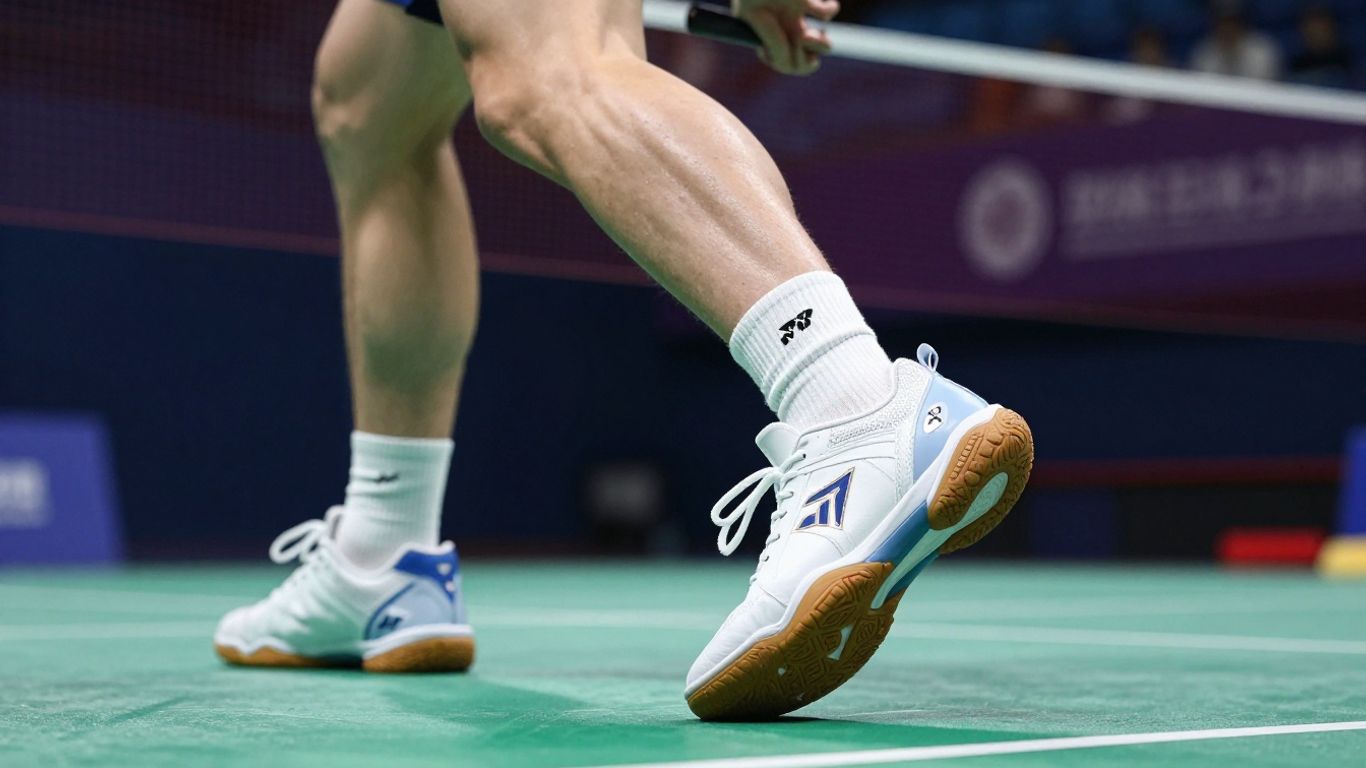
Alright, let’s talk shoes. You might think any old sneakers will do for badminton, but trust me, that’s a fast track to frustration and maybe even a twisted ankle. Badminton shoes are a whole different ballgame, designed specifically for the quick, sharp movements you do on the court. They’re built to keep you stable and give you the grip you need to change direction in a split second.
Grip and Sole Characteristics
The sole is probably the most important part of your badminton shoe. You want something that grips the court well, whether it’s wood or a synthetic surface. Most good badminton shoes use non-marking rubber soles. This is super important because it won’t leave scuff marks on indoor courts, which is often a rule in clubs and tournaments. The tread pattern also plays a big role; it’s usually designed to give you traction in all directions, so you don’t slip when you’re lunging for a shot or scrambling back.
Cushioning and Support Features
Badminton involves a lot of jumping and quick stops, which means your feet take a beating. That’s where cushioning comes in. Look for shoes that have good shock absorption, especially in the heel and forefoot. This helps reduce the impact on your joints. Beyond just cushioning, you need support. This means the shoe should hold your foot securely, preventing it from sliding around inside, and offer good lateral support to keep your ankles stable during side-to-side movements. Some brands have specific technologies for this, like Yonex’s Power Cushion system, which is designed to absorb shock and then release energy for your next move.
Lightweight and Breathable Materials
Nobody wants to feel like they’re wearing bricks on their feet. Lightweight shoes help you move faster and feel more agile on the court. You’ll find that most badminton shoes are made with lighter materials than, say, basketball shoes. Breathability is also key. Your feet are going to get sweaty during a match, and you want shoes that let air circulate to keep your feet cooler and drier. This helps prevent blisters and just makes the whole experience more comfortable. Many shoes use mesh panels or other engineered fabrics to help with airflow.
Choosing the right badminton shoes is more than just picking a pair that looks good. It’s about finding footwear that actively supports your movement, protects you from injury, and ultimately helps you play better. Don’t skimp on this piece of gear; your feet will thank you.
Here’s a quick rundown of what to look for:
- Sole: Non-marking rubber with good tread for multi-directional grip.
- Cushioning: Adequate shock absorption in the heel and forefoot.
- Support: Secure fit with good lateral stability for your ankles.
- Weight: As light as possible for quickness.
- Breathability: Materials that allow air to circulate.
Brands like Yonex, Victor, and others offer a range of options, so it’s worth trying a few different pairs to see what feels best for your feet and your style of play.
Shuttlecocks: Flight and Durability
When you’re out on the court, the shuttlecock is pretty much the star of the show. It’s what you’re hitting back and forth, and its behavior really affects how the game feels. There are two main types you’ll run into: feather and synthetic (often called nylon).
Feather Shuttlecocks for Precision
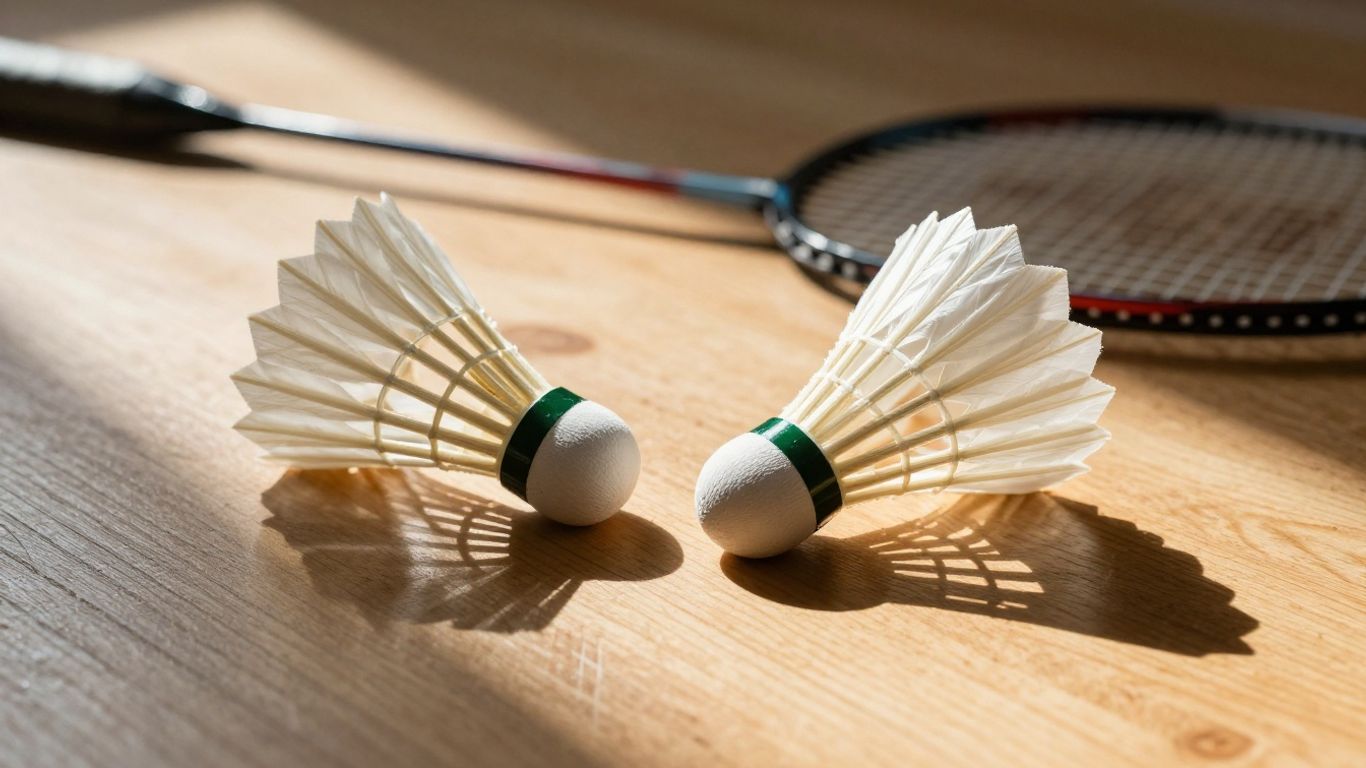
These are the ones you’ll see in professional matches. They’re made from real feathers, usually goose or duck, attached to a cork base. Feather shuttles fly really true and fast, which is great for precise shots and quick rallies. They have a very specific trajectory and feel. However, they’re not exactly built to last. They can get bent or damaged pretty easily, especially if you’re hitting them hard or if they land awkwardly. So, while they’re fantastic for accuracy, you’ll go through them quicker.
Nylon Shuttlecocks for Practice
If you’re just starting out or playing casually, nylon shuttles are probably what you’ll be using. They’re made from plastic and have a rubber or cork base. The big advantage here is durability. These things can take a beating and keep on flying. They’re much cheaper than feather shuttles, making them a good choice for practice sessions, training drills, or just hitting around with friends. The downside is they don’t fly quite as accurately as feather ones. Their flight path can be a bit more unpredictable, and they tend to be a bit slower.
Key Shuttlecock Considerations
Choosing the right shuttlecock really depends on what you’re doing. For serious matches and tournaments, you’ll want feather shuttles for that top-tier flight. If you’re just looking to get some practice in, improve your footwork, or play a friendly game, nylon shuttles are the way to go. They offer a good balance of performance and value.
Here’s a quick rundown:
- Feather Shuttles: Best for tournaments, precise flight, faster feel, less durable, more expensive.
- Nylon Shuttles: Great for practice and beginners, very durable, consistent enough for training, less expensive.
The consistency of a shuttlecock’s flight is a big deal. Even small differences can change how you react to a shot and how accurately you can place your own. It’s worth trying out different types to see what feels best for your game.
When you’re looking to buy, you’ll often see them sold by the dozen. For nylon shuttles, you can expect to pay somewhere in the range of $20 to $40 per dozen, depending on the brand and quality. Feather shuttles will cost quite a bit more, often starting around $30-$40 and going up from there for higher-grade tournament ones. It’s a good idea to check out different shuttlecock options to find what fits your budget and playing needs.
Beyond the Basics: Other Badminton Equipment
So, you’ve got your racket, shoes, and shuttlecocks sorted. That’s the big stuff, right? Well, almost. There are a few other bits and pieces that can make a surprising difference in how you play and how comfortable you are on the court. Think of these as the supporting actors that help the stars shine.
The Role of Grip Tape
This is one of those things that seems small, but it’s actually pretty important. The grip on your racket is what connects you to the game, literally. Over time, the original grip can get worn out, slippery, or just not feel right in your hand. That’s where grip tape, or overgrips, come in. They’re thin strips of material you wrap around the existing handle.
- They add tackiness: This means your hand is less likely to slip, especially when you get sweaty. Better grip means better control over your shots.
- They can change the feel: Some are thicker, making the handle feel a bit bigger, which some players prefer. Others are designed for maximum sweat absorption.
- They protect the original grip: Wrapping an overgrip can help the original handle last longer.
It’s a cheap way to make a big difference in comfort and control. You can find them in different materials, like soft PU (polyurethane) for a sticky feel or towel grips for serious sweat management. Changing your grip tape regularly is a simple habit that pays off.
Comfortable and Functional Apparel
We touched on this a bit earlier, but let’s go a little deeper. What you wear on the court isn’t just about looking good; it’s about performance. You need clothes that let you move freely without restriction. Think about all those quick lunges, jumps, and twists. Cotton is usually a no-go because it holds onto sweat, making you feel heavy and damp. Instead, look for synthetic fabrics like polyester or nylon blends. These are designed to wick moisture away from your skin, keeping you drier and cooler.
Here’s a quick rundown of what to look for:
- Breathability: Fabrics that allow air to circulate are key to staying cool.
- Moisture-wicking: Materials that pull sweat away from your body.
- Stretch: Enough give in the fabric to allow for a full range of motion.
- Lightweight: You don’t want anything weighing you down.
Don’t forget socks! Proper athletic socks can prevent blisters and provide extra cushioning and support, especially around the arch. It might seem minor, but the right socks can make a big difference during a long match or practice session. Having good athletic wear can really help you focus on your game instead of being distracted by discomfort.
Wearing the right clothes means you can focus on your footwork and your swing, not on adjusting your shirt or dealing with chafing. It’s about making sure your gear works for you, not against you.
Matching Badminton Equipment to Your Game
Beginner Badminton Equipment Needs
So, you’re just starting out in badminton? That’s awesome! The most important thing for beginners is to get gear that’s forgiving and helps you learn the basics without getting frustrated. For your first racket, think about something that’s not too heavy and has a bit of flexibility in the shaft. This makes it easier to swing and generate power, even if your technique isn’t perfect yet. A medium-flex racket is usually a good bet. You don’t need the most expensive shuttlecocks either; durable nylon ones are great for practice. They can take a beating and won’t break the bank. When it comes to shoes, look for good grip and decent cushioning. You’ll be moving around a lot, and you want to feel stable and protected.
- Racket: Lightweight with a flexible or medium-flex shaft.
- Shuttlecocks: Durable nylon shuttles for practice.
- Shoes: Good grip, adequate cushioning, and lateral support.
Don’t feel pressured to buy top-of-the-line gear right away. Focus on comfort and ease of use as you develop your skills. The right beginner equipment can make learning the game much more enjoyable.
Intermediate Player Gear Choices
Once you’ve got a few months or maybe a year of playing under your belt, you’re probably starting to feel more comfortable on the court. You might be hitting the shuttlecock more consistently and developing a feel for different shots. Now’s a good time to think about upgrading your equipment to match your improving game. You might want a racket that’s a little lighter or has a different balance point – maybe more head-light for quicker wrist action or head-heavy for more power on smashes. Shaft flexibility can also become more important; a stiffer shaft offers more control for precise shots. For shuttlecocks, you might start experimenting with feather ones for matches, as they offer a truer flight, but keep those nylon ones handy for drills. Good badminton shoes with excellent grip and support are non-negotiable at this stage.
- Racket: Consider weight (e.g., 4U) and balance (head-light or even balance) for faster play. Explore authentic badminton rackets.
- Shuttlecocks: Mix of durable nylon for practice and feather shuttles for matches.
- Shoes: Focus on advanced grip, superior cushioning, and ankle support.
Advanced Player Badminton Equipment
If you’re playing regularly, perhaps in leagues or tournaments, your equipment choices become much more specific to your playing style. Advanced players often know exactly what they want. You’ll likely be looking at rackets with specific weight classes (like 3U) and balance points that complement your offensive or defensive strategies. Shaft stiffness is key for control and power. You might prefer a very stiff shaft for maximum precision or a slightly more flexible one for a bit of extra whip. Feather shuttlecocks are almost always the choice for serious play due to their superior flight characteristics, though durability is lower. Your shoes should be lightweight, offer maximum agility, and provide the best possible grip for those lightning-fast court movements. Investing in high-quality gear at this level can make a noticeable difference in your performance.
- Racket: Tailored to playing style – specific weight, balance, and shaft stiffness.
- Shuttlecocks: High-quality feather shuttles for competitive play.
- Shoes: Lightweight, agile, with top-tier grip and responsive cushioning.
Choosing the right gear is a journey, and it’s okay to experiment. What works for one player might not work for another, so pay attention to how your equipment feels and performs for you. Selecting the ideal badminton racket is a great place to start when you’re ready to upgrade.
Wrapping It Up
So, picking out your badminton gear might seem like a lot at first, but honestly, it’s all about finding what feels right for you on the court. Think about how you play – are you smashing hard or playing it safe? That’ll point you towards the right racket. And don’t forget those shoes; they’re super important for keeping your feet happy and preventing slips. It’s not just about having the coolest stuff, it’s about having gear that helps you play better and stay comfortable. Take your time, maybe try a few things out if you can, and you’ll be set for some great games.
Frequently Asked Questions
What’s the most important piece of badminton equipment?
Your badminton racket is super important! It’s like your main tool on the court. Picking the right one can make a big difference in how well you play, helping you hit shots better and feel more comfortable during games.
Why are special shoes needed for badminton?
Badminton shoes are designed to help you move quickly and safely. They have special soles for good grip on the court, so you don’t slip. They also give your feet extra support and cushioning to protect them from hard landings and quick turns.
What’s the difference between feather and nylon shuttlecocks?
Feather shuttlecocks fly more accurately and are used in official games, but they break easily. Nylon shuttlecocks are tougher and last longer, making them great for practicing and for beginners who are still learning.
How do I know if my racket grip is the right size?
The grip size should feel comfy in your hand. If it’s too small, your hand might get tired, and if it’s too big, you might not be able to hold it tightly. You want a grip that lets you control your shots without feeling strained.
Should beginners use flexible or stiff badminton rackets?
Beginners usually do better with a more flexible racket. It helps you get more power behind your shots without needing a super fast swing. As you get better and your swing speeds up, you might want to try a stiffer racket for more control.
Does the weight of a badminton racket matter?
Yes, racket weight is a big deal! Lighter rackets are easier to swing quickly, which is good for fast games. Heavier rackets can give you more power for smashing, but they can also make you feel tired faster. It’s about finding a balance that works for your style.