
So, you want to hit that killer badminton smash, huh? It’s the shot everyone talks about, the one that ends rallies with a bang. But let’s be real, it’s not always as easy as it looks. Lots of folks struggle to get the power or the timing right. This guide is here to break down what a badminton smash really is and how you can actually pull it off. We’ll cover everything from where you should be on the court to how to swing your arm, so you can start winning more points.
Key Takeaways
- A badminton smash is a powerful, downward shot aimed at winning points quickly, usually hit from a high position.
- Proper court positioning and body orientation are vital for generating maximum power in your smash.
- Your grip should be relaxed until the moment of impact to allow for faster racket head speed.
- Power comes from rotating your entire body, starting with your legs and moving through your hips and torso.
- Timing is everything; strike the shuttle at its highest point with a quick, controlled swing for accuracy and speed.
Understanding What Is Badminton Smash
Definition and Characteristics of Smashes
The badminton smash is pretty much the most exciting shot in the game. Think of it as the thunderbolt of badminton – a powerful, downward strike aimed at your opponent’s court. It’s usually hit from a high point, and the goal is simple: end the rally fast. It’s not just about brute force, though. A good smash needs good timing and a bit of finesse, often involving a quick flick of the wrist. When you nail one, it puts a ton of pressure on the other side and can easily win you the point. It’s the shot that gets the crowd going, for sure.
The Power and Excitement of the Smash
What makes the smash so thrilling? It’s the sheer speed and the aggressive nature of the shot. It’s an offensive weapon, designed to overwhelm your opponent. When you’re in a good position, with the shuttle high above your head, you can really put some heat on it. This shot is often the decider in long rallies, the moment where you can finally put your opponent away. It’s that feeling of hitting the shuttle with everything you’ve got and watching it rocket down before they can even react. That’s what makes it so addictive.
Common Challenges in Executing a Smash
Now, smashing isn’t always easy. Lots of players, especially those just starting out, run into a few common problems. One big one is timing – hitting the shuttle too early or too late means you lose a lot of power and accuracy. Then there’s positioning; if you’re not behind the shuttle properly, your swing just won’t have the right angle or momentum. Many people also rely too much on just their arm, forgetting that the whole body needs to get involved to generate real power. It’s a combination of things that need to click.
Here are some common issues players face:
- Poor Timing: Hitting the shuttle at the wrong moment in your swing.
- Incorrect Positioning: Not getting behind the shuttle to hit it at its highest point.
- Lack of Body Rotation: Relying solely on arm strength instead of using your legs and core.
- Grip Issues: Holding the racket too tightly, which slows down racket head speed.
Many players find that their smashes lack the punch they see from professionals. This often comes down to not fully utilizing their body’s rotation and striking the shuttle a bit too late in the swing. It’s not just about swinging harder; it’s about swinging smarter and more efficiently.
Getting the smash right takes practice, but understanding these basics is the first step. It’s about building a solid foundation before you even think about hitting the shuttle. You can find some basic training models that break down different smash techniques, which can be a good starting point [fa0f].
Mastering Badminton Smash Preparation and Positioning
Getting ready for a smash isn’t just about swinging your arm; it’s about setting yourself up for success. Proper preparation and court positioning are key to hitting that powerful, game-winning shot. If you’re not in the right spot, even the best technique won’t do much.
Optimal Court Positioning for the Smash
To really put some heat on your smash, you need to be in the right place relative to the shuttlecock. Think about getting yourself underneath it, or at least slightly behind it, when it’s at its highest point. This usually means taking a few quick steps back from the baseline if the shuttle is high enough. Being too far back or too close to the net when you swing can really kill your power. Aim to be about half a meter behind where you intend to hit the shuttle. This gives your body room to move forward into the shot, adding momentum.
Body Orientation for Maximum Power
How you turn your body matters a lot. For a smash, you want to turn sideways to the net, almost like you’re facing the side wall. Your hitting arm should be bent at the elbow, ready to swing. This sideways stance allows for a bigger rotation, which is where a lot of the smash’s power comes from. It’s not just about arm strength; it’s about using your whole body.
The Role of the Non-Racket Arm
Don’t forget about your other arm! The arm not holding the racket plays a big part in balance and timing. As you prepare to swing, point your non-racket arm upwards towards the shuttle. This helps you keep your balance and also acts as a visual cue, helping you track the shuttle and time your swing. It’s like a counter-balance that helps your body rotate more effectively. Think of it as part of the whole body movement needed for a good smash.
Proper positioning and body orientation are the foundation of a powerful smash. Without these, you’re essentially trying to build a house on shaky ground. Focus on getting yourself into the ideal spot before you even think about swinging.
Refining Your Badminton Smash Grip and Technique
The Ideal Grip for a Powerful Smash
Getting the right grip is super important for a killer smash. Most players find that a standard forehand grip works best. Think about how you’d shake hands with someone – that’s a good starting point. The key here is to keep it loose until the very last second before you hit the shuttle. Why? Because a relaxed grip lets your wrist and forearm whip through the air faster, giving you that extra speed at impact. It’s like cracking a whip; you don’t want to be stiff.
Maintaining a Relaxed Grip for Speed
Seriously, don’t strangle the racket. A death grip will kill your racket head speed. Imagine you’re holding a delicate bird – you want to be firm enough not to drop it, but gentle enough not to crush it. This relaxed state allows for a more fluid swing, and when you accelerate into the shuttle, that speed is what translates into power. It takes practice to get this feel right, but it’s worth it.
Adjusting Grip for a Flatter Strike
Sometimes, your smashes might have too much of a curve, or you might be hitting the shuttle a bit too high. If you notice this, try making a small adjustment to your grip. You can slightly rotate your hand so it’s a bit more on top of the handle, almost like you’re holding a hammer. This subtle shift can help you hit through the shuttle more directly, resulting in a flatter, faster trajectory. It’s a small change that can make a big difference in how your smash travels across the net. This technique is often shown in videos explaining proper body positioning.
Here’s a quick rundown of grip adjustments:
| Grip Type | Feel |
|---|---|
| Standard Forehand | Like shaking hands |
| Slightly Adjusted | More on top, like holding a hammer |
Remember, the goal is to generate maximum racket head speed. This comes from a combination of a relaxed grip and a powerful, coordinated body movement. Don’t be afraid to experiment during practice to find what feels best for you and produces the results you want. It’s all part of learning the fundamentals of badminton.
Unlocking Power Through Body Rotation
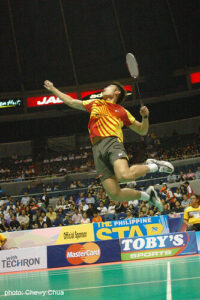
So, you’ve got the grip and you’re in the right spot, but your smash still feels a bit… weak? Chances are, you’re not using your whole body. The real power in a badminton smash doesn’t come from your arm alone; it’s a full-body effort. Think of it like cracking a whip – the energy starts from the base and travels all the way to the tip. Your body rotation is that crucial link.
Generating Power from Your Legs
It all begins down low. Before you even think about swinging your racket, your legs need to be doing some work. They’re the foundation for everything that follows. You want to get a good bend in your knees, almost like you’re coiling a spring. This allows you to push off the ground and transfer that energy upwards.
- Bend your knees deeply.
- Keep your weight balanced, ready to explode upwards.
- Use the push from your legs to initiate the upward movement.
Coordinated Hip and Torso Rotation
Once your legs have done their job, it’s time for your hips and torso to join the party. This is where a lot of that whip-like action comes from. As you start to uncoil from your leg bend, your hips should lead the rotation, followed closely by your torso. It’s a sequential movement, not a simultaneous one. Imagine your body turning like a well-oiled machine. This rotation is key to building up speed before your arm even gets involved. Getting this right can really help with smash speed outcomes.
The sequence is vital: legs push, hips turn, torso follows. Trying to force the rotation with just your shoulders will limit your power significantly. It’s about letting the momentum build naturally from the ground up.
Smooth Follow-Through with Shoulders and Elbow
Finally, as your hips and torso are rotating, your shoulder and elbow come into play. Your shoulder acts as a pivot point, and your elbow bends and extends to bring the racket forward. The key here is smoothness. Don’t force it; let the momentum from your body rotation carry your arm through the swing. A good follow-through means your racket continues its path after hitting the shuttle, often across your body. This ensures you’ve transferred as much energy as possible into the shot and helps maintain balance. It’s all about that coordinated kinetic chain, where the core stability plays a big part in transferring that energy efficiently.
The Art of Timing Your Badminton Smash
Timing is everything when it comes to a killer smash. You can have all the power in the world, but if you hit the shuttle at the wrong moment, it’s just not going to land where you want it to. It’s like trying to catch a falling object – you need to be in the right place at the right time.
Striking the Shuttle at Its Highest Point
This is probably the most talked-about aspect of smash timing. You want to connect with the shuttle when it’s as high as possible, ideally above your head and slightly in front of you. Why? Because hitting it at its peak gives you the steepest downward angle. This makes it much harder for your opponent to get to it. Think about it: if you hit it too late, when it’s already dropping, you lose that steep angle, and it becomes a much easier shot for them to return. It’s not just about hitting hard; it’s about hitting smart.
Controlling Your Swing for Accuracy
While we all want that thunderous smash, accuracy is just as important. Sometimes, trying to swing too early or too wildly can lead to you mis-hitting the shuttle, sending it into the net or out of bounds. The key here is to keep your swing smooth and controlled, especially in the lead-up. Don’t commit to the full swing until you’re sure of your timing and positioning. A relaxed grip, as we discussed earlier, really helps here, allowing for better racket head speed without sacrificing control. It’s a delicate balance, for sure.
Maximizing Speed in the Final Moment
This is where the magic happens. Instead of starting your swing with maximum effort from the get-go, focus on building up speed as you approach the shuttle. The real power comes from that final burst of acceleration right before impact. It’s about generating momentum and then transferring it explosively through the racket head. This technique helps prevent you from slicing the shuttle and ensures you get the most velocity on the shot. Practicing this acceleration phase is key to developing a truly devastating smash. You can work on this by practicing badminton smash hacks that focus on the final swing motion.
Variations and Strategic Use of the Badminton Smash
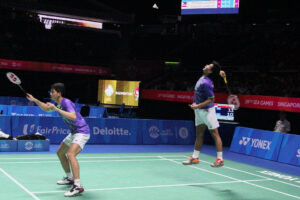
So, you’ve got the basic smash down, but what’s next? It’s not just about hitting it hard, right? There are different ways to swing that racket and different times to actually use the smash to really mess with your opponent. Think of it like having a few different tools in your toolbox instead of just one hammer.
Steep Smash vs. Cross-Court Smash
When we talk about smash variations, two big ones come to mind: the steep smash and the cross-court smash. The steep smash is pretty much what it sounds like – you’re hitting the shuttle almost straight down into the opponent’s court, usually near the front or middle. This is great for a quick point if your opponent is caught off guard or too far back. The cross-court smash, on the other hand, goes diagonally across the net. This one is a bit trickier to pull off but can be super effective if you can catch your opponent out of position on the other side. It forces them to move a lot more.
Here’s a quick look at when each might be better:
| Smash Type | Target Area | Best Used When… |
|---|---|---|
| Steep Smash | Front/Mid-court | Opponent is deep, or you have a very high shuttle. |
| Cross-Court Smash | Opposite side corner | Opponent is out of position, or to change direction. |
When to Deploy the Smash for Maximum Impact
Knowing when to smash is almost as important as knowing how. You don’t want to just smash every high shuttle you get. The best times are when you have a clear advantage. This usually means the shuttle is high enough that you can hit it downwards with force, and your opponent is struggling to get back into a good defensive spot. If they’re too close to the net, or if they’re still recovering from the last shot, that’s your cue. A well-timed smash can end a rally fast. But, be careful – if you’re too far back when you try to smash, it might just float and give your opponent an easy return. It’s all about picking those moments where you can really put the pressure on.
Don’t just smash because you can. Look for the right opportunity. A smash is a powerful weapon, but like any weapon, it’s most effective when used with precision and at the right moment. Sometimes, a well-placed drive or drop shot can be just as damaging, if not more so, because it’s unexpected.
Using Smashes to Pressure Opponents
Smashes aren’t just for winning points directly; they’re also a fantastic way to put your opponent under constant pressure. When you start mixing in smashes, even if they don’t all land perfectly, your opponent has to be ready for them. They can’t just relax and wait for easy shots. This means they might play more defensively, which can open up other opportunities for you. You can use smashes to force them to move around the court more, tiring them out. It’s a psychological game too; constantly having to defend against powerful smashes can wear down an opponent’s confidence. Remember, practicing your shadow practice can help you get into the right positions for these powerful shots more consistently. Mastering the badminton smash is key to winning points effectively, and understanding these variations and strategic uses will definitely help you improve your smashing skills.
Wrapping It Up
So, there you have it. Getting a good smash down in badminton isn’t just about swinging hard. It’s about getting your body in the right spot, holding the racket just so, and making sure you hit the shuttle at the best possible moment. It takes practice, for sure. Don’t expect to nail it perfectly the first time you try. Keep at it, focus on these steps, and you’ll start seeing your smashes get way more effective. You’ll be putting more pressure on your opponents and winning more points before you know it.
Frequently Asked Questions
What makes a badminton smash so powerful?
A powerful smash comes from using your whole body, not just your arm! Think about pushing off with your legs, twisting your hips and chest, and then letting your arm and racket follow through fast. It’s like cracking a whip – the whole body works together to make the racket head move super quickly when it hits the shuttlecock.
How do I know when to hit the shuttlecock for the best smash?
Timing is everything! You want to hit the shuttlecock when it’s at the highest point you can reach. This gives you the best angle to hit down. Don’t swing too early; focus on building speed right before you make contact. It’s like catching a ball at its peak before it starts to drop.
What’s the best way to hold the racket for a smash?
For a smash, you’ll want to use a forehand grip, like you’re shaking hands with the racket. The trick is to keep your grip a little loose until the very last second before you hit the shuttlecock. This lets your wrist and arm snap through faster, giving you more power.
I struggle with my smash landing out or not going fast enough. What can I do?
This often happens if you’re not in the right spot. Try to get yourself under the shuttlecock and a little bit behind it. Also, make sure you’re turning your body sideways before you swing. This helps you get more power and control, and it keeps your shots from going wild.
Are there different kinds of smashes I should know?
Yes! You can hit a steep smash that goes almost straight down, which is great for surprising your opponent. Or, you can hit a cross-court smash that goes to the opposite side of the court. Knowing when to use each one can really mess with your opponent’s game.
How can I practice my smash effectively?
The best way is to practice a lot! Hit lots of smashes, even if they aren’t perfect at first. You can also do exercises that make your core stronger, as this helps with the twisting motion. Watching videos of pro players can also give you great ideas on how they do it.