
So, the Paris 2024 Olympics just wrapped up, and the badminton events were pretty wild. We saw some amazing plays and big wins, but also some tough losses. Now that the dust has settled in Paris, it’s time to look back at what happened and start thinking about what’s next. The focus shifts to LA28, and we’ve got a lot to consider as we head towards the next Games. Let’s break down the action from Paris and see what it means for the future of badminton at the Olympics.
Key Takeaways
- China was the top nation at Paris 2024, taking home the most medals overall in badminton.
- The qualification for Paris 2024 was a long process, using the ‘Race to Paris’ rankings that began in May 2023.
- The Porte de La Chapelle Arena hosted all the badminton matches, with the competition running from late July into early August.
- Badminton offers a fast-paced and exciting spectacle, a sport that’s been a part of the Summer Games since 1992.
- With Paris behind us, attention is now turning to LA28, with hopes of seeing new talent emerge and established stars continue their Olympic journeys.
Paris 2024: A Look Back at Badminton’s Olympic Showcase
The Paris 2024 Olympics saw badminton take center stage at the Porte de La Chapelle Arena, delivering a tournament packed with incredible skill and nail-biting finishes. From the opening rallies to the final championship matches, the athletes showcased the very best of this dynamic sport. It was a true celebration of speed, strategy, and sheer athleticism.
Key Statistics from Paris 2024 Badminton
The numbers from Paris tell a story of intense competition and global reach. A total of 173 players from 49 nations battled it out across the five medal events: men’s singles, women’s singles, men’s doubles, women’s doubles, and mixed doubles. The qualification period, which ran from May 2023 to April 2024, was a long road for many, but the effort was clearly worth it for those who made it to the French capital.
Here’s a quick look at the medal distribution:
| Rank | NOC (Nation) | Gold | Silver | Bronze | Total |
|---|---|---|---|---|---|
| 1 | China | 2 | 3 | 0 | 5 |
| 2 | South Korea | 1 | 1 | 0 | 2 |
| 3 | Chinese Taipei | 1 | 0 | 0 | 1 |
| 4 | Denmark | 1 | 0 | 0 | 1 |
| 5 | Thailand | 0 | 1 | 0 | 1 |
| 6 | Japan | 0 | 0 | 2 | 2 |
| 7 | Malaysia | 0 | 0 | 2 | 2 |
| 8 | Indonesia | 0 | 0 | 1 | 1 |
Dominant Nations in Olympic Badminton
China once again proved its might in the badminton world, topping the medal table with a total of five medals, including two golds. South Korea also had a strong showing, securing a gold and a silver. Other nations like Chinese Taipei and Denmark also managed to grab a gold medal each, highlighting the growing global competitiveness in the sport. It’s clear that while some nations consistently perform at the highest level, the gap is narrowing, making every match a potential upset.
The intensity of Olympic badminton is something else. You see players pushing their limits, making incredible saves, and executing shots that seem impossible. It’s a sport that demands so much physically and mentally, and watching it unfold on the Olympic stage is always a treat.
Individual Medalists and Their Achievements
Paris 2024 saw some truly memorable performances. In the women’s singles, An Se-young of South Korea clinched the gold, marking a significant achievement in her career. The mixed doubles title went to China’s Zheng Siwei and Huang Yaqiong, who added another Olympic gold to their impressive collection. The men’s singles gold was claimed by Viktor Axelsen of Denmark, solidifying his status as one of the sport’s top athletes. These victories, among many others, will be remembered as highlights of the Paris 2024 Games.
Here are the gold medal winners:
- Men’s Singles: Viktor Axelsen (Denmark)
- Women’s Singles: An Se-young (South Korea)
- Men’s Doubles: Lee Yang / Wang Chi-lin (Chinese Taipei)
- Women’s Doubles: Chen Qingchen / Jia Yifan (China)
- Mixed Doubles: Zheng Siwei / Huang Yaqiong (China)
The Road to Paris: Badminton Qualification Process
Getting to the Olympics for badminton isn’t just about being good; it’s a whole journey involving rankings, specific tournaments, and sometimes, a bit of luck. For Paris 2024, the path was pretty involved, making sure only the best of the best made it to the court.
Understanding the ‘Race to Paris’ Rankings
The main way athletes qualified was through the Badminton World Federation’s (BWF) “Race to Paris” ranking system. Think of it as a year-long tournament where every match played in specific BWF events between May 1, 2023, and April 28, 2024, earned players points. The higher you ranked at the end of this period, the better your chances of securing a spot. It wasn’t just about winning one big tournament; consistency over many months was key. This system aimed to reward players who performed well consistently on the international stage.
Universality Places and Host Nation Spots
While the rankings were the primary route, the Olympics also makes room for broader representation. France, as the host nation, got automatic spots in both men’s and women’s singles. This is a nice perk for the host country. On top of that, there were “Universality Places.” These are spots set aside for athletes from countries that might not typically have players qualifying through the main ranking system. It’s a way to ensure badminton is seen and played by a wider range of nations at the Games. For Paris 2024, there were four such places, two for men and two for women.
Key Dates in the Qualification Journey
- Qualification Period Start: May 1, 2023. This is when players began earning points for the “Race to Paris” rankings.
- Qualification Period End: April 28, 2024. The final day for players to earn ranking points.
- Final Rankings Published: April 30, 2024. This is when the official list of qualified athletes was determined based on the rankings.
- Olympic Games Start: July 26, 2024. The culmination of all the hard work and qualification efforts.
The qualification system is designed to be fair, rewarding consistent performance over a significant period. It balances direct qualification through rankings with provisions for host nations and broader global participation, making the Olympic badminton field a true reflection of global talent.
Looking ahead, the qualification system for LA28 will follow a similar structure, with the ranking period set to run from May 3, 2027, to April 30, 2028. The official LA28 Olympic Ranking will be the deciding factor, published just before the Games begin.
Inside the Porte de La Chapelle Arena
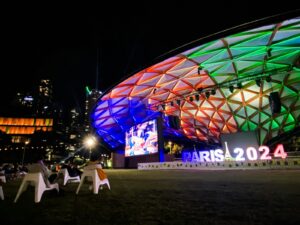
The badminton events at the Paris 2024 Olympics took place at the Porte de La Chapelle Arena, a brand-new venue that opened its doors just before the Games. This place was buzzing with energy, hosting thrilling matches from July 27th to August 5th, 2024. It’s a pretty modern spot, designed to hold about 8,000 fans for sports like badminton, and even more for concerts.
Venue Details for Badminton Events
The arena itself is located in the north of Paris, in the 18th arrondissement. It’s a purpose-built facility, meaning it was constructed specifically with major sporting events in mind. For badminton, this meant courts set up to international standards, ensuring fair play and optimal conditions for the athletes. The atmosphere inside was electric, with spectators close enough to the action to really feel the intensity of each rally.
- Capacity: 8,000 seats for sporting events.
- Opened: February 2024, just in time for the Paris Olympics.
- Location: Porte de Chapelle, Paris.
- Features: State-of-the-art courts, modern amenities for athletes and fans.
The Porte de La Chapelle Arena is more than just a sports venue; it’s a symbol of Paris’s commitment to modern infrastructure and hosting world-class events. Its design aims to be functional and visually appealing, contributing to the overall Olympic experience.
Competition Schedule Breakdown
The schedule was packed, with matches running almost every day during the tournament period. It kicked off with the preliminary rounds, gradually building up to the intense knockout stages.
Here’s a general look at how the schedule unfolded:
- Opening Days (Late July): Preliminary rounds for all five disciplines – men’s singles, women’s singles, men’s doubles, women’s doubles, and mixed doubles. This is where the sheer number of competitors get whittled down.
- Mid-Tournament (Early August): Round of 16 and quarter-finals. The pressure really starts to mount as players fight for a spot in the semi-finals.
- Final Stretch (First Week of August): Semi-finals and the medal matches. These are the high-stakes games where Olympic glory is decided.
The finals for all events were held on August 3rd, 4th, and 5th, crowning the Olympic champions. It was a tight schedule, demanding peak performance from the athletes day after day. You can find more details about the specific match timings and results on the official Paris 2024 Olympics website.
The Thrill of Olympic Badminton
Badminton at the Olympics is something else, isn’t it? It’s not just a game; it’s a high-speed ballet of athleticism and strategy. Watching these athletes move across the court, you can’t help but be amazed by their agility and sheer speed. It’s a sport that demands incredible stamina, explosive power, and reflexes so quick they seem almost supernatural.
What Makes Badminton an Exciting Olympic Sport
So, what is it about badminton that grabs your attention, especially when it’s on the Olympic stage? For starters, the pace is just relentless. We’re talking about rallies that can last mere seconds or stretch into nail-biting contests of endurance. Players use their rackets to send a shuttlecock flying back and forth over the net, and the goal is simple: land it where your opponent can’t reach it, or force them into making a mistake. It’s a constant back-and-forth, a mental chess match played at lightning speed.
Here’s a quick breakdown of what makes it so captivating:
- Speed and Agility: The shuttlecock can travel at speeds over 300 miles per hour, and players have to react instantly, often leaping high into the air.
- Strategic Depth: It’s not just about hitting hard. Players need to think several shots ahead, using deception, placement, and variation to outsmart their opponents.
- Physical Demands: The constant movement, lunging, and jumping require incredible cardiovascular fitness and muscular strength.
- Mental Fortitude: Staying focused under pressure, especially in crucial moments of a match, is just as important as physical skill.
The sheer intensity packed into such a small court is astounding. Every point feels significant, and the ebb and flow of a match can change in an instant, keeping everyone on the edge of their seats.
Evolution of Badminton in the Summer Games
Badminton officially joined the Olympic program at the Barcelona 1992 Games, and since then, it’s really come into its own. Initially, it might have been seen as a more niche sport, but its inclusion has definitely boosted its global profile. We’ve seen the game evolve significantly over the decades. The equipment has improved, training methods have become more sophisticated, and the level of competition has just gotten higher and higher.
Looking back at the early Olympic tournaments compared to what we saw in Paris 2024, the difference is stark. The athleticism on display today is phenomenal. The introduction of mixed doubles also added another layer of excitement and strategy to the Olympic badminton program. It’s fascinating to see how the sport has grown and how new stars emerge, pushing the boundaries of what’s possible on the court. The journey from its demonstration status to a main event is a testament to its appeal and the dedication of its athletes, making it a highlight of the Paris 2024 anniversary celebrations.
Looking Ahead: Badminton’s Future at LA28

After the excitement of Paris 2024, the badminton world is already setting its sights on the next Olympic Games in Los Angeles in 2028. The journey to qualify for LA28 will begin soon, with players and nations gearing up for another intense cycle. We can expect the “Race to LA” rankings to become the main focus for athletes aiming to secure their spot.
Anticipating the Next Olympic Badminton Cycle
The qualification process for LA28 will likely follow a similar structure to Paris, emphasizing consistent performance on the world stage. The Badminton World Federation’s ranking system will be key, with points accumulated over a specific period determining who makes the cut. The intensity of these qualification tournaments often mirrors the Olympics themselves, as athletes fight for every ranking point.
Here’s a general idea of what the qualification path might look like:
- Ranking Period: Athletes will compete in various international tournaments to earn points.
- Ranking Release: The official “Race to LA” rankings will be published by the BWF.
- Quota Allocation: National Olympic Committees will receive spots based on these rankings, with limits on the number of players per country.
- Universality and Host Nation Spots: As in previous Games, there will be provisions for universality places and spots for the host nation, LA28.
Potential Emerging Talent for Future Games
Every Olympic cycle brings new stars to the forefront, and LA28 will be no different. We’ll be watching closely to see which young talents emerge from the shadows and challenge the established order. Keep an eye on players from countries like China, South Korea, and Japan, who consistently produce top-tier talent, but also look for rising stars from emerging badminton nations. The dynamic nature of the sport means that unexpected contenders can always make a splash. It’s always exciting to see who will be the next big name in Olympic badminton, and the path to LA28 hospitality packages will be a thrilling one to follow.
The evolution of badminton in the Olympics has seen a rise in speed and power. Players are not just technically gifted but also incredibly athletic, showcasing incredible stamina and explosive movements. This trend is likely to continue, making the sport even more captivating for fans.
We can anticipate a strong showing from established powerhouses, but the beauty of the Olympics is the potential for upsets and the rise of new heroes. The schedule for LA28 will undoubtedly feature thrilling matches as athletes vie for Olympic glory.
Looking Ahead: From Paris to LA
So, Paris 2024 gave us some amazing badminton moments, didn’t it? We saw incredible skill and some upsets, too. China really showed up, but other countries like South Korea and Chinese Taipei definitely made their mark. Now that the shuttlecock has landed in Paris, all eyes are turning to Los Angeles for 2028. We can only imagine what new rivalries will form and which stars will rise by then. The sport is always growing, and it’s going to be exciting to see how it all plays out on home soil for the next Games. Get ready, LA, badminton is coming!
Frequently Asked Questions
What is badminton and why is it exciting to watch at the Olympics?
Badminton is a fast-paced indoor game where players use rackets to hit a shuttlecock over a net. It’s super exciting at the Olympics because it requires amazing speed, quick thinking, and incredible agility. Athletes leap, dive, and make lightning-fast shots, making every match a thrilling display of skill and energy. It’s been an Olympic sport since 1992, and it always keeps you on the edge of your seat!
Where did the badminton events take place at the Paris 2024 Olympics?
The badminton matches at the Paris 2024 Olympics were held at the Porte de La Chapelle Arena. This venue buzzed with excitement as top players from around the world competed for gold.
How do players qualify for the Olympics in badminton?
Getting to the Olympics for badminton is a tough journey! Players earn points in tournaments throughout the year, and their ranking in the ‘Race to Paris’ list is key. The top-ranked players automatically qualify. There are also special spots for the host country and for players from countries that might not usually have many athletes competing, making sure the Games are truly global.
Which countries did really well in badminton at Paris 2024?
China was a powerhouse in badminton at Paris 2024, taking home the most gold medals. South Korea also had a fantastic showing with multiple medals. Other strong nations included Chinese Taipei, Denmark, Thailand, Japan, Malaysia, and Indonesia, showing how competitive the sport is worldwide.
What are the main events in Olympic badminton?
At the Olympics, badminton features five main events: men’s singles, women’s singles, men’s doubles, women’s doubles, and mixed doubles. Each event is a unique challenge, testing different skills and teamwork.
What should we look forward to in badminton at the Los Angeles 2028 Olympics?
For the LA28 Games, we can expect even more incredible talent to emerge. New stars will likely rise, and established champions will be looking to defend their titles. The sport continues to grow, so expect faster rallies, more creative strategies, and even more thrilling matches as athletes push the boundaries of what’s possible.