
Thinking about picking up badminton? It’s a really fun sport that lots of people play. Whether you’re just hitting the shuttle around with friends or getting serious about matches, knowing the basic 5 rules of badminton is super important. It helps make sure the game is fair and honestly, it just makes it more enjoyable. We’re going to break down some of the main rules and give you a heads-up on what gear works best to help you play better.
Key Takeaways
- Grasp the core badminton rules, covering court setup, how to serve, and how points are scored.
- Serve the shuttle correctly: hit it below your waist and send it diagonally into the opponent’s service box.
- Pick the right gear, like a suitable racket, shoes that don’t mark the floor, and a good shuttlecock.
- Work on your footwork and vary your shots to get faster and have more control on the court.
- Find a good balance between attacking and defending to become a more adaptable player.
1. Court
Alright, let’s talk about the badminton court. It’s not just any old rectangle; it’s a precisely measured space where all the action happens. The dimensions are super important for both singles and doubles play. For singles, you’re playing on a narrower court, measuring 13.4 meters long and 5.18 meters wide. But when you switch to doubles, that court gets a bit wider, stretching to 6.10 meters across, though the length stays the same at 13.4 meters. Knowing these lines is key because hitting the shuttlecock outside of them means you’ve made a fault.
Think of the court as your battlefield. You’ve got the sidelines, the baselines, and the service lines all defining your territory. The net, of course, splits it right down the middle. It’s a pretty standard setup, but the specifics matter a lot when you’re trying to score points.
The court’s boundaries are not just lines on the floor; they dictate where the shuttlecock must land for a point to be valid. Understanding these limits is the first step to playing strategically.
When you’re playing, especially in doubles, you’ll notice how the court feels different. The wider doubles court means more ground to cover, and positioning becomes a whole different ballgame. It’s all about using that space effectively. You can find more details on the specific court dimensions if you want to get really technical about it.
2. Net
The net is a pretty big deal in badminton, obviously. It’s what separates the two sides of the court, and you’ve got to get that shuttlecock over it to keep the rally going. For both singles and doubles matches, the net stands at a height of 1.55 meters (about 5 feet 1 inch) at the posts on the sides, and it dips slightly in the middle to 1.524 meters (around 5 feet). It’s important to remember that you can’t touch the net with your racket or your body while the shuttle is in play. If you do, it’s a fault, and the other side gets a point. So, keep your distance!
Here’s a quick rundown of net-related rules:
- Height: 1.55m at the posts, 1.524m in the center.
- No Touching: Players must avoid contact with the net during a rally.
- Shuttle Stuck: If the shuttle gets stuck in the net, it’s usually a ‘let’, meaning the point is replayed.
The net isn’t just a barrier; it’s a strategic element. Learning to hit shots that skim just over it, or using it to your advantage with tricky angles, can really change the game. It dictates the pace and the type of shots you’ll play, forcing you to be precise with your trajectory and power.
3. Shuttlecock
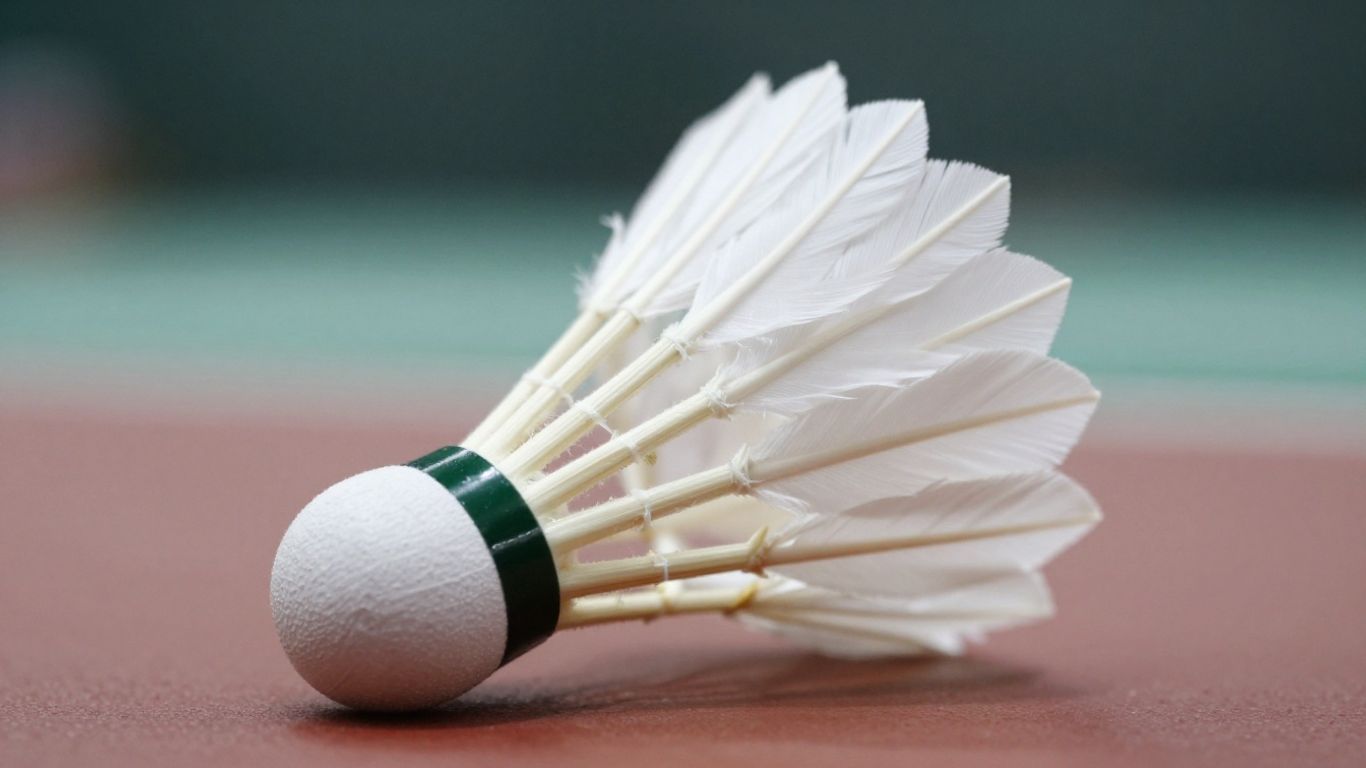
Alright, let’s talk about the shuttlecock, or as some folks call it, the ‘birdie’. This little thing is what makes badminton, well, badminton. It’s not just any old ball; it’s got a unique shape that makes it fly in a pretty specific way.
There are two main types you’ll see out there:
- Feather shuttlecocks: These are the ones the pros use. They’re made from goose or duck feathers, usually 16 of them, all stuck into a cork base. They fly really true and fast, and they have that classic arc. The downside? They don’t last super long and can get banged up pretty quickly, especially if you’re hitting them hard.
- Synthetic (or plastic) shuttlecocks: These are way more durable and cheaper, which makes them perfect for beginners or just casual games in the park. They’re usually made of plastic with a rubber or cork base. They don’t fly quite the same as feather ones – a bit more floaty, maybe – but they’ll survive a lot more smashes before you need to swap them out.
| Type | Material | Flight Characteristics | Durability | Cost |
|---|---|---|---|---|
| Feather | Goose/Duck Feathers | Fast, true arc | Low | High |
| Synthetic | Plastic/Rubber | Slower, more floaty | High | Low |
Choosing the right shuttlecock really depends on what you’re doing. If you’re just starting out or playing for fun, a synthetic one is probably your best bet. But if you’re getting serious and want to feel what the game is really like, you’ll want to get your hands on some feather ones. They just behave differently in the air, and that makes a big difference in how you play your shots.
4. Racket
Alright, let’s talk about the racket. This is your main tool on the court, so picking the right one makes a difference. Think of it like a painter’s brush; you wouldn’t use a house-painting brush for fine detail, right? Same idea here.
Badminton rackets are generally pretty light, often made from materials like carbon fiber or aluminum. The weight and flexibility are key factors. Lighter rackets mean you can swing faster, which is great for quick volleys or getting to a fast shot. Heavier ones can give you more power for smashes, but they might slow you down a bit.
Here’s a quick rundown of what to consider:
- Weight: Most rackets fall between 70-80 grams. Lighter is faster, heavier is more powerful. Find your balance.
- Flexibility: Stiff rackets are good for power shots, while more flexible ones offer better control. Beginners often do well with a slightly more flexible racket.
- Balance Point: This is where the racket feels heaviest. Head-heavy rackets are for power, while head-light ones are better for speed and defense. An even balance is a good all-around choice.
The grip is also super important. You want a grip that feels comfortable but secure. It shouldn’t be too tight, as that can strain your wrist. A good grip lets you move your wrist easily for different shots. There are different ways to hold the racket, like the forehand and backhand grips, and knowing these helps you play better strokes.
Choosing the right racket isn’t just about specs; it’s about how it feels in your hand and how it helps your specific game. Don’t be afraid to try out a few different ones if you can. It’s worth the effort to find one that feels like an extension of your arm. For intermediate players, looking at rackets based on playing style can really help narrow down the options. Check out racket types.
Remember, your racket is your partner in the game. Take care of it, and it’ll help you play your best.
5. Shoes
Alright, let’s talk about shoes. You might think, ‘It’s just shoes, right?’ But in badminton, they’re way more important than you’d guess. The right pair can seriously change how you play and help keep you from getting hurt.
Badminton involves a ton of quick stops, starts, and sideways movements. Your regular sneakers just aren’t built for that. They don’t have the right kind of grip, and they don’t support your feet and ankles the way you need them to when you’re lunging for a shot or cutting across the court.
What you really want are badminton-specific shoes. These are designed with a few key things in mind:
- Grip: The soles are made to stick to the court surface, so you don’t slip when you make those sudden moves. This is super important for quick footwork.
- Support: They offer better ankle support to help prevent twists and sprains. You’ll feel more stable when you’re moving around.
- Cushioning: Good cushioning absorbs the impact from all that jumping and landing, saving your knees and feet.
- Non-Marking Soles: Most indoor courts require shoes that don’t leave marks. Badminton shoes usually have soles that are designed to be non-marking, keeping the court looking good.
Think of your shoes as your connection to the court. If that connection is weak or unstable, your whole game suffers. You need shoes that let you move confidently and quickly without worrying about slipping or twisting something.
When you’re picking out a pair, look for something that feels comfortable right away. You don’t want to break them in during a match. Try them on and do a few quick movements in the store if you can. It’s an investment in your game and your body, so don’t skimp here!
6. Service Box
Alright, let’s talk about the service box. This is where the magic, or sometimes the mess, begins in a badminton rally. It’s the designated area from which you must serve the shuttlecock. Think of it as the starting gate for every point. If you’re serving in singles, you’ll be serving diagonally into the opponent’s service box. For doubles, it’s a bit different, but the principle remains the same – serve into the correct box.
Here’s the lowdown on serving correctly:
- Server’s Position: Both your feet must be inside your service box when you hit the shuttle. No stepping on the lines or outside the box!
- Shuttle Height: The serve must be hit below your waist. This is a common fault if you forget.
- Racket Angle: The entire racket head must be below your hand when you make contact with the shuttle.
- Diagonal Serve: The shuttle must travel across the net and land within the boundaries of the opponent’s service box.
Missing any of these can lead to a fault, and nobody wants to give away a free point right at the start. It’s all about precision and following the rules to get the rally going properly. Getting this right is a big step towards mastering the game, and you can find more details on serving rules to help you nail it every time.
7. Boundary Lines
The lines marking the edges of the badminton court are super important. They tell you if the shuttlecock landed in or out of play. For singles matches, the court is narrower, using the inner sidelines. But when you’re playing doubles, you get to use the full width, including those outer sidelines.
It’s a common mistake for beginners to get confused about which lines apply to which game type. Always remember that the boundary lines are different for singles and doubles.
Here’s a quick breakdown:
- Singles: Uses the inner sidelines and the back boundary line.
- Doubles: Uses the outer sidelines and the back boundary line.
The shuttlecock is considered ‘in’ if it lands on any part of these boundary lines. If it lands completely outside of them, it’s a fault, and the point goes to your opponent. Paying close attention to where the shuttle lands relative to these lines is key to playing correctly and scoring points.
8. Scoring System
Alright, let’s talk about how you actually win a game of badminton. It’s pretty straightforward once you get the hang of it. The first side to win two out of three games takes the match. Each game is played up to 21 points. So, you’re aiming to get to 21 before your opponent does.
Now, here’s a little detail that trips some people up: you need to win by at least two points. If the score hits 20-20, you can’t just stop there. You’ve got to keep playing until one player or team has a two-point lead. For example, if it’s 25-24, the person with 25 points wins. But if it keeps going and gets to 29-29, the next point wins the game, making it 30-29. So, the maximum score you can get is 30 points.
This scoring method is called a rally point system. What that means is that a point is scored on every single rally, no matter who served. So, if you win the rally, you get a point. Simple as that. This is different from older rules where only the serving side could score.
Here’s a quick rundown:
- Match Format: Best of three games.
- Game Target: First to 21 points.
- Winning Margin: Must win by at least 2 points.
- Tiebreaker: If 20-20, play continues until a 2-point lead is achieved.
- Cap: If score reaches 29-29, the next point wins (30-29).
There are also short breaks during the game. When a player reaches 11 points, there’s a quick 60-second break. Then, between games, you get a bit longer, about 2 minutes, to catch your breath and strategize. It’s good to know these little breaks are there, especially in a close match. You can find more details on how matches are structured on the official badminton rules.
Remember, every rally counts. Focus on winning each point, and the games and match will take care of themselves. Don’t get discouraged if you’re down; a few quick rallies can change everything.
9. Rally Point

So, what exactly is a rally point in badminton? It’s pretty straightforward, actually. Every single rally played results in a point for one of the players or teams. This means it doesn’t matter who served the shuttlecock; if you win the rally, you get a point. This is different from older scoring systems where only the serving side could score.
Here’s how a rally typically plays out:
- The game starts with a serve.
- Players hit the shuttlecock back and forth over the net.
- The rally continues until the shuttlecock hits the ground, goes out of bounds, or a fault is committed.
- The side that doesn’t commit the fault or error wins the rally and scores a point.
This system keeps the game moving and exciting. You’re always in with a chance to score, no matter what. It really makes you focus on every single shot because any mistake can cost you.
The rally point system means that every exchange of the shuttlecock is a chance to score. Winning a rally, whether you served or not, earns you a point. This keeps the game dynamic and requires constant focus from both players.
10. Faults
Alright, let’s talk about faults. These are basically the things you can’t do on the court, and messing up any of them means your opponent gets a point. It’s pretty straightforward, but knowing the specifics can save you a lot of frustration.
The most common way to commit a fault is by breaking a rule during play. This can happen in a few different ways.
Here are some of the main ones to watch out for:
- Touching the Net: You absolutely cannot let your racket or your body touch the net while the shuttle is in play. Seriously, not even a little brush. If you do, it’s an automatic fault.
- Hitting the Shuttle Twice: A player or a pair in doubles can only hit the shuttle once per shot. You can’t hit it, let it bounce off you, and then hit it again, or have two players on the same side hit it in quick succession. That’s a double hit, and it’s a fault.
- Shuttle Out of Bounds: If the shuttle lands outside the boundary lines of the court, it’s out. This also applies if it hits the ceiling or any other obstruction.
- Serving Errors: There are specific rules for serving, like hitting it below your waist and making sure it lands in the correct service box. Mess up the serve, and it’s a fault.
- Reaching Over the Net: Unless you’re following through with a stroke, you can’t hit the shuttle on the opponent’s side of the net. Your racket has to be on your side when you make contact.
Remember, the goal is to keep the shuttle in play within the boundaries and according to the rules. Every fault you avoid is a step closer to winning.
Understanding these common faults is key to playing a clean game. It’s not just about hitting the shuttle hard; it’s about playing smart and respecting the game’s structure. Keep these in mind during your next match, and you’ll find yourself making fewer mistakes and scoring more points. For more on how to play, check out this guide to badminton rules.
Wrapping It Up
So there you have it, the basic rundown on how to play badminton. It’s not rocket science, right? Knowing these rules, like how to serve properly or what counts as a point, really makes a difference. Plus, having the right gear, like a decent racket and shoes that don’t mark up the court, helps a ton. Keep practicing those moves and trying out different shots. The more you play, the better you’ll get. Don’t be afraid to mix up your offense and defense. It’s all about having fun and getting a good game going. Now go hit the court!
Frequently Asked Questions
What’s the main goal when playing badminton?
The main goal is to hit the shuttlecock over the net so your opponent can’t hit it back legally into your court. You score a point when they miss or hit it out of bounds.
How is a badminton match won?
A match is usually the best of three games. Each game is played to 21 points. You need to win by at least two points. If it’s 20-20, play continues until one side has a two-point lead, or until one side reaches 30 points.
What are the basic rules for serving?
You must serve diagonally to the opponent’s service box. The shuttlecock must be hit below your waist, and the racket head should be lower than your hand when you make contact.
What’s the difference between singles and doubles?
In singles, it’s one player against another, and you have to cover the whole court yourself. In doubles, it’s two players against two, and the court is wider. Players usually work together, covering different parts of the court.
What counts as a fault in badminton?
A fault happens if you hit the shuttlecock out of bounds, hit it twice in a row, touch the net with your racket or body while the shuttle is in play, or if your serve doesn’t go into the correct service box.
Why is wearing the right shoes important?
Wearing special badminton shoes is important because they give you good grip on the court, helping you move quickly without slipping. They also provide support to help prevent injuries.