
So, you’re wondering, what is a smash shot in badminton? It’s that super fast, downward hit that can end a rally in a flash. Think of it as badminton’s thunderbolt. It’s the shot everyone wants to nail because it’s so satisfying and effective. But getting it right takes more than just swinging hard. It’s about timing, body movement, and a bit of technique. We’re going to break down how to make your smash a real weapon on the court, so your opponents are always on the back foot.
Key Takeaways
- The badminton smash is a powerful, attacking shot hit downwards, often at high speed, to win a rally.
- Generating a strong smash involves coordinating your body: waist rotation leads, followed by elbow extension and a quick wrist flick.
- Hit the shuttle at the highest point possible and slightly in front of your body for maximum downward angle and power.
- Avoid common errors like relying only on arm strength, neglecting wrist and elbow action, poor timing, and bad footwork.
- Practice drills that focus on technique, footwork, and combining the smash with other shots to improve consistency and power.
Understanding What Is A Smash Shot In Badminton
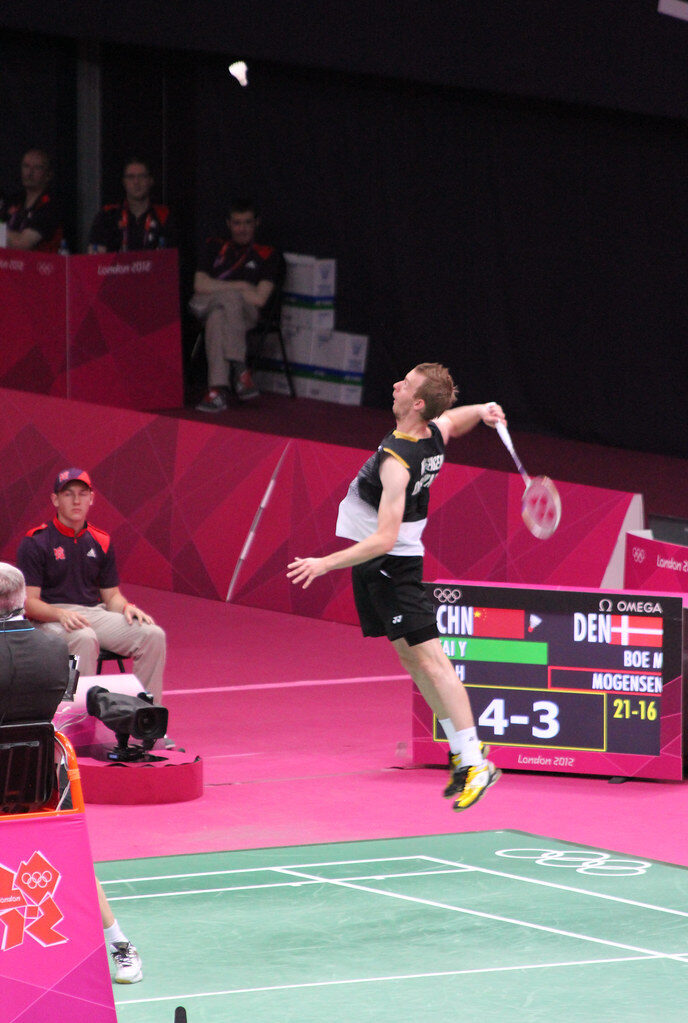
So, what exactly is a smash in badminton? Think of it as the ultimate attacking move, the one that can end a rally in a flash. It’s a powerful, overhead shot where you hit the shuttlecock downwards with as much force and speed as you can muster. The goal is to make it so fast and steep that your opponent can’t get to it in time. It’s not just about hitting hard, though; it’s about hitting smart and hitting with purpose.
The Definition Of A Badminton Smash
At its core, a badminton smash is an offensive stroke. You’re aiming to hit the shuttlecock from a high point, usually above your head, and drive it down into your opponent’s court. It’s the badminton equivalent of a thunderous slam dunk in basketball or a powerful serve in tennis. When done right, it’s incredibly difficult to return, often resulting in an outright point.
The Power And Speed Of A Smash
The sheer power and speed of a smash are what make it so intimidating. Professional players can hit smashes that reach speeds well over 300 km/h (186 mph), and some have even been recorded at speeds exceeding 500 km/h (310 mph). While you might not hit those kinds of numbers right away, the principle is the same: generate maximum velocity to overwhelm your opponent. This speed means your opponent has very little time to react, forcing them into a defensive position or an error.
When To Execute The Smash Shot
Knowing when to smash is just as important as knowing how. You can’t just smash every shot. The ideal time to unleash a smash is when the shuttlecock is high in the air, giving you that crucial downward angle. This often happens after your opponent hits a weak lift or a shot that doesn’t go deep enough into your court.
Here are some common scenarios where a smash is a good idea:
- Your opponent hits a short lift that you can reach comfortably above your head.
- You’ve managed to push your opponent to the back of the court, giving you space to attack.
- You’ve set up the rally with a few well-placed shots and see an opening.
However, you should be cautious about smashing if:
- You’re off-balance or out of position.
- The shuttlecock is too low or too far in front of you.
- Your opponent is already in a strong defensive position at the net.
Trying to force a smash when the conditions aren’t right can often lead to mistakes, like hitting the shuttle into the net or out of bounds. It’s better to play a safe shot and wait for a better opportunity than to waste a scoring chance.
Mastering the smash isn’t just about raw power; it’s about timing, technique, and knowing when to strike. It’s the shot that can truly change the momentum of a game.
Mastering The Smash Technique
Coordinating Body Mechanics For Power
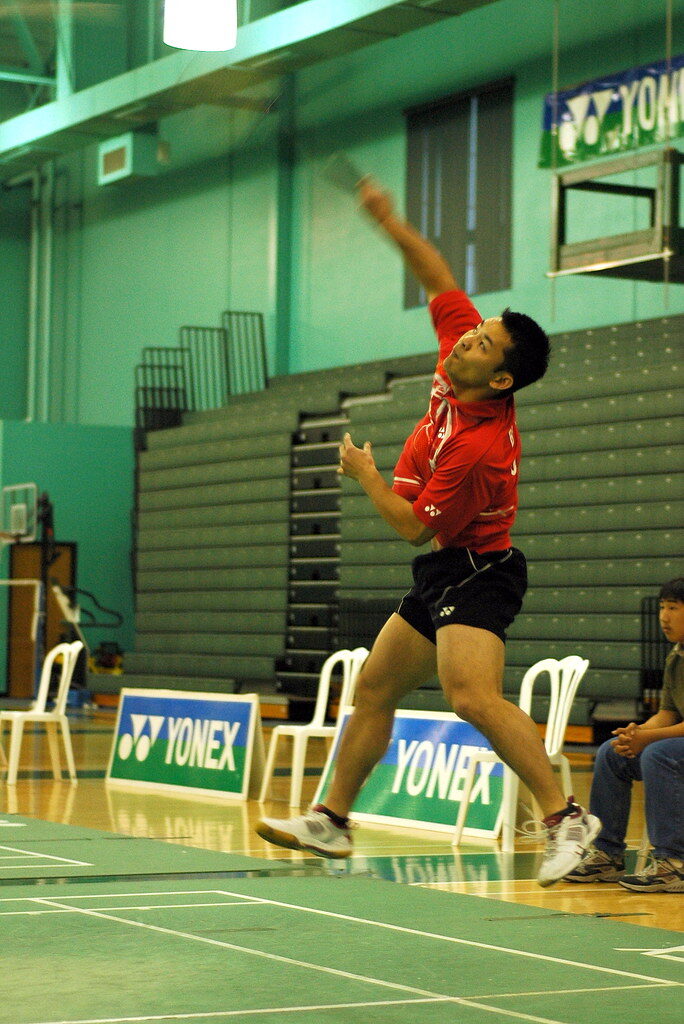
Getting a really powerful smash in badminton isn’t just about swinging your arm as hard as you can. It’s more like a chain reaction, starting from your core and moving all the way down to your wrist. Think of it as a coordinated dance of your body parts. You want to get everything moving together smoothly to build up that speed.
The Role Of Waist, Elbow, And Wrist
So, how does this body dance work? It starts with your waist. As you get ready to smash, you’ll rotate your waist, and this rotation helps generate the initial momentum. Then, that energy flows into your elbow, which starts to extend forward. Finally, right at the moment you hit the shuttlecock, your wrist snaps. This wrist snap is what adds that extra bit of speed and force, making your smash really sting. It’s all about transferring energy efficiently from one part to the next. The wrist snap at the point of impact is key to maximizing power and accuracy.
Achieving Fluidity In Your Swing
It’s really important that these movements – waist, elbow, and wrist – don’t happen one after another like separate events. They need to blend together into one continuous, fluid motion. Imagine a whip cracking; it’s that kind of smooth acceleration. When everything flows together, the power you generate from your body is transferred directly to the shuttlecock. This makes your smash much harder to return and can really surprise your opponent. Practicing this smooth, connected swing is what separates a decent smash from a truly devastating one. You can find some great drills to help with this coordination.
Don’t just focus on hitting the shuttle. Think about the entire motion leading up to and following the hit. A good smash feels like one smooth, powerful movement, not a series of jerky actions. This fluidity is what allows you to generate maximum velocity.
Key Elements Of A Powerful Smash
So, you want to hit a smash that really makes your opponent sweat? It’s not just about swinging hard. There are a few things you absolutely need to get right to make that smash count.
Optimal Body Positioning And Grip
Getting yourself set up correctly before you even think about hitting the shuttle is super important. You want to be balanced, with your feet shoulder-width apart, ready to move. Your non-racket arm should be pointing towards the shuttle, helping you aim and keep your balance. The grip for a smash is usually a forehand grip, but you want to hold the racket a bit more loosely than you might think. This allows for that quick wrist snap we’ll talk about later. A relaxed grip lets you generate more speed at the last second. Think of it like cracking a whip; you don’t grip the handle super tight the whole time.
Striking The Shuttle At The Highest Point
This is probably the most talked-about part of a good smash, and for good reason. You want to hit the shuttle when it’s as high as you can get it, ideally above your head and slightly in front of you. Why? Because hitting it higher gives you a better angle to hit down into your opponent’s court. If you hit it too low, you’re basically hitting it upwards, giving them an easy chance to attack. It takes good footwork and anticipation to get into the right position to hit at this peak height.
Aiming For Strategic Court Locations
Where you aim your smash makes a big difference. Just smashing it hard down the middle might work sometimes, but a smart player will anticipate that. You want to mix it up. Hitting to the back corners is a classic move, forcing your opponent to move a long way. You can also aim for the lines, trying to catch them off guard. Sometimes, a smash angled towards the body can be effective too, as it’s hard to react to.
Here are some common targets:
- Back Corners: Forces maximum court coverage.
- Lines: Aims for precision and surprise.
- Opponent’s Body: Can cause a weak return or an error.
The goal isn’t just to hit the shuttle hard, but to hit it where your opponent can’t easily get it back. This means thinking about their position on the court and where they’re likely to be. It’s a bit like playing chess, but with a racket and a shuttlecock.
The Sound Of Power
Ever heard a really good smash? It makes a distinct sound. It’s not a dull thud; it’s a sharp, crisp snap. This sound tells you that you’ve made clean contact with the shuttle at the right point and with good speed. If you’re not hearing that sound, it’s a good sign that something in your technique – maybe your timing, your grip, or where you’re hitting the shuttle – needs a little adjustment. It’s a subtle cue, but a useful one for improving.
Tips For Increasing Smash Power
Want to make your smash hit harder? It’s not just about swinging your arm faster. There are a few things you can focus on to really get some extra zip on that shuttlecock. Think of it like this: a powerful smash is a chain reaction, and every link needs to be strong and connected.
Focus On A Smooth, Continuous Motion
This is a big one. A lot of players tend to make their swing a bit jerky or choppy. That breaks up the flow of energy. You want your swing to be like a whip, not a stiff stick. Imagine the racket head gliding through the air, gathering speed all the way until it connects with the shuttle. A smooth motion means all the power you generate from your body can transfer directly to the shuttle, instead of getting lost in awkward movements.
Listen For The Crisp Sound Of Impact
This might sound a little odd, but the sound your racket makes when it hits the shuttle is a really good clue. A powerful smash should have a sharp, clean sound – like a quick snap. It’s not a dull thud or a soft ‘whoosh’. That crisp sound means you’ve made clean contact at the right point and your racket head speed was high. If you’re not hearing that sharp sound, it’s a sign that something in your technique might need a tweak.
Patience And Timing For The Perfect Shot
It’s tempting to just go for the smash the second you see an opening, but sometimes, that’s the worst thing you can do. Rushing a smash often leads to a weaker, less accurate shot. You need to wait for the optimal moment. This means getting yourself into the right position, with the shuttle at its highest point, and then executing the swing. Being patient allows you to put your whole body into the shot, rather than just relying on your arm. It’s about waiting for the right setup and then striking with full force and accuracy.
Don’t just swing harder; swing smarter. The power comes from a combination of good technique, proper body mechanics, and precise timing. Focus on making each part of the motion work together, from your footwork to your wrist snap.
Common Mistakes To Avoid
Even with the best intentions, it’s easy to fall into some bad habits when you’re trying to nail that powerful smash. Let’s talk about what trips players up so you can sidestep these issues.
Over-reliance on Arm Strength
This is a big one. Many players think that just swinging their arm harder will give them a killer smash. The truth is, your arm is only part of the equation. Trying to muscle the shuttle with just your arm leads to quick fatigue and often a weaker, less controlled shot. The real power comes from a coordinated effort involving your whole body, not just your biceps.
Neglecting Wrist and Elbow Movement
Think of your arm like a whip. The elbow and wrist are the parts that create that sharp, fast snap at the end. If you keep your elbow stiff or don’t use your wrist properly, you’re losing a ton of potential speed and power. The elbow should lead the forward motion, setting up your wrist for that crucial flick. Without this, your smash will feel flat and predictable.
Poor Timing and Lack of Footwork
Badminton is all about timing, and the smash is no exception. If you jump too early or too late, or if you’re not in the right position, your smash will suffer. Good footwork gets you to the shuttle at the ideal height and angle. Without it, you’re often reaching, which compromises your swing and power. It’s like trying to hit a baseball without stepping into the pitch – it just doesn’t work well.
It’s easy to get fixated on the racket swing itself, but remember that the smash starts long before your racket even gets near the shuttle. Your preparation, footwork, and body positioning are just as important, if not more so, than the actual swing. Don’t neglect the setup!
Here’s a quick rundown of what to watch out for:
- Arm-only power: Trying to force the shuttle with just your arm. Remember to use your body’s rotation.
- Stiff elbow/wrist: Not allowing the natural whip-like action of the elbow and wrist.
- Bad positioning: Not getting your feet in the right place to hit the shuttle at its highest point.
- Rushing the shot: Swinging before the shuttle is ready or at the wrong height.
- Ignoring the follow-through: Stopping your swing abruptly instead of letting it complete naturally.
Practicing Your Badminton Smash
Alright, so you’ve got the theory down about what makes a smash so killer. Now comes the fun part: actually getting good at it. You can’t just read about it and expect to suddenly be smashing like a pro, right? It takes time and, well, practice. Lots of it.
Drills For Developing Smash Technique
This is where you build the muscle memory and refine the movements. Don’t just go out there and hit a hundred smashes without thinking. Break it down. A good starting point is having a partner feed you high clears or lifts. Focus on one thing at a time – maybe it’s getting your body position right, or perhaps it’s the wrist snap. Take your time between shots. Seriously, don’t rush. Use that moment to think about what you just did. Did it feel right? Where did the shuttle go? This kind of self-check is super important.
Here’s a simple progression:
- Drill 1: The Solo Smash Feed. Your partner hits high shots to you, and you practice hitting smashes. Focus on your preparation and the hitting action itself. Take a breath between each one.
- Drill 2: The Two-Shot Combo. This gets you moving. Try hitting a drop shot, then have your partner lift to the other side for a smash. Or, hit a smash, have your partner return it to mid-court, and then you drive or push. This helps with moving into and out of the smash.
- Drill 3: Game-Like Scenarios. Incorporate the smash into more realistic rallies, like a rear-mid exchange. This is where you start putting it all together under a bit more pressure.
Practicing Smash Combinations
Once you’re comfortable with the basic smash, start linking it with other shots. Badminton isn’t just about one big hit; it’s about setting up opportunities. Practice hitting a smash and then immediately getting ready for the return. Or, practice setting up a smash with a deceptive shot. This makes your game less predictable and your smash more effective because opponents won’t always see it coming.
Recording Yourself For Feedback
This one sounds a bit vain, but trust me, it’s a game-changer. Get someone to film you when you’re practicing your smashes. You can then watch it back later, maybe even compare it to videos of pros. You’ll spot things you never noticed while you were playing – maybe your elbow isn’t coming through right, or your footwork is a bit off. It’s like having a coach with you 24/7, but it’s just you and your phone.
Don’t get discouraged if your smash isn’t perfect right away. It’s a complex shot that involves your whole body working together. Focus on making small improvements each time you step on the court. Consistency in practice is way more important than hitting one amazing smash and then nothing for a week.
Bringing It All Together
So, we’ve gone over what makes a badminton smash so powerful. It’s not just about swinging hard, right? It’s about using your whole body, from your waist to your wrist, and getting the timing just right. Remember to avoid those common mistakes, like only using your arm or rushing the shot. Practice makes perfect, as they say, and with a little focus on technique and timing, you’ll be hitting those thunderous smashes before you know it. Keep practicing, and you’ll definitely see your game improve.
Frequently Asked Questions
What exactly is a smash in badminton?
A smash in badminton is like a super-fast, downward hit. Think of it as a powerful punch with your racket, aiming to send the shuttlecock flying down into your opponent’s side of the court really quickly. It’s a main way to score points because it’s so hard to return!
How fast can a badminton smash go?
Smash speeds can be mind-blowing! Some professional players can hit the shuttlecock at speeds over 300 miles per hour. That’s faster than a speeding car! Even for regular players, a good smash is incredibly quick.
When is the best time to use a smash?
You want to smash when the shuttlecock is high up in the air and you’re in a good position to hit it downwards. It’s usually best when your opponent has hit the shuttle too high or too short, giving you that perfect opportunity to attack.
What’s the most important part of hitting a powerful smash?
It’s not just about using your arm! The real power comes from your whole body working together. You need to twist your waist, move your elbow correctly, and then snap your wrist at the last second. It’s like a chain reaction of power.
What are some common mistakes people make when smashing?
A big mistake is only using arm strength. Also, forgetting to use your wrist and elbow properly can make your smash weak. Another common error is not moving your feet to get in the right spot or swinging at the wrong time.
How can I practice and get better at smashing?
You can practice by having a friend hit high shuttles to you so you can focus on your smashing technique. You can also try hitting a smash right after another shot, like a drop shot, to get used to moving into the smash. Watching videos of yourself can also help you see what you need to fix.