
So, you want to get better at badminton, specifically with your forehand? That’s a smart move. The forehand is a big part of the game, and if you can nail it, you’ll see a real difference. We’re going to break down how to hold the racket right, how to stand, and how to actually hit the shuttlecock with power and control. It’s not just about swinging hard; it’s about doing it the right way. Let’s get into it and make your forehand in badminton something to be reckoned with.
Key Takeaways
- Getting the right grip and stance is the first step to a solid forehand in badminton.
- Mastering the forehand clear, whether defensive or attacking, helps control the back of the court.
- The forehand smash is your main weapon for ending rallies, and it needs good preparation and a strong follow-through.
- Finesse shots like the forehand drop and drive require precise racket control for accuracy.
- Practicing specific drills and understanding how your body moves will help you improve your forehand in badminton.
Understanding The Forehand Grip And Stance
The Foundation of Your Forehand Game
Alright, let’s get down to business. Before you can even think about smashing or dropping like a pro, you need to nail the basics: your grip and your stance. Seriously, these two things are like the bedrock of your entire forehand game. Get them right, and everything else starts to fall into place. Get them wrong, and you’ll be fighting yourself with every swing.
Think of your grip as how you connect with the racket. It’s not just about holding on; it’s about control and how you can move the racket head. The most common and generally best grip for forehand shots is often called the ‘handshake’ grip. Imagine you’re meeting someone for the first time and giving them a firm, friendly handshake. That’s pretty much how you want to hold the handle. Your palm should be somewhat behind the handle, and your fingers should wrap around it comfortably. This relaxed yet firm hold allows for the most natural wrist action, which is super important for generating power and finesse.
Achieving Optimal Balance and Stability
Now, let’s talk about where you stand – your stance. This is all about balance and being ready to move. When you’re waiting for your opponent to hit the shuttle, you should be in what we call the ‘ready position’. This means your feet are about shoulder-width apart, with your knees slightly bent. You want to be on the balls of your feet, not flat-footed, so you can spring into action. Your weight should be balanced, maybe leaning slightly forward. Typically, your non-racket foot will be a little ahead of your racket foot, and your body will be somewhat sideways to the net. This setup lets you move quickly in any direction – forward, backward, or sideways – without losing your balance.
Here’s a quick rundown of what that ready stance looks like:
- Feet: Shoulder-width apart, knees bent.
- Weight: Balanced, slightly forward, on the balls of your feet.
- Body: Sideways to the net, non-racket foot slightly forward.
- Racket: Held out in front of you, around chest height, with the racket face visible.
Being in this position isn’t just about waiting; it’s about being prepared to react instantly. It’s a dynamic state, not a static one. You should feel light and agile, ready to explode into movement the moment the shuttle is hit.
Grip Variations for Different Shots
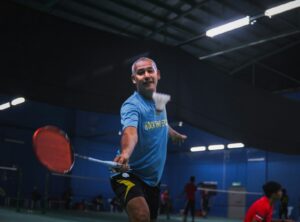
While the handshake grip is your go-to for most forehand shots, you might find yourself making tiny adjustments depending on what you’re trying to do. For instance, if you’re hitting a really powerful attacking shot, you might naturally grip a bit firmer. For delicate net shots, you might loosen your grip slightly and use more of your fingers to control the racket face. It’s not about completely changing your grip every time, but more about subtle shifts in pressure and finger placement.
Here are a few common adjustments:
- Forehand Clear/Drive: Standard handshake grip, firm but not tense. Focus on a full swing.
- Forehand Drop Shot: A slightly more relaxed grip, with more emphasis on finger control to ‘cushion’ the shuttlecock.
- Forehand Smash: A firmer grip, ensuring maximum power transfer through the wrist and arm.
Experimenting with these small changes during practice will help you develop a feel for what works best for each type of shot. It’s all about finding that sweet spot between control and power.
Mastering The Forehand Clear Technique
Executing the Defensive Forehand Clear
The defensive forehand clear is your go-to shot when you’re pushed back or off balance. The main goal here is to get the shuttle high and deep into your opponent’s back court. This gives you precious time to recover your position and get ready for whatever they send back. To do this, you want to get your body sideways to the shuttle, almost like you’re facing the side wall. Raise your non-racket arm for balance – it really helps. Then, as you swing, push your back hip forward. This body movement is key to getting some decent power behind the shot without having to rely solely on your arm.
Generating Power with the Attacking Forehand Clear
Now, the attacking forehand clear is a bit different. Instead of just getting it high and deep, you’re aiming for a flatter, faster trajectory. This shot is meant to put pressure on your opponent, giving them less time to react and potentially forcing a weak return. You still want to hit it deep, but the angle is more forward than upward. Think of it as a powerful push that drives the shuttle down the line or cross-court to their back boundary. It requires a good, full swing and a strong wrist snap to get that extra pace.
Footwork and Body Rotation for Clears
Good footwork is absolutely vital for both types of clears. You need to be able to move quickly to get into the right position under the shuttle. For the defensive clear, a sideways stance is common, with your weight shifting from your back foot to your front foot as you swing. For the attacking clear, you might find yourself moving forward more. The body rotation is where a lot of the power comes from. It’s not just your arm doing all the work. As you swing, your torso rotates, transferring energy from your legs and core all the way through your arm to the racket. This coordinated movement is what separates a weak clear from a powerful one.
Here’s a quick breakdown of the key elements:
- Positioning: Get sideways to the shuttle, racket arm back, non-racket arm up for balance.
- Swing: A full, fluid motion using your whole body, not just your arm.
- Contact Point: Hit the shuttle in front of your body, ideally at the highest point you can reach.
- Follow-Through: Continue the swing upwards and across your body to maximize power and control.
Remember, the clear isn’t just about hitting the shuttle hard. It’s about placing it effectively to gain an advantage. Practice hitting to different spots in the backcourt to see how your opponent reacts.
Unleashing Power With The Forehand Smash
The forehand smash is pretty much the ultimate offensive weapon in badminton. It’s that shot you aim to end a rally with, or at least force a really weak return from your opponent. Top players can hit these things ridiculously fast, over 400 km/h, which is just wild to think about. Getting this shot right takes a lot of coordination and good technique.
The Preparation and Wind-Up Phase
Before you even think about hitting the shuttle, you need to get yourself ready. This starts with your grip – you’ll want your standard forehand grip. Then, you need to get into position under the shuttle, which usually means moving sideways. Your racket should be up and ready above your head, and your non-racket arm goes up for balance. This is all about setting yourself up for the big swing.
Next comes the wind-up. You’ll often step forward with your back foot, and your back hip starts to rotate. Your hitting arm and forearm rotate outwards (supination), and you draw your elbow and shoulder back. This whole motion coils your body up like a spring, storing up energy for the strike.
Striking the Shuttlecock Effectively
This is where all that preparation pays off. The key here is explosive forearm pronation – that’s the quick inward rotation of your forearm. You want to extend your arm fully, making contact with the shuttle above or slightly in front of your hitting shoulder. The goal is to hit the shuttle downwards with as much force as possible. The speed of your racket head at impact is what really matters.
Here’s a quick breakdown of the strike phase:
- Pronation: Quick, powerful inward rotation of the forearm.
- Extension: Full reach with your hitting arm.
- Contact Point: Above or slightly in front of your hitting shoulder.
- Trajectory: Impart a sharp downward angle to the shuttle.
Follow-Through for Maximum Velocity
Don’t just stop after you hit the shuttle; the follow-through is super important for getting the most power and also for maintaining balance. Keep that forearm rotating after contact. Your racket should continue moving forward in front of you. After you hit, you’ll typically land on your back foot first, then bring your front foot forward to regain balance and prepare for whatever comes next. It’s a smooth, continuous motion that helps transfer all that energy into the shot.
The smash isn’t just about brute strength; it’s a complex movement where different body parts work together. Think of it like a whip: the handle (your body) starts the motion, and the tip (your racket head) moves the fastest. Getting the timing right between your body rotation, arm swing, and that final forearm snap is what separates a decent smash from a truly devastating one. It takes a lot of practice to get this coordination down.
Precision Forehand Shots: Drops and Drives
Beyond the big clears and smashes, badminton really comes alive when you start playing with finesse. That’s where the forehand drop and drive come in. These shots are all about control and making your opponent move, often setting up the next point or even winning it outright. They might not look as flashy as a smash, but mastering them is key to a smarter game.
Executing the Forehand Drop Shot
The forehand drop shot is a delicate touch, designed to send the shuttle just over the net and into the opponent’s front court. The goal is to make them scramble forward, opening up the rest of the court. It looks a lot like you’re about to hit a clear or a smash, but then you just gently guide the shuttle over.
Here’s a breakdown of how to get that soft touch:
- Grip: Use a relaxed forehand grip, almost like you’re shaking hands with the racket.
- Preparation: Keep your backswing minimal. You don’t want to telegraph that you’re hitting a drop.
- Contact: Aim to hit the shuttle at its highest point possible, but with a very soft wrist action. Think of it as ‘catching’ the shuttle with your strings and guiding it.
- Follow-through: A very short, controlled follow-through is important. Don’t whip the racket.
The trick with a good drop shot is deception. Your opponent should see the same preparation as a more powerful shot, only to be surprised by the shuttle’s gentle descent.
The Fast and Flat Forehand Drive
The forehand drive is a quick, flat shot that travels parallel to the net, usually aimed at your opponent’s mid-court. It’s a fast exchange, often used when the shuttle is a bit too low for a clear but not high enough for a smash. It’s about speed and keeping the rally going with pace, forcing your opponent to react quickly. This shot is great for controlling the rally.
Key elements for a good drive:
- Stance: Stay balanced, ready to move.
- Swing: A shorter, more compact swing than a clear, focusing on racket head speed.
- Contact: Hit the shuttle slightly in front of your body.
- Power: Generate power from your legs and a firm wrist, not just your arm.
Controlling the Racket Head for Finesse
Whether it’s a drop or a drive, controlling the racket head is what separates a good shot from a great one. For the drop, it’s about that soft touch, almost like you’re cushioning the shuttle. For the drive, it’s about keeping the racket head speed up and the swing path flat and direct.
| Shot Type | Key Racket Control Aspect |
|---|---|
| Drop Shot | Soft wrist action, minimal follow-through |
| Drive | Firm wrist, fast swing path, controlled follow-through |
Practicing these shots regularly will build the muscle memory needed to execute them effectively in a match. It’s all about feeling the shuttle on the strings and knowing just how much force to apply.
Biomechanical Principles of The Forehand
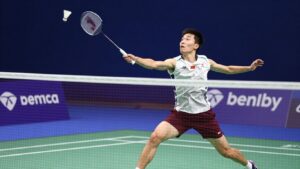
Understanding the physics behind your forehand can really make a difference in how well you hit the shuttle. It’s not just about swinging hard; it’s about using your whole body efficiently. Think of it like a whip – the energy builds up from the base and transfers all the way to the tip. That’s basically what’s happening when you hit a forehand in badminton.
Speed Summation in Forehand Strokes
This is a big one. Speed summation means that the final speed of your racket head comes from adding up the speeds of all the different parts of your body as they move. It starts from the ground up. Your feet push off, your legs move, your torso rotates, your shoulder turns, your arm swings, and finally, your forearm and wrist snap. Each part adds a little bit of speed to the next, and it all adds up to give the shuttle a good whack. If one of these links in the chain is weak, you lose speed. It’s like trying to push a heavy box – you use your legs and core, not just your arms.
The Role of Trunk Rotation
Your body’s rotation is a huge source of power. When you prepare to hit a forehand, you twist your torso away from the shuttle. Then, as you swing, you unwind that twist, bringing your hips and shoulders around. This rotation helps generate a lot of momentum that travels up your arm to the racket. A good trunk rotation can add significant velocity to your shot. It’s more than just moving your arm; it’s about using your core to drive the swing.
Forearm Pronation and Finger Action
This is where the magic happens right before you hit the shuttle. After your arm swings forward, your forearm rotates inwards – that’s pronation. Think of turning a doorknob. This quick, sharp movement, combined with a flick of your wrist and fingers, gives the racket head a final burst of speed. It’s this last bit of action that really makes the shuttle fly. Some studies suggest that this forearm rotation and finger action contribute a large percentage to the racket head speed, especially on powerful shots like the smash.
Here’s a quick breakdown of how these elements work together:
- Ground Force: Pushing off the ground with your feet.
- Leg Drive: Transferring energy from your legs.
- Trunk Rotation: Unwinding your torso and hips.
- Arm Swing: Bringing the racket forward.
- Forearm Pronation: Rotating the forearm inwards.
- Wrist and Finger Flick: The final snap for maximum speed.
The goal is to create a smooth, continuous flow of energy from your body to the racket. Each segment should accelerate the next, building speed as the movement progresses towards the shuttle. Missing any part of this kinetic chain means you’re not hitting the shuttle with as much power as you could be.
Developing Your Forehand In Badminton
Building a reliable forehand isn’t just about swinging harder—there’s a lot more to it! Each practice session, warm-up, or match is a new chance to get a little better. Let’s talk about routines, how to put your forehand shots into real games, and fix the stuff everyone gets wrong.
Practice Drills for Forehand Improvement
Consistent practice is what really separates an average forehand from a dependable one. Here are some hands-on drills to get you started:
- Shadow Swing Drills: Without a shuttle, move around the court mimicking forehand swings. Focus on form and reach.
- Partner Forehand Drive Rally: Stand midcourt and rally with a partner using only forehand drives. Keep up a fast tempo.
- Forehand Flick Drill: Stand close to the net and practice forehand flicks—accuracy and a quick wrist are key. Working with a partner, as recommended in programs like this forehand flick practice, will help sharpen your control and precision.
- Multi-Shuttle Forehands: Have a feeder toss shuttles to your forehand. You focus on quick footwork and solid contact each time.
Practice isn’t about perfection, but about building habits so your best shot comes out when it counts.
Integrating Forehand into Match Play
Getting good at drills is just one part. The trickier bit is using your forehand naturally during a game. During match play, blend your forehand shots with other strokes to stay unpredictable. Try to:
- Mix fast drives with slower drops in your rallies
- Use the clear to push opponents back, then follow up with an attacking forehand smash
- Target different parts of the court so you don’t get stuck in a pattern
Keep an eye on the flow—don’t force your forehand every shot, but be ready to use it when someone sends the shuttle into your strike zone.
Common Forehand Mistakes and Corrections
Everyone starts with some hiccups. Here are the slip-ups I see most—and how to fix them:
| Mistake | What It Looks Like | How to Fix It |
|---|---|---|
| Gripping too tight | Stiff wrist, slow swing | Relax your grip, let the racket move |
| Poor footwork | Always late to the shuttle | Drill court movement weekly |
| Over-rotating body | Off-balance after each hit | Keep your center stable, small steps |
| Mis-timing contact | Hits close to your body | Move early, strike at arm’s reach |
- Review your stance and make small adjustments after each session.
- Ask a friend or coach to point out things you might miss.
- Film yourself—sometimes what you feel isn’t what happens!
Bad habits don’t fix themselves, but they do break with some attention and repetition. Keep tweaking, keep hitting, and one day your forehand won’t even be something you worry about—it’ll just work.
Keep Practicing, Keep Improving
So, we’ve gone over a lot about hitting that forehand in badminton. It’s not just about swinging hard, you know? It’s about getting the grip right, moving your feet well, and really understanding how your body works together to make that shot powerful and accurate. Remember, nobody gets it perfect right away. It takes time, lots of practice, and maybe a few frustrating moments. But stick with it. Focus on one thing at a time, drill it over and over, and you’ll start to see a difference. Your forehand will get better, and so will your whole game. Keep at it, and you’ll be surprising yourself and your opponents in no time.
Frequently Asked Questions
What’s the best way to hold the racket for a forehand?
Think of shaking hands with the racket! For most forehand shots, you’ll want to use a ‘forehand grip.’ This means your palm is behind the racket handle, and your index finger is a bit spread out. It’s like a relaxed handshake. This grip gives you good control and power for many different shots.
How do I hit a powerful forehand clear?
To hit a strong forehand clear, you need to use your whole body. Start by getting sideways to the shuttlecock. Then, swing your racket up and over your head, using your hips and shoulders to add power. It’s not just about your arm; it’s about a smooth, coordinated movement that transfers energy from your feet all the way to the racket.
What’s the difference between a defensive and an attacking clear?
A defensive clear is hit very high and deep into the opponent’s court. Its main job is to give you time to get back into a good position. An attacking clear, on the other hand, is hit flatter and faster. It’s meant to put pressure on your opponent, making it harder for them to return it well.
How can I make my forehand smash more powerful?
For a powerful smash, preparation is key! Get behind the shuttlecock, bring your racket high above your head, and rotate your body. Then, swing down hard and fast, using your forearm and wrist to snap the racket through the shuttle. Imagine you’re trying to hit the shuttle straight down with all your might.
What are forehand drop shots and drives, and how are they different?
A forehand drop shot is a delicate shot hit with a soft touch, meant to land just over the net. You need good racket head control for this. A forehand drive is a fast, flat shot hit with more power, usually aimed at your opponent’s mid-court. It’s a quick way to keep the rally going or surprise them.
What’s the most important thing to remember when practicing forehand shots?
Consistency and repetition are super important! Start by getting the grip and stance right. Then, practice the basic swing over and over. Don’t worry too much about power at first; focus on hitting the shuttlecock cleanly. Once you’re comfortable, you can start adding more power and trying different types of shots.