
So, you’re wondering about the difference between badminton and tennis? It’s a good question because, at first glance, they might seem pretty similar. Both involve hitting something over a net with a racquet, right? But dig a little deeper, and you’ll find some pretty big distinctions. We’re going to break down what makes each sport unique, from the gear you use to how you play the game. It’s more than just a simple swap of a shuttlecock for a ball; there’s a whole world of difference in the strategy, the physical effort, and even the court itself. Let’s get into it and really unpack the difference between badminton and tennis.
Key Takeaways
- Badminton uses a lighter shuttlecock that flies differently than a tennis ball, affecting game speed and strategy.
- The net height and court size are significantly different, with badminton courts being smaller and nets lower.
- Serving in badminton is underhand and must be below the waist, unlike tennis’s overhead serve.
- Badminton rallies can be much faster and involve more aerial play due to the shuttlecock’s nature.
- Tennis generally requires more brute strength and powerful groundstrokes, while badminton emphasizes quickness and delicate touch.
Understanding The Fundamental Difference Between Badminton and Tennis
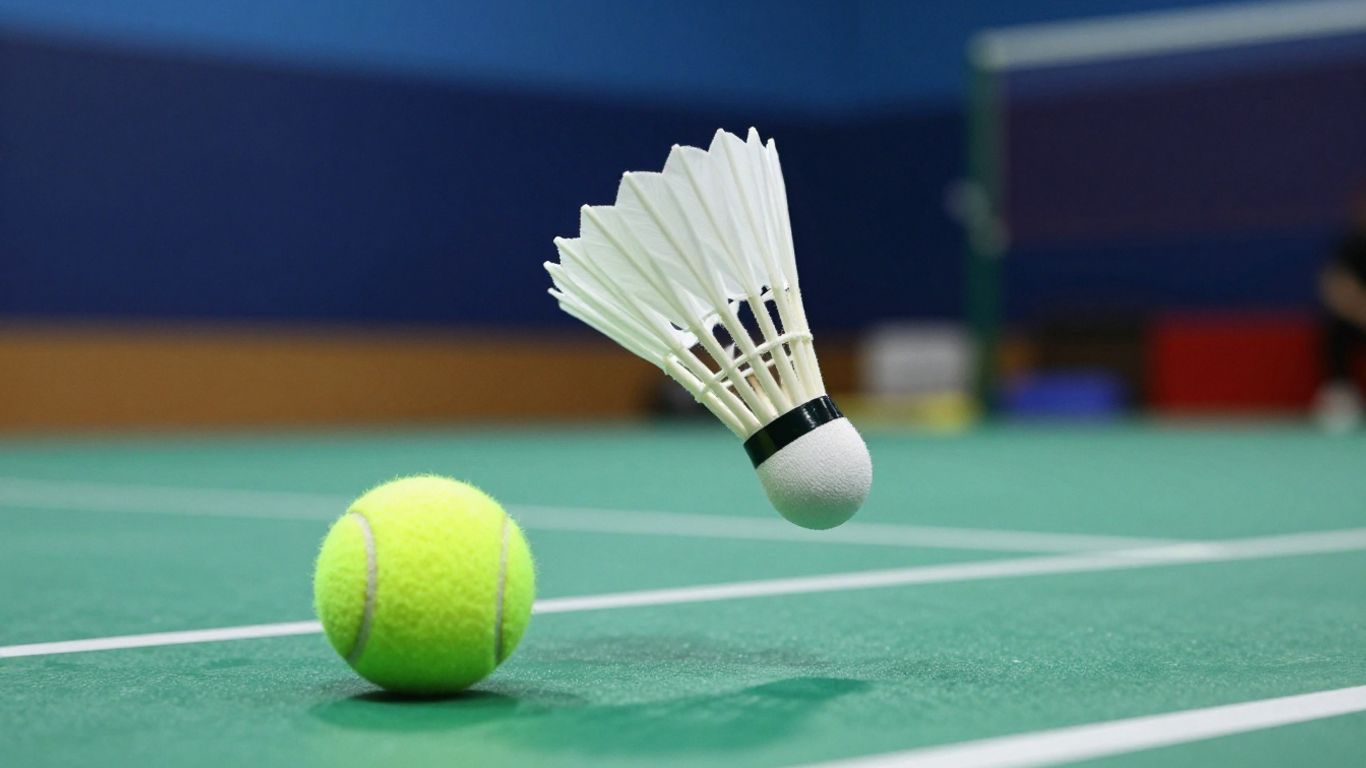
Alright, let’s get down to it. When you first look at badminton and tennis, they might seem pretty similar. You’ve got racquets, a net, and people hitting something back and forth over it. But honestly, the differences are pretty big, and they start right from the get-go with the gear and the court itself.
Core Equipment Distinctions
This is where things really diverge. Think about the racquets themselves. Badminton racquets are generally lighter, often made from carbon fiber or graphite, and they’re designed for quick, flicking movements. Tennis racquets, on the other hand, are heavier and sturdier, built to handle the force of a much faster ball. It’s like comparing a feather duster to a small hammer – both have their uses, but they’re for totally different jobs.
The Shuttlecock Versus The Ball
This is probably the most obvious difference. In badminton, you’re hitting a shuttlecock, which is made of feathers or plastic. It’s light and has a unique aerodynamic shape that makes it slow down quickly after being hit. This means rallies can be long and require a lot of finesse. Tennis uses a ball, which is heavier and bounces. This bounce changes the entire dynamic of the game, making it more about power and spin.
| Feature | Badminton | Tennis |
|---|---|---|
| Projectile | Shuttlecock | Ball |
| Material | Feathers/Plastic | Rubber/Felt |
| Weight | Very Light | Heavier |
| Bounce | No Bounce | Bounces |
| Speed Potential | Slower (decelerates) | Faster (maintains) |
The way the shuttlecock flies is really what sets badminton apart. It doesn’t just go in a straight line; it arcs and slows down, which totally changes how you have to play it compared to a tennis ball that just keeps trucking along.
Net Height And Court Dimensions
Even the playing field is different. A badminton net is much lower than a tennis net. For badminton, it’s 5 feet 1 inch at the posts and 5 feet at the center. Tennis nets are a standard 3 feet high at the center. The courts are also different sizes. A badminton court is narrower and shorter than a tennis court. This means players in badminton need to cover less ground horizontally but often need to move more vertically and react quicker to the shuttlecock’s trajectory. It’s a different kind of spatial challenge, and you can see how this impacts the type of footwork needed for each sport. If you’re curious about how these differences stack up, checking out a comparison of racquet sports can be really helpful.
So, while both sports involve hitting an object over a net, the equipment, the projectile, and the court setup create two very distinct athletic experiences. It’s not just a minor tweak; it’s a whole different ballgame, or rather, shuttlecock game!
Gameplay Mechanics: A Study In Contrasts
When you first watch badminton and tennis, they might seem pretty similar. You’ve got rackets, a net, and people hitting things back and forth. But dig a little deeper, and the way the games actually play out is quite different. It’s not just about the equipment; the rules and how you score really change the feel of the game.
Serving Techniques And Rules
Serving in both sports is your first chance to get the rally going, but the rules are not the same at all. In tennis, you stand behind the baseline and serve the ball diagonally into the opponent’s service box. You get two tries, and if you miss both, it’s a fault. The serve has to bounce in the correct box before the receiver can hit it. It’s a pretty controlled start to the point.
Badminton, though? It’s a whole different ballgame, or rather, shuttlecock game. You have to serve underhand, below your waist, and the shuttlecock has to travel diagonally over the net into the opponent’s service court. There’s no second chance; if your serve is off, the point is lost. This makes the serve in badminton a bit more about precision and less about raw power compared to tennis. It’s a subtle but important difference that affects the start of every rally. You can find more details on specific rules for sports like this on various sports sites.
Rally Dynamics And Strategies
The back-and-forth action, or rally, is where the real contrast emerges. Tennis rallies often involve powerful groundstrokes, with players trying to hit the ball deep into the opponent’s court or use sharp angles to win the point. The ball bounces, giving players a bit more time to react and set up their shots. This can lead to longer rallies, but also more opportunities for big winners.
Badminton rallies are incredibly fast. Because the shuttlecock doesn’t bounce, players have to hit it out of the air. This means quick reflexes and constant movement are key. Players use a mix of delicate net shots, powerful smashes, and clears that send the shuttlecock high and deep. The speed and aerial nature of badminton rallies are unmatched. It’s a game of finesse and rapid adjustments, often played in a smaller space than a tennis court.
Scoring Systems Explained
How you rack up points also sets these sports apart. Tennis uses a unique scoring system: 15, 30, 40, and then game. You need to win at least four points to win a game, and you must win by two points. Winning a set requires winning six games, again, usually by a two-game margin. It’s a system that can lead to dramatic comebacks within a single game.
Badminton, on the other hand, uses a simpler point-per-rally system. Every rally results in a point for one side. Games are typically played to 21 points, and you must win by two points. If the score reaches 20-20, the side that gains a two-point lead first wins the game. If it gets to 29-29, the next point wins. This system means games can be very quick, or they can be nail-bitingly close. It’s a different kind of pressure compared to tennis.
The core difference in gameplay mechanics boils down to how the projectile is played and the scoring. Tennis relies on bounces and a more complex point system, while badminton is all about aerial play and a straightforward point-per-rally structure. These distinctions shape everything from player movement to the overall pace and strategy of each match.
Physical Demands And Athletic Requirements
Agility and Footwork Variations
When you watch a badminton match, you’ll notice players moving in a way that’s almost like dancing. They’re constantly shifting their weight, making quick little steps, and jumping. It’s all about being light on your feet and ready to change direction in an instant. The shuttlecock moves so fast, and you have to be right there to hit it. Tennis, on the other hand, involves bigger movements. Players cover more ground, often with longer strides and more powerful lunges. You’re not just reacting to the immediate shot; you’re anticipating where the ball will go and positioning yourself for the next one. It’s a different kind of agility, really.
Strength and Endurance Needs
Both sports will definitely get your heart pumping, but in different ways. Badminton players need a lot of explosive power, especially in their arms and shoulders for those overhead smashes. They also need good stamina for those long rallies where they’re constantly moving. Tennis players, though, often need more sustained endurance. Think about a long tennis match – you’re running, hitting, and moving for hours sometimes. The strength needed is also different; tennis players often build more overall leg and core strength to power their shots and movements across the larger court. Badminton demands quicker reflexes because of the shuttlecock’s speed, whereas tennis relies more on stamina and power for court coverage. Both sports offer distinct physical and strategic challenges, appealing to different athletic preferences.
Impact On The Body
Because of the different movements, the toll on your body can vary. Badminton’s quick, sharp movements and jumps can put stress on your ankles and knees. The repetitive overhead arm motions can also lead to shoulder issues if not managed properly. Tennis, with its larger court and more forceful groundstrokes, can be harder on the lower back and hips. The constant pounding on the court surface can also affect the knees and ankles over time. It’s interesting how the same basic idea of hitting a projectile over a net can lead to such different physical stresses.
It’s easy to think of sports as just ‘exercise,’ but the specific demands really shape the athlete. What works for a badminton player might not be the best training for a tennis player, and vice versa. Understanding these differences helps appreciate the unique skills each sport requires.
The Role Of The Racquet In Each Sport
Okay, so you’ve got your shuttlecock or ball, your net, and your court. But what about the thing you actually use to hit the bird or ball? That’s right, the racquet. It might seem like just a stick with strings, but in badminton and tennis, the racquets are actually pretty different, and that makes a big difference in how you play.
Racquet Size And String Tension
When you look at a badminton racquet next to a tennis racquet, the first thing you’ll probably notice is the size. Badminton racquets are generally much lighter and have a smaller head size. This is because you’re dealing with a shuttlecock, which is super light and moves through the air differently than a tennis ball. The strings on a badminton racquet are also typically strung at a higher tension. This allows for quick, sharp movements and precise control needed for those fast volleys and delicate drops.
Tennis racquets, on the other hand, are heavier and have larger heads. This extra weight and surface area help players generate more power to hit a heavier ball across a larger court. The string tension in tennis can vary a lot depending on the player’s style, but it’s generally lower than in badminton to allow for a bit more feel and spin on the ball. It’s a whole different ball game, literally.
| Feature | Badminton Racquet | Tennis Racquet |
|---|---|---|
| Weight | Lighter | Heavier |
| Head Size | Smaller | Larger |
| String Tension | Higher | Lower (variable) |
Weight And Balance Considerations
The weight and balance of a racquet are super important for how it feels in your hand and how you can swing it. Badminton racquets are designed to be maneuverable. They’re often balanced towards the head to help players whip them around quickly for smashes and clears. This quickness is key when you’re trying to react to fast-paced rallies. You can find a great overview of how racquets compare in this article comparing pickleball, tennis, and badminton.
Tennis racquets, because they’re heavier, often have a balance point that’s more towards the handle or evenly distributed. This gives players more stability when hitting a fast-moving ball and helps with power on groundstrokes and serves. It’s all about matching the tool to the job.
Swing Mechanics
Because of these differences in racquets, the way you swing them is also quite distinct. In badminton, the swing is often more of a wristy, flicking motion. You’re using a lot of wrist action to generate speed and control, especially for overhead shots. The lighter weight means you can get that racquet head moving incredibly fast.
Tennis swings tend to be more about using your whole body – your legs, core, and arm – to generate power. The swing path is usually longer and more fluid, with an emphasis on transferring energy from the ground up. You’re not just flicking your wrist; you’re rotating your body to drive the ball. It’s a different kind of athleticism, and understanding these differences can really help you appreciate badminton and tennis rackets.
The racquet isn’t just an extension of your arm; it’s a carefully designed piece of equipment that dictates much of your technique and strategy. The subtle differences in weight, balance, and stringing directly influence the speed, power, and precision you can achieve on the court.
Here’s a quick rundown of the swing differences:
- Badminton: Quick, wrist-dominant swings for fast volleys and overhead smashes. Focus on racquet head speed.
- Tennis: Full-body, fluid swings for power and spin on groundstrokes and serves. Focus on energy transfer.
- Both: Require practice and good technique to master, but the specific movements are quite different.
Court Surfaces And Environmental Factors
When you think about playing badminton or tennis, you probably picture a specific kind of court, right? But the ground beneath your feet and the air around you actually play a pretty big role in how the game feels and how well you can play. It’s not just about hitting the shuttlecock or ball; the environment matters a lot.
Indoor Versus Outdoor Play
This is a big one. Badminton is almost exclusively played indoors. Why? Because that little shuttlecock is super light and easily thrown around by even the slightest breeze. Imagine trying to play a serious match when the shuttle is doing its own dance with the wind! Tennis, on the other hand, can be played both inside and outside. Outdoor courts are common, but they come with their own set of challenges, like wind and sun glare. Indoor tennis courts, like those used for professional tournaments, offer a controlled setting. This protection from external elements contributes to their longevity and consistent performance, shielding them from things like UV rays and rain.
Surface Types And Their Influence
Different surfaces change the game. For tennis, you’ve got clay, grass, and hard courts. Clay courts are slower, meaning the ball bounces higher and slower, giving players more time to react. Grass courts are the fastest, with low bounces, favoring quick, aggressive players. Hard courts are somewhere in the middle, offering a consistent bounce. When selecting the ideal tennis court surface, it’s important to consider player health, playing style, and environmental conditions alongside durability. Badminton courts are typically made of wood or a synthetic material, designed to be a bit forgiving on the joints. The surface needs to provide good grip without being too sticky.
Weather Impact On Play
Outdoor tennis is heavily influenced by weather. Rain stops play, obviously. Wind can mess with serves and shots, making it tough to control the ball. Even the sun can be a factor, causing glare that makes it hard to see the ball. Badminton, being indoors, avoids most of these issues. However, temperature and humidity inside a badminton hall can still affect the shuttlecock’s flight and how players feel. A damp court can also be a slipping hazard for any sport.
The choice of court surface and playing environment isn’t just about aesthetics; it directly impacts player performance, injury risk, and the overall strategy of the game. What works for one sport might be completely unsuitable for another.
Strategic Nuances: Unpacking The Difference Between Badminton and Tennis
Offensive and Defensive Playstyles
When you’re out on the court, the way you approach the game can feel pretty different depending on whether you’re playing badminton or tennis. In tennis, you’ll often see players trying to control the baseline, hitting powerful shots to push their opponent back. It’s a game of building pressure, waiting for that opening to come in and finish the point at the net, or just wearing the other person down with consistent, deep shots. Defense in tennis often means scrambling to get a racket on a hard-hit ball and trying to reset the point, maybe with a defensive lob or a slice to buy yourself some time. It’s a bit more about endurance and power.
Badminton, on the other hand, is a lot more about quick reactions and exploiting the whole court. You’re not just hitting hard; you’re trying to place the shuttlecock where your opponent can’t reach it easily. Offensive play often involves sharp, angled smashes or delicate drop shots that land just over the net. Defensive play in badminton is super fast-paced. You might be lunging to return a smash or trying to lift the shuttle high to give yourself a moment to recover. The speed of the shuttlecock in badminton means you have less time to react, making agility and quick decision-making paramount. It’s a game of finesse and speed, more so than brute force.
Shot Selection and Placement
Choosing the right shot and putting it in the right spot is key in both sports, but the options and their effectiveness change quite a bit. In tennis, you’ve got a wide range of shots: powerful groundstrokes, volleys at the net, lobs, and slices. Placement is about hitting to your opponent’s weaker side, opening up the court, or forcing them into awkward positions. A well-placed drop shot can be deadly, but it requires a different kind of touch than a booming serve.
Badminton’s shot selection is more about deception and using the full height of the court. You have smashes, clears (hitting the shuttle high and deep), drop shots, and drives (flat, fast shots). The placement is often more about precision. A drop shot that’s just a millimeter too long can be easily attacked, while a clear that’s too short gives your opponent a chance to smash. You’re constantly thinking about how to make your opponent move, whether it’s forcing them to the back corners or drawing them forward with a deceptive net shot. It’s a delicate balance.
The Importance of Deception
Deception plays a role in both sports, but it manifests differently. In tennis, deception might come from disguising your shot direction or using a change of pace. A player might fake a forehand and hit a backhand, or slow down a powerful rally with a slice. It’s often about making your opponent guess what’s coming next based on your body language and preparation.
Badminton takes deception to another level due to the speed of the game. Players often use subtle wrist movements to disguise whether they’re going for a smash or a net shot. A flick of the wrist can turn a powerful overhead into a gentle, falling shot just over the net. This ability to make shots look like one thing when they are actually another is a huge part of advanced badminton play. It’s about tricking your opponent into committing to the wrong shot or being out of position. This is why badminton is often recommended for beginners due to its accessibility [1468].
The constant back-and-forth in badminton, with its rapid rallies and quick changes in direction, demands a different kind of mental focus than tennis. While tennis requires sustained concentration over longer points, badminton is about split-second decisions and adapting instantly to the opponent’s move. The shuttlecock’s flight path is also much more influenced by air currents, adding another layer of complexity that isn’t as pronounced in tennis. This makes the game feel more reactive and less about pure power.
Here’s a quick look at how the pace and demands differ:
- Tennis: Longer rallies, emphasis on endurance, power shots, court coverage.
- Badminton: Shorter, explosive rallies, emphasis on reflexes, agility, precise placement, and deception.
Understanding these strategic differences really highlights how distinct these two racket sports are, even though they share some basic similarities. It’s not just about hitting a ball or shuttlecock over a net; it’s about a whole different set of skills and mental approaches [6e67].
So, Which Racket Sport is For You?
Alright, so we’ve gone over the main differences between badminton and tennis. It’s pretty clear they’re not the same game, even though they both use rackets and a net. Badminton feels faster, lighter, and you need quick reflexes, especially with that shuttlecock flying around. Tennis, on the other hand, is more about power and court coverage, with that heavier ball and bigger court. Neither one is really ‘better’ than the other, it just depends on what you’re looking for. If you want something that’s maybe a bit easier on the joints and can be played indoors easily, badminton might be your jam. But if you’re up for a challenge that requires more strength and a big outdoor space, tennis could be the way to go. Honestly, the best way to figure it out is to grab a racket and give both a try. You might surprise yourself with what you enjoy most.
Frequently Asked Questions
What’s the biggest difference between badminton and tennis?
The main difference is what you hit! In badminton, you use a shuttlecock, which is light and floats. In tennis, you hit a heavier ball. This makes badminton games often faster and require quicker reflexes, while tennis can involve more powerful hits.
Are the nets and courts the same size?
Nope! Badminton nets are much higher than tennis nets, and the court is also shaped differently and is a bit smaller. This setup in badminton means the shuttlecock travels over a higher obstacle and stays in play for longer due to its lightness.
How do you serve in each sport?
Serving in badminton is usually underhand and must be hit below the waist, aiming to get the shuttlecock over the net. Tennis serves can be overhand, much faster, and are designed to be an attacking shot right from the start.
What kind of racquets do they use?
Badminton racquets are super light and thin, built for quick wrist movements to hit the shuttlecock precisely. Tennis racquets are heavier and larger, designed to handle the force of hitting a much heavier ball with power.
Is one sport harder on your body than the other?
Both sports are great workouts! Tennis can be tougher on your joints, especially knees and ankles, because of the harder ball and more forceful impact. Badminton involves a lot of jumping and quick, sharp movements that can be demanding on your legs and core.
Can you play badminton outside like tennis?
While you can play badminton outdoors, it’s best played inside. The shuttlecock is so light that even a slight breeze can send it way off course, making it very difficult to play a proper game. Tennis balls are heavier and less affected by wind, so outdoor play is common.