
So, you want to get better at badminton? It’s a fun sport, but like anything, knowing the lingo helps. We’re going to break down some of the most important badminton terms you’ll hear on the court. Understanding these will make playing, watching, and even just talking about the game a lot easier. Let’s get started.
Key Takeaways
- The court has specific dimensions for singles and doubles, and the net has a set height.
- Serving involves hitting the shuttlecock diagonally into the opponent’s service court, below waist height.
- Games are played to 21 points, and you need to win by two points, with a cap at 30.
- Faults happen when rules are broken, like hitting the shuttle out or into the net; a ‘let’ means the point is replayed.
- Doubles play has unique rules for rotation and court boundaries, and the right equipment makes a difference.
Understanding Badminton Court Dimensions
Alright, let’s talk about the actual playing area in badminton. You can’t really play the game without knowing where you’re supposed to be, right? The court itself is a pretty specific rectangle, and its size changes depending on whether you’re playing singles or doubles. It’s not just about hitting the shuttlecock; it’s about hitting it within the lines.
Court Length and Width
The total length of a badminton court is always 44 feet. That part doesn’t change. What does change is the width. For a singles match, the court is 17 feet wide. But when you’re playing doubles, the court opens up to a full 20 feet wide. This extra width in doubles means more ground to cover and different strategies come into play. It’s a pretty big difference when you’re out there trying to chase down shots. Knowing these boundaries is key, especially when you’re serving or receiving. For doubles, the court is 13.4 meters (44 feet) long and 6.1 meters (20 feet) wide [7203].
Net Height Specifications
Now, the net. It’s what separates you from your opponent, and its height is pretty precise. The net stands 5 feet 1 inch high at the posts on the sides. But, right in the middle, it dips down a tiny bit to 5 feet. This slight dip is intentional and affects how the shuttlecock travels over it. It’s a small detail, but it matters for those tricky shots.
Designated Service Areas
This is where things get a bit more detailed, especially when you’re serving. The court is marked with specific service boxes. For singles, these are narrower than for doubles. The service boxes are located on each side of the net, extending from the center line to the sidelines. When you serve, you have to hit the shuttlecock diagonally into the opponent’s service box. If you’re serving from the right side (because your score is even), it has to land in their left service box, and vice versa. Messing this up is a common fault, so paying attention to these lines is super important. You can find more details on court dimensions and how they affect play on the official badminton rules.
The court dimensions and net height aren’t just arbitrary numbers; they’re designed to create a balanced game. The width differences in singles and doubles, for example, directly influence the pace and type of rallies you’ll experience. Understanding these physical aspects of the court is the first step to truly mastering the game.
Mastering Badminton Serving Rules
Getting the serve right in badminton is more than just starting a rally; it’s your first chance to put pressure on your opponent. It might seem simple, but there are quite a few details to remember to avoid giving away a free point. Let’s break down the key rules so you can serve with confidence.
Serving Position and Diagonal Placement
The serve must always travel diagonally across the net into the opponent’s service court. For singles, this means aiming for the longer, narrower service box. In doubles, the serve is shorter and wider, targeting the front and side service boxes. The server and receiver must stand within their respective service courts, diagonally opposite each other. It’s a common mistake for beginners to serve straight ahead, so always remember that diagonal trajectory.
Underhand Stroke and Waist Height
When you serve, the shuttlecock must be hit below your waist. This means the entire shuttlecock must be below the server’s lowest rib when struck. Also, the racket head must be below your hand at the moment of impact. This underhand stroke rule is there to prevent players from gaining an unfair advantage with an overhead smash serve. It’s all about a smooth, controlled motion.
Foot Positioning During Service
This is a big one that trips up a lot of players. During the serve, both of your feet must remain in contact with the ground and stationary. You can’t lift your feet or shuffle them around until after you’ve hit the shuttlecock. Think of it as planting your feet firmly before you swing. This rule helps maintain fairness and prevents players from using momentum from moving feet to power their serve. You also can’t step on or over the boundary lines of the service court while serving.
Serving Based on Score (Odd or Even)
This rule adds a bit of strategy to where you serve from. When your score is an even number (0, 2, 4, etc.), you serve from the right-hand service court. If your score is an odd number (1, 3, 5, etc.), you serve from the left-hand service court. This applies to both singles and doubles. The receiver stands in the diagonally opposite service court. If you win the rally, you switch sides to serve from the other court for your next serve. This serving rule ensures that players alternate serving from both sides of the court throughout the game.
Here’s a quick rundown:
- Even Score: Serve from the Right Service Court.
- Odd Score: Serve from the Left Service Court.
Remember, if you commit a fault on your serve, your opponent gets the point, and it becomes their turn to serve. Practicing these rules consistently will make your serves more reliable and help you start rallies on the right foot.
Navigating Badminton Scoring and Winning
Winning a badminton game is all about understanding how points are earned and when the game officially ends. It’s not just about hitting the shuttlecock hard; it’s about playing smart and keeping track of the score.
Rally Point System Explained
Badminton uses what’s called a rally point system. This means that a point is awarded after every single rally, no matter who served. If you win the rally, you get a point. If your opponent wins the rally, they get a point. This keeps the game dynamic and ensures that every hit matters. It’s a pretty straightforward concept, but it really changes how you approach each point compared to older systems where only the server could score.
Winning a Game to 21 Points
The main goal in a standard badminton game is to be the first to reach 21 points. However, there’s a catch: you have to win by at least two points. So, if the score is 20-20, you can’t just win 21-20. You need to pull ahead by two, like 22-20, or 23-21, and so on. This rule adds a layer of tension, especially when games get close.
Tie-Breaker Rules at 20-20 and 29-29
What happens when things get really tight? Well, if the score hits 20-20, the game enters a ‘win by two’ situation. You keep playing until one side has a two-point advantage. But there’s a limit! If the score keeps climbing and reaches 29-29, the very next point decides the game. The side that scores the 30th point wins, regardless of the two-point lead rule. It’s a sudden-death scenario to prevent games from going on forever. This rule is a key part of the rally point scoring system.
Here’s a quick rundown of the scoring:
- Standard Win: Reach 21 points with a two-point lead.
- Tie at 20-20: Play continues until one side has a two-point lead (e.g., 22-20).
- Cap at 29-29: If the score reaches 29-29, the next point (30) wins the game.
Understanding these scoring nuances is vital. It helps you strategize your play, knowing when to play aggressively and when to focus on consistency. Don’t let a close game slip away because you weren’t aware of the tie-breaker rules!
Remember, mastering the scoring is just as important as mastering your shots. It’s all part of becoming a well-rounded player on the court. For more details on how matches are structured, you can look into the scoring system and winning a game details.
Identifying Faults and Lets in Badminton
Okay, so you’re on the court, rally’s going, and suddenly… what was that? Did the ref blow the whistle? Was that a point for them? Understanding what constitutes a fault versus a let is super important. It’s the difference between winning a point and replaying it. Let’s break it down.
Common Serving Faults
Serving seems simple, right? Hit the birdie over the net. But there are a few ways you can mess it up, and when you do, your opponent gets a free point. The most common serving faults happen when the serve isn’t executed legally.
Here are some classic serving mistakes to watch out for:
- Hitting the shuttlecock above your waist: The serve has to be an underhand stroke, and the contact point must be below your waist. No exceptions.
- Foot faults: Both your feet need to be stationary and within the boundaries of your service court when you serve. You can’t be shuffling around or have a foot outside the lines.
- Missing the shuttlecock: If you swing and completely miss the birdie, that’s a fault. You only get one shot at serving, so make it count!
- Serving out of bounds or into the net: Just like any other shot, if your serve lands outside the designated service court or hits the net and doesn’t go over, it’s a fault.
In-Game Violations and Errors
Faults aren’t just for serving, though. Things can go wrong during a rally too. These are often called violations or errors, and they also result in a point for the other side.
Some common ones include:
- Hitting the shuttlecock twice: If you hit the birdie, and then it bounces off you or your racket again before going over the net, that’s a fault. Your partner can’t hit it twice in a row either.
- Touching the net: If your racket, body, or clothing touches the net while the shuttlecock is still in play, it’s a fault.
- Hitting the shuttlecock before it crosses the net: You have to let the birdie come to your side of the court before you can hit it back.
- Shuttlecock hitting the ceiling or walls: If the birdie hits anything other than the floor, net, or your opponent’s racket/body, it’s usually a fault.
Remember, the goal is to keep the rally going legally. Most faults happen because players aren’t fully aware of the rules or get a bit too excited and forget the basics. A little focus goes a long way.
Understanding When a Let is Called
Now, a let is different from a fault. A let means the rally is stopped, and you just replay the point. No harm, no foul, no point awarded. It’s basically a do-over.
Here are the main reasons you might hear a let called:
- Obstruction: If a player is unfairly obstructed by their opponent from hitting the shuttlecock, a let might be called.
- Shuttlecock issues: If the shuttlecock gets stuck in the net and doesn’t go over, or if it breaks mid-rally, that’s a let.
- Outside interference: If something unexpected happens, like a spectator running onto the court or a loud noise distracting a player at a critical moment, the umpire might call a let. You can read more about what constitutes a let to get the full picture.
- Player readiness: If one player isn’t ready to receive the serve and the server serves anyway, a let can be called. This is why it’s important for both sides to be prepared.
Knowing these distinctions helps keep the game fair and flowing smoothly. It’s all part of mastering the court!
Key Badminton Terms for Doubles Play
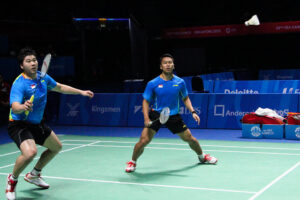
Playing doubles in badminton is a whole different ballgame compared to singles. It’s all about teamwork, communication, and covering a wider court. You’ve got your partner right there with you, which means you need to be on the same page about who’s covering what and when.
Doubles Court Boundaries
First off, the court itself gets a bit wider when you’re playing doubles. The sidelines move out, giving you more space to work with. This means you’ll be covering more ground, and your partner is doing the same. It’s a shared responsibility, really. The back boundary line stays the same, though, so those deep clears are still a big threat.
Alternating Receivers and Hitters
This is where things get interesting. When your opponents serve, your team has to decide who’s going to take that serve. Usually, the player on the right side of the court receives the serve. But here’s the kicker: after every rally, the receiving side switches who receives the serve. So, if you received the last serve, your partner might receive the next one. It keeps things dynamic and prevents one player from getting stuck on one side of the court. During a rally, you and your partner also need to alternate hitting the shuttlecock. You can’t just hit it back and forth between yourselves. One player hits it, then the other player must hit it if it comes back to their side. This requires some quick thinking and good court awareness.
Service Rotation in Doubles
Service rotation in doubles is a bit more involved than in singles. When your side wins the serve back, the player who is currently in the right service court will serve. The key is that the serving position rotates between the two partners based on who won the last rally. If your side wins a rally while you are serving, you stay in the same service court. If you lose the rally, the serve goes to the other team, and the player in the right service court on their team will serve. It sounds complicated, but once you play a few games, it starts to make sense. It’s all about keeping track of who’s where and who’s supposed to serve next. For a more detailed look at these rules, you can check out doubles badminton rules.
The biggest difference in doubles is the constant need for communication and coordination with your partner. You’re not just playing your own game; you’re playing as a unit. Deciding who takes the middle shots, covering the back corners, and anticipating your partner’s movements are all part of the doubles strategy. It’s a fast-paced game that really tests your teamwork.
Here’s a quick rundown of the rotation:
- Starting the Game: The serving team decides which player serves from which side.
- Winning a Rally (Serving Side): If the serving side wins a rally, the same player serves again, but from the other service court (if they were in the right, they move to the left, and vice versa).
- Losing a Rally (Serving Side): If the serving side loses a rally, the serve goes to the opponents, and the player in the right service court of the opposing team serves.
- Receiving Side: The receiving side alternates who stands in the right service court to receive the serve after each rally.
Essential Badminton Equipment and Attire
Alright, so you’re ready to hit the court, but what do you actually need to play? It’s not just about grabbing any old pair of sneakers and a racket. Getting the right gear makes a big difference, not just for comfort, but for how well you play and to avoid any silly injuries.
Choosing the Right Racket
When you’re starting out, don’t go for the super expensive, pro-level stuff. You want something that feels good in your hand. Most beginners do well with a racket that’s not too heavy. Think lightweight, maybe made from carbon fiber or aluminum. This makes it easier to swing without getting tired too quickly. The grip size is also important; it should fit snugly in your palm without you having to clench your fist. A racket that’s too heavy or has a grip that’s too big or small can really mess with your swing and control.
Shuttlecock Types for Beginners
Shuttlecocks, or birdies as some call them, come in a couple of main types. For folks just getting the hang of it, plastic shuttlecocks are usually the way to go. They’re tougher and tend to last longer, which is great when you’re still figuring out how to hit them cleanly. Feather shuttlecocks are what the pros use, but they’re way more delicate and expensive. Stick with plastic for now; you can always switch later when your game gets more serious. You’ll want to make sure you have a few on hand because they can get lost or damaged.
Appropriate Footwear for Court Play
This is a big one, seriously. You absolutely need proper court shoes. Regular running shoes just don’t cut it. Badminton courts need shoes that offer good grip so you don’t slip when you’re making quick turns or lunging for a shot. They also need to provide support for your ankles. Wearing the wrong shoes is a fast track to twisting something. Look for shoes that are designed for indoor court sports; they usually have flat, non-marking soles. Many players also like to wear cotton socks for comfort and to help manage sweat. Proper clothing includes cotton socks.
Getting the right gear isn’t about showing off; it’s about setting yourself up for success on the court. It helps you move better, react faster, and ultimately, enjoy the game more. Don’t skimp on shoes!
Here’s a quick rundown of what to look for:
- Racket: Lightweight, comfortable grip, durable material (like carbon fiber or aluminum).
- Shuttlecock: Start with plastic ones for durability and ease of use.
- Shoes: Non-marking soles, good grip, ankle support, designed for court sports.
- Attire: Comfortable clothing that allows free movement – think shorts or skirts and t-shirts. Moisture-wicking fabrics are a plus if you tend to sweat a lot. Beginner gear checklist.
So, before you even think about your first serve, make sure you’ve got the right tools for the job. It’s the foundation for a good game.
Wrapping It Up
So, there you have it. We’ve gone over a bunch of badminton terms, from the basics of a serve to what happens when things go wrong. It might seem like a lot at first, but honestly, the best way to really get it is to just get out there and play. Don’t worry too much about remembering every single word right away. Just focus on hitting the birdie, having fun, and maybe learning a new term or two each time you play. You’ll pick it up faster than you think, and before you know it, you’ll be talking the talk on the court like a pro. Happy hitting!
Frequently Asked Questions
What’s the main goal in badminton?
The main goal in badminton is to hit the shuttlecock (or birdie) over the net and into your opponent’s side of the court. You want to do this in a way that they can’t hit it back legally before it touches the ground. It’s all about making them miss or hit it out of bounds!
How do you win a game of badminton?
You win a game by being the first to score 21 points. But there’s a catch: you must win by at least two points. If the score gets really close, like 20-20, you have to keep playing until one side is ahead by two points. If it’s still tied at 29-29, the next point wins the game.
What are the rules for serving in badminton?
When you serve, you have to hit the shuttlecock underhand, and it must be below your waist. You also have to hit it diagonally into the opponent’s service box. Your feet need to stay still on the ground while you serve. Plus, you serve from the right side of the court if your score is even, and the left side if it’s odd.
What’s the difference between singles and doubles?
Singles is a one-on-one match on a slightly narrower court. Doubles is played with two players on each side, and the court is wider. In doubles, you have to work with your partner, and the rules for serving and receiving are a bit different to make sure everyone gets a chance to play.
What happens if I hit the net with the shuttlecock?
If you hit the shuttlecock and it doesn’t go over the net, or if it lands outside the boundaries of the court, it’s called a ‘fault’. Your opponent gets a point. However, if the shuttlecock hits the net on a serve and still goes over into the correct service box, it’s a legal serve and play continues.
What is a ‘let’ in badminton?
A ‘let’ is called when something unexpected happens that stops the rally, but it’s not a fault by either player. For example, if the shuttlecock gets stuck on the net or if a player is unfairly bothered by something outside the game. When a let is called, the rally is replayed, and no points are scored.